
It has been 70 years since Mexican women achieved the right to vote and the country is getting ready to elect its first president, but some indigenous women who will vote on June 2 still do not have a voice in their own homes or in their communities.

PLAN DE AYALA, Mexico (AP) — At four-thirty in the morning, the trickle of women, some of them girls, begins through the streets of a Tojolabal town in southeastern Mexico that is still in darkness. They walk in silence. Some are going to grind corn to then prepare breakfast tortillas and continue working at home. Others go to collect firewood that they bring on donkeys. Some rush to finish their homework to get to school on time.
Hours later, it’s time to talk. A group of girls and boys settle into a classroom at the Plan de Ayala high school to reflect on their future, gender equality and the role of women in this remote indigenous community in the state of Chiapas, the poorest in Mexico.
Jeydi Hernández, 17, wants to be a veterinarian and play basketball, although her first attempt to form a team failed. “There were 12 of us but my classmates got married and there were only four of us left.” Madaí Gómez, 18, complains about not being able to give her opinion in her own town. “They think women don’t know.”
Two indigenous women lead the talk, which is attended by dozens of young people. Years ago, an initiative like this would not have been so well received, say the educators. Change comes, albeit slowly.
It has been 70 years since Mexican women achieved the right to vote and the country is getting ready to elect its first president, but some indigenous women who will vote on June 2 still do not have a voice in their own homes or in their communities.
In Plan de Ayala, like in other corners of Mexico, women cannot be authorities. Men set priorities. They decide how to spend the resources: repair the school or the park? They have a registry with the 1,200 adult men in the community but can only speculate on the number of women although their names do appear on the electoral roll.
It is not clear how many communities in Mexico function like this, there is no data on this. But it is one of the many contradictions in which a part of the Mexican population, marginalized for centuries, lives.
However, more and more indigenous women are working to change that situation, little by little, thanks to the push of the new generations.
THE IMPULSE OF ZAPATISM
Mexico has more than 23 million indigenous people—almost 20% of the population—and 65% live in poverty, according to official data from 2022. Women bear the brunt. Illiteracy among speakers of an indigenous language is 26% compared to 4% for women who speak Spanish. The right to land ownership – which entails other community rights – remains pending in much of the country.
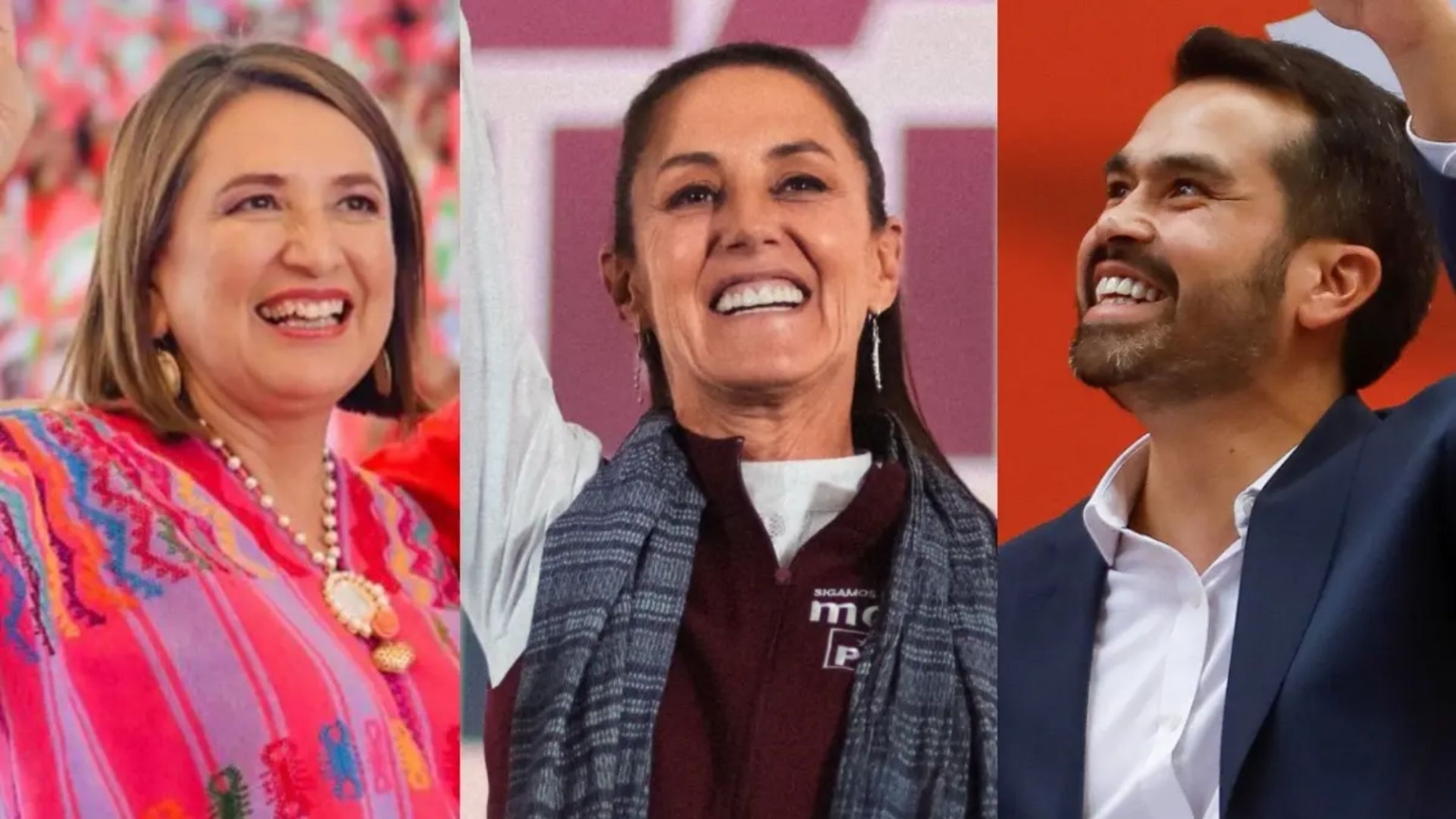
Although neither of the two candidates, nor the official Claudia Sheinbaum, the favorite, nor the opposition Xóchitl Gálvez, of indigenous origin, have spoken much about indigenous issues, the women in this region do not hide some hope that a president will improve their needs more urgent health, education or to prevent gender violence.
The situation of indigenous peoples burst onto the international political scene from Chiapas in 1994 when the Zapatista National Liberation Army (EZLN) declared war on the State. The Zapatista movement, which had an unusual participation of women, did not intend to take power but to force the government to take concrete actions to reduce racism, marginalization and oblivion in which millions of people lived almost reaching the 21st century.
Twelve days of war and years of negotiation and political discussion—which even led a Zapatista woman to speak from the Congress platform—culminated with the 2001 constitutional reform that recognized the right of indigenous peoples to decide their internal forms of organization, their right to preserve their language, land and cultural identity and to improve access to basic rights such as healthcare and education.
This allowed many small indigenous communities to govern themselves and opened the possibility for them to elect their leaders without national political influence. But it also caused the federal government to frequently look the other way when those local customs contradicted basic rights, such as gender equality.
After the Zapatista uprising, indigenous women felt encouraged to fight for their rights in their communities and in some places—such as in many towns in the state of Oaxaca—they succeeded. But poverty and inequality persist in many indigenous communities.
Juana Cruz, 51 years old, is one of the women dedicated body and soul to this crusade for change in a region where the traces of the colonial past are still present and people who were born on farms of large Creole landowners still live where the indigenous people were treated like slaves.
Cruz grew up hearing stories of the abuse suffered by four generations of her family on one of those farms. She still remembers how they beat her at school for not speaking Spanish well, the language they were forced to use instead of her mother tongue, Tojolabal.
Today she is one of the most veteran social fighters in Las Margaritas, the municipality where Plan de Ayala is located, and she is the director of the “Tzome Ixuk” collective, which means “organized woman” in Tojolabal.
His group also accompanies a victim of family violence to the prosecutor’s office, which organizes talks for men and women in the communities to talk about equality and even has a “school of memory and resistance” to teach not only the Tojolabal language, but his story.
This year, two parties proposed that she join their electoral lists but she rejected it because in the past she saw how politicians tried to get her to abandon her work raising awareness of women, something that is vital to her. “If we have the ability to decide, it is because we do not have any authority,” she emphasizes.
Six years ago, the Zapatistas and other indigenous groups elected María de Jesús Patricio to run in the presidential elections as the first independent candidate. Marichuy, as everyone knew her, faced intense racism and was unable to get her name on the ballot. But her work was not in vain, Cruz says. “She gave us hope and strength.”
Cruz’s activism dates back to the Zapatista uprising, when the guerrillas closed the haciendas and she heard the word “organize” for the first time, something that she did not understand at the time but that later became the axis of her life. One of her worst memories dates back to that time when 40 men attacked her because she asked for water, electricity, drainage and school for an indigenous neighborhood of Las Margaritas made up of those who fled the farms.
As she explains, politicians in the mid-90s considered these requests unacceptable because they said that indigenous people did not need these services.
THE GENERATION OF CHANGE
Since Cruz and other women raised their voices demanding basic services, there has been progress in Las Margaritas, a municipality on the border with Guatemala with 140,000 inhabitants who live scattered throughout 400 towns, largely rebuilt with remittances from those who have emigrated to the United States.
Unwritten rules still govern in many of those communities with high rates of teen marriage and pregnancy. For some girls it is the only way to escape violence in their homes, as a 15-year-old girl who was beaten almost daily by a family member told AP.
Although she is not formally married, because Mexican law prohibits it until she is 18, for the community she and her partner, 17, are a married couple since the young man, with the help of his brothers and the consent of the girl, They took her from her house secretly one night.
“I wanted to get married as soon as I could,” she explains, although she knew that meant the end of her dream of continuing to study. “I would love to study again, but I can’t yet, because that’s the rules here,” says the teenager whose identity is not revealed because she is a minor and a victim of abuse. “When you get married you leave school, you leave everything you have.”
More and more young people reject these norms. And that is part of what is discussed in the workshops at the Plan de Ayala institute.
About a third of the teenagers gathered there raised their hands when María Leticia Santiz, 28, and Liz Vázquez, 33, — the educators who run the workshop — asked them who wants to continue studying.
“They have the ability to make decisions in their communities, in their schools, in their families,” Vázquez tells them. “They are a generation of change.” Santiz then intervenes in tojolabal.
The connection with Santiz is immediate and jokes and laughter appear. Using her native language builds trust. The educator aims to show teenagers that they should be proud of using it but she recognizes that “there are still young people, women who are ashamed of the language, who are ashamed of being indigenous.”
Vázquez and Santiz belong to a collective called Ch’ieltik, which means “we are the ones who grow” in Tseltal. The objective of the group is to encourage conversation and reflection among young people from some of the most closed communities in Chiapas, learn about their reality and provide them with tools to improve their lives.
Santiz says that in Plan de Ayala, where women have never held positions of authority, there are many very interested in participating in local civic life but “they are inhibited because they feel that there will be punishment.”
“The agreements that people have planted in them are very deep-rooted,” she adds.
LOOKING AT THE FUTURE
In Plan de Ayala, as in the majority of the rural area of Las Margaritas where the wide valleys, agricultural areas and the jungle combine, there is little electoral propaganda and what there is is only from the official candidate Claudia Sheinbaum. The face of the opposition Xóchitl Gálvez, who always wears the traditional embroidered huipils and whose father was Otomi, is difficult to find.
Vázquez assures that she has not connected with any of the candidates but in the workshop she highlights that the fact that there is going to be a female president is an example of things that were previously unthinkable that later become possible.
Santiz is suspicious of politicians. “I have not seen a change, an attention towards the native peoples.” He believes that they are used to sell an image, to take a photo but without anyone really caring about the people behind it.
“Belonging to an indigenous people is not just coming from an indigenous community,” she says. “It’s coming back and doing things for your community.”
Yásnaya E. Aguilar, a renowned Mixe linguist and activist from the neighboring state of Oaxaca, regrets that politicians have always approached them either from contempt or from idealization or folklore. She also assures that a “racist gaze” persists when sexist practices that persist in communities are linked to their tradition, when such behaviors occur everywhere.
The academics also recall that examples of indigenous women who have reached levels of power have been minimized, for example, leading the fight against megaprojects that endangered their territories.
The novel proposals of the presidential candidates have been conspicuous by their absence. Sheinbaum insists on advancing historical reparation programs for some towns such as those launched by the current government. Gálvez has limited herself to remembering the advances in infrastructure from when she led the entity in charge of indigenous development two decades ago.
In Plan de Ayala, Vázquez and Santiz leave the institute hopeful after the workshop. Young people seem receptive to talking about equality and little by little they are beginning to see signs of change: parents who support their daughters’ dreams, young women who are beginning to participate in new spaces.
After the workshop, Madaí Gómez, the 18-year-old girl, heads home to finish helping her mother. She is still not sure about continuing studying because what she wants most is to be financially independent, perhaps working here, perhaps emigrating to the United States. But she guarantees that she will not give up because she considers herself a woman who if they say “no” and she wants to do it, she will do it.
That afternoon she puts on her soccer uniform and heads to the field, optimistic, because she says that more and more girls are signing up to play. On the dirt road, she passes older women in their traditional embroidered huipils and shiny, pleated satin skirts returning from the fields, their bodies hunched over by the enormous bundles of grass they carry on their backs.
Gómez is very clear about the potential of the women in her community and she thinks that Mexico’s first female president could show that they can do even better work than men.
“I would like gender equality to come,” she says. “That they give us that opportunity to raise our voices, to have our voice be as valuable as that of a man.”
Source: proceso