

Mexico’s overall inflation accelerated again in May, although less than expected, making it difficult for Banxico to reduce the key interest rate in its next monetary policy decision.
Inflation in Mexico accelerated in May 2024 for the third consecutive month, with an annual rate of 4.69%, from the 4.65% it had registered in April, pressured upward by the increase in the prices of services and agricultural products.
However, despite the fact that it accelerated for the third consecutive month, the inflation figure for May was below the expectations of analysts, who expected the National Consumer Price Index (INPC) to rebound to an annual rate of 4.82 percent.
At a monthly rate, the general INPC had an increase of 0.17% during May, according to the report of the National Institute of Statistics and Geography (Inegi).
“Today’s data did indeed increase annual inflation to 4.69%, but it is a good figure because it was expected to increase further. So the response, the market’s interpretation of this data is going to be positive because it was expected to grow a little more,” said Luis Adrián Muñiz, deputy director of economic analysis at Vector Casa de Bolsa.
Core inflation (which excludes goods and services with more volatile prices) had an annual increase of 4.21%, with the Education (6.34%) and Other Services (6.14%) components showing the highest increase in prices. At a monthly rate, the core had an increase of 0.17 percent.
Meanwhile, non-core inflation in the fifth month of the year was 6.19% at an annual rate, while it showed a fall of 1.28% compared to the previous month.
One component that helped contain non-core inflation was energy and government-authorized rates, whose prices fell 3.0% on a monthly basis due to adjustments in electricity rates in 11 cities in the country in anticipation of the arrival of the warm season.
What has been observed in recent months, particularly this year, is that the acceleration of general inflation is basically explained by an acceleration of non-core inflation,” explained the deputy director of economic analysis at Vector Casa de Bolsa.
He said that core inflation, which in May was also lower than expected, has been on a downward trend since January of last year, so “in this context of non-core pressures, the emphasis of the analysis should fall on core inflation, which for the moment has been performing well, with the annual rate falling month by month.”
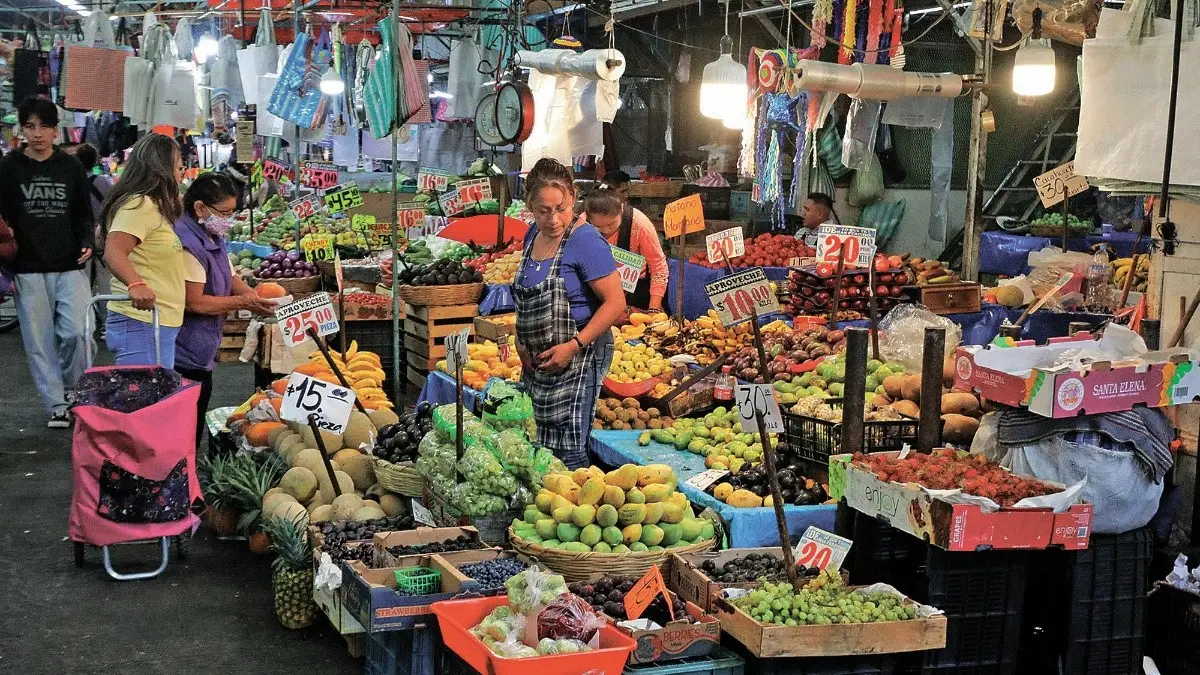
The products that rose the most in price in May were:
Serrano pepper (+22.49%)
Poblano pepper (+21.96%)
Orange (+11.38%)
Tomato (+11.09%)
Avocado (+9.11%)
Air transport (+5.09%)
While the products that fell the most in price were:
Onion (-25.14%)
Electricity (-21.45%)
Cucumber (-20.68%)
Melon (-18.04%)
Green tomato (-10.75%)
Domestic LP gas (-3.11%)
Muñiz mentioned that the positive inflation data for May “may tip the balance a little more” so that the governing board of the Bank of Mexico is encouraged to cut the interest rate by 25 basis points during its meeting on June 27.
“If we had any doubts, this data helps us to think that there will be a cut in June (…) there is a lot of uncertainty regarding the pace of reduction, that is, how many more reductions, when they will happen. We will be in a scenario in which there will be times when the central bank decides to pause, times when it decides to lower the rate again and we will be in that scenario of slow reductions,” he said.
Vector Casa de Bolsa’s scenario is that the interbank rate will end 2024 at a level of 10.25%, from the 11.0% it is currently at.
Producer inflation, also on the rise
Producer prices continued with the acceleration trend that began a month earlier. During May 2024, the National Producer Price Index (INPP) grew by 3.33% at an annual rate and 0.45% at a monthly rate.
By economic activity, the highest inflation for producers occurred in the primary sector (agricultural), with a monthly increase of 2.81% in the INPP; in the secondary (industrial) and tertiary (services) sectors, the increase was 0.31 and 0.25%, respectively.
Source: eleconomista