
The findings, published by the journal Nature Communications, reveal that by that year, four-fifths of Mexico’s municipalities will be affected by dengue
:quality(85)/cloudfront-us-east-1.images.arcpublishing.com/infobae/OAQMW7IJWRAVXLQWMDIAG6RMBQ.jpg)
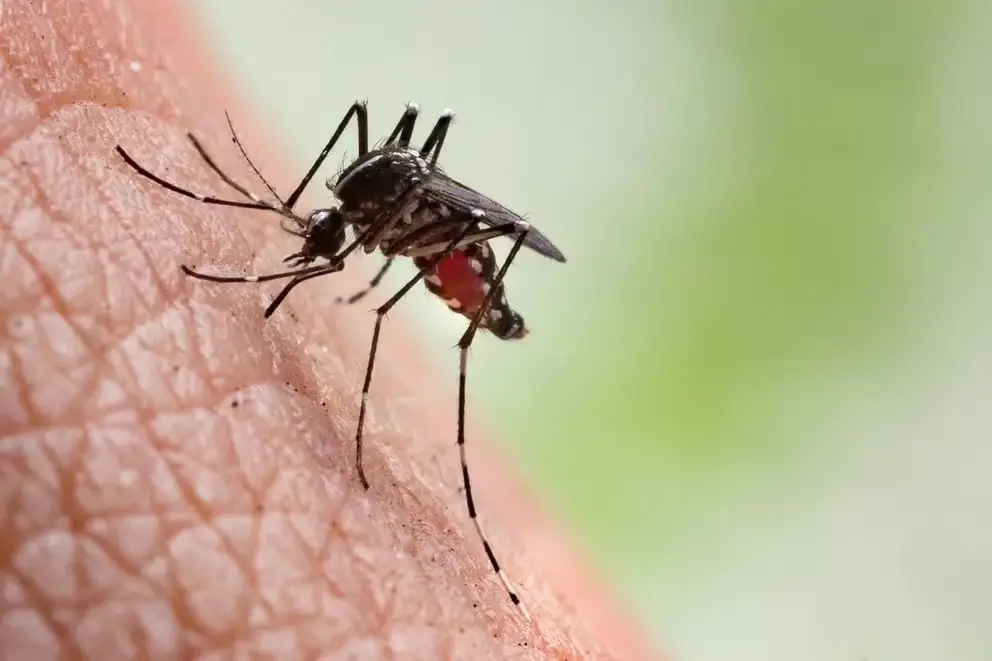
In 15 years, 81% of municipalities in Mexico will have cases of dengue, which adds a problem to the health system, revealed a study published at the end of May in the journal Nature Communications, which warns that the problem will mainly affect the center of the country.
The study titled Human movement and environmental barriers shape the emergence of dengue was published on May 28 and estimates that in addition to the municipalities in the center, the municipality of Tijuana, on the border with the United States, may also be affected, which will be invaded by the disease between 2027 and 2030.
It is expected that the metropolitan area of the Valley of Mexico will face this situation between the years 2038 and 2039.
“Many people have investigated environmental factors such as temperature, humidity, rain, to establish the relationship between these characteristics and mosquitoes,” said scientist Vinyas Harish of the University of Toronto, who participated in the study, in an interview with the EFE agency.
“But to really understand how dengue affects the population we needed to integrate that with data on population mobility over time. We used machine learning to integrate those insights,” he added.
Looking back, only 16 municipalities in Mexico (0.65% of the country’s total) were affected by dengue infection in 1996. Between 2000 and 2010, the infection spread to 965 municipalities, and by the end of 2019, the number had reached 1,350, representing 55% of the total, according to the same study.
The scientists used artificial intelligence during the research to understand how the connection between areas and environmental conditions interact at different stages of infection, according to Vinyas Harish, a scientist at the University of Toronto (Canada) and participant in the study.
The team, made up of Mexican, Canadian, Australian, Brazilian and British specialists, used data from more than 8,000 municipalities in Brazil and Mexico, collected over the past 25 years, along with climate information, records of the appearance of epidemics and the history of genetic evolution.
Dengue situation in the world
According to Nature Communications, America is the continent most affected by dengue, with 8.1 million cases. The situation is expected to worsen in the coming years.
Between January and April 2024, 7.9 million cases and 4,000 deaths have been reported in 79 countries, a significantly higher figure compared to 2023, when 6.6 million cases were recorded throughout the year, the World Health Organization reported in the webinar Dengue: epidemiological situation and response on June 13 of this year.
“By April 2024, there will be more cases of dengue than in the whole of 2023, and we also know that the real figures are almost nine million, although we must take into account the fatality rate, which has been slightly reduced, but this has no impact, it does not mean that there are fewer cases,” said Martina Mcmenamin, an epidemiologist at the WHE Acute Events Analysis Unit.
The increase in dengue cases is due to climate change, since “the increase in temperature favors the reproduction of mosquitoes and, in addition, the virus inside the mosquito’s body also multiplies,” said Raman Velayudhan, head of the vector control and tropical diseases unit at the WHO, in the webinar.
The Aedes mosquito, which transmits dengue, is found in more than 150 countries, and according to Velayudhan, it is not being controlled as it should be because they did not know that it was spreading silently.
“There are many places where temperatures are now favourable for mosquitoes and they are spreading to countries where they had never even been present before. This includes Europe. People are moving more and are bringing the diseases with them,” he said.
What is dengue and what are its symptoms?
:quality(85)/cloudfront-us-east-1.images.arcpublishing.com/infobae/INIHN2QYJJAQHD52OZDZ3PYRBY.jpg)
Dengue is a disease transmitted by the bite of mosquitoes carrying the virus, prevailing mainly in regions with subtropical and tropical climates, as well as in areas where water accumulates.
There are four types of dengue that can infect people (Dengue 1, 2, 3 and 4). Any of them can cause the disease to be mild or severe, even causing internal bleeding that can result in the death of the affected person.
The World Health Organization (WHO) indicates that most people who contract dengue do not have symptoms or when they appear they usually go away in one or two weeks. However, in some cases the disease becomes serious and requires hospitalization, as it can be fatal.
According to data from the Mexican Social Security Institute (IMSS) there are three different manifestations of the disease: dengue fever, hemorrhagic fever and hemorrhagic shock.
The symptoms of dengue appear after a period of 4 to 7 days. They present as:
Fever
Bone pain
Intense headache (in the forehead)
Eye pain (which increases when moving the eyes)
Skin rash (similar to measles)
Nausea
Vomiting
Insomnia
Itching
Lack of appetite
Abdominal pain
In severe cases:
Hemorrhage
Convulsions due to fever
Severe dehydration
In very severe cases, dengue can become complicated by becoming hemorrhagic dengue, characterized by internal and external bleeding, or hemorrhagic shock, when blood does not flow properly to the main organs of the body, which can result in the death of the infected person.
Source: infobae