
Press freedom worldwide is at its lowest point since Reporters Without Borders (RSF) began ranking countries 25 years ago. This decline was particularly exacerbated last year by the criminalization of journalism, as well as by attacks perpetrated by figures such as Donald Trump.
In its 2026 ranking, published this Thursday, RSF notes that the average score of the 180 countries analyzed has never been so low in the last quarter-century. Spain not only follows this general trend but, comparatively speaking, has fallen six places, from 23rd to 29th.
Norway tops the list once again, the only country to achieve a perfect score (92.72 out of 100), followed by the Netherlands, Estonia, Denmark, Sweden, and Finland.
Less than 1% of the world’s population enjoys what RSF considers a “good” level of press freedom, compared to 20% in 2002. At the opposite end of the spectrum, 52.2% of countries are in a “difficult” or “very difficult” position.
The list is rounded out by some of the world’s harshest dictatorships: Saudi Arabia (176th), Iran (177th), China (178th), North Korea (179th), and Eritrea (180th).
Among the regimes most closed to the press is also Russia (172nd), “a specialist in using laws against terrorism, separatism, or extremism” to restrict its room for maneuver.
The biggest drop in 2026 is Niger (37 places down to 120th), which thus exemplifies the deterioration of press freedom in the Sahel region over the years due to attacks by various armed groups and the military juntas in power.
At the other extreme, the fall of Bashar al-Assad’s dictatorial regime in Syria has allowed it to rise from 177th to 144th place.
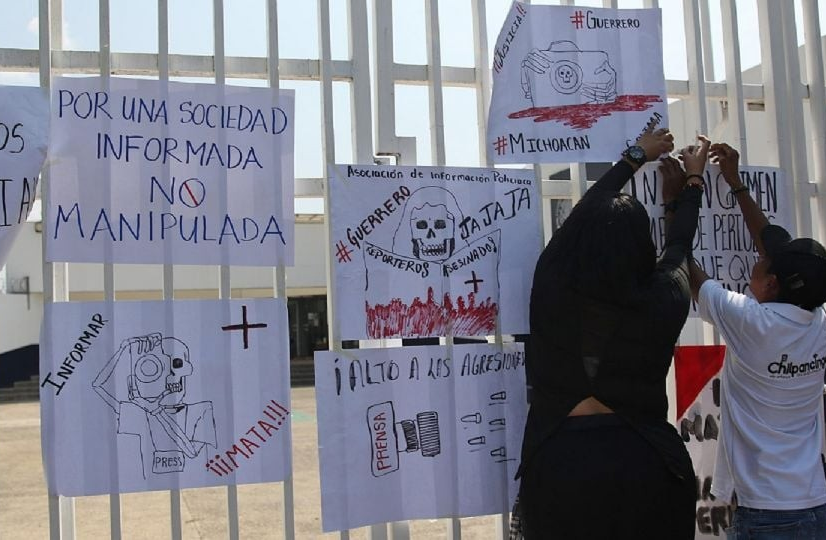
Mexico remains one of the most dangerous countries.
This year, Mexico ranked 122nd out of 180, an improvement of two places compared to 2016, after obtaining a score of 45.23.
RSF highlights that with the arrival of Claudia Sheinbaum, a less aggressive discourse toward the press has been adopted, although she has not hesitated to criticize media coverage on some occasions.
“Year after year, Mexico remains one of the most dangerous and deadly countries in the world for journalists,” the fact sheet states.
Meanwhile, the number of journalists killed so far in 2016 is two.
Many Latin American countries have worsened their position in the rankings, particularly Ecuador, which, amid a sharp rise in organized crime, has plummeted 31 places to 125th following the murders of journalists Darwin Baque and Patricio Aguilar.
Peru has also been affected in the last year by the murder of four journalists and has fallen 14 places to 144th.
RSF has significantly pushed Argentina (11 places, to 98th) and El Salvador (eight places, to 143rd) down the rankings due to the actions of their leaders, Javier Milley and Nayib Bukele, respectively, who have followed Donald Trump’s lead in their hostility and pressure on the press.
Three Latin American countries remain at the bottom of the global press freedom rankings, although they have improved their positions: Venezuela (159th, down from 160th) due to uncertainty surrounding press freedom guarantees despite the release of journalists in early 2026; Cuba (160th, down from 165th), where “the profound crisis is forcing the few independent journalists to operate increasingly underground.”
And Nicaragua, relegated to 168th place (down from 172nd), in a “media landscape in ruins, characterized by systematic repression and a lasting collapse of the conditions for practicing journalism.”
Colombia bucks the regional trend, climbing 13 places to a less than commendable 102nd.

Source: latinus.us