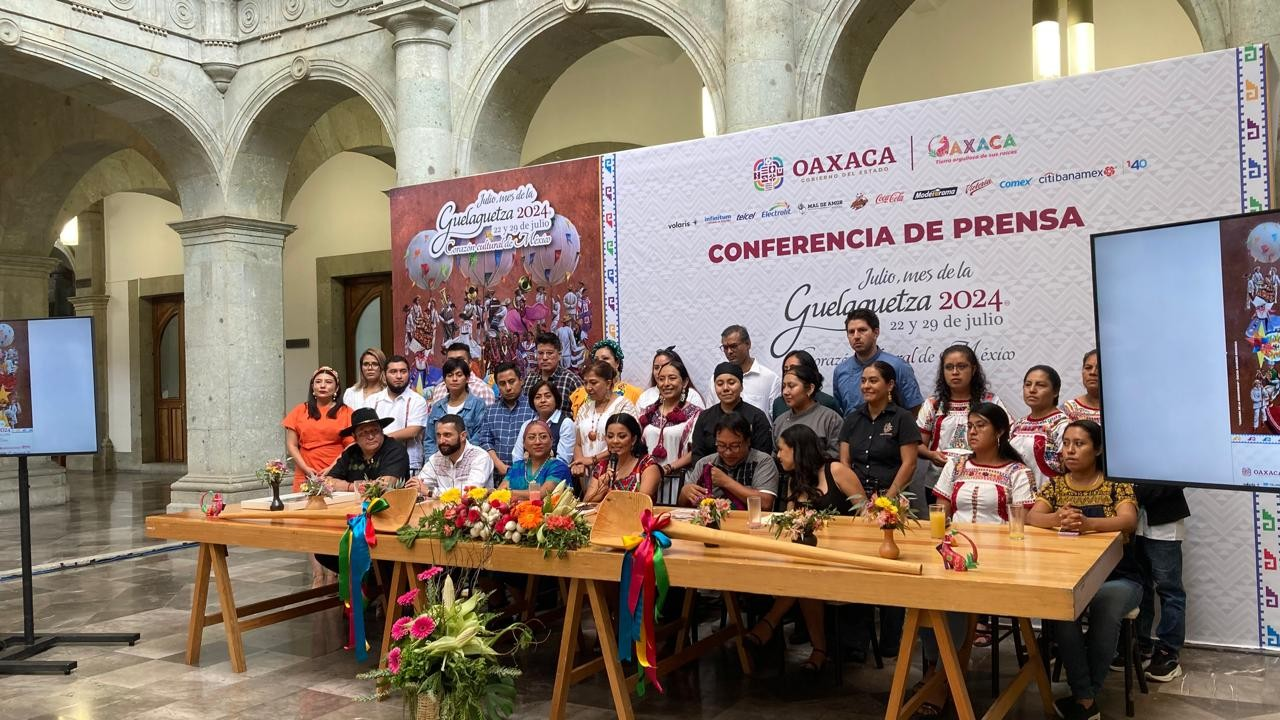


The Government of Oaxaca, through the organizing committee of the Guelaguetza, enthusiastically announced the programming of the delegations participating in the four broadcasts of the traditional Lunes del Cerro.
This festivity, which will be celebrated on July 22 and 29, will bring together various communities from the eight regions of the state, showing the cultural wealth and ancestral traditions of Oaxaca.
First Morning Broadcast: July 22
The opening day, in its morning edition, will feature the participation of the Chinas Oaxaqueñas of Genoveva Medina, representing the Central Valleys with their vibrant Zapotec culture. From the Isthmus of Tehuantepec region, Asunción Ixtaltepec will bring with it the essence of the Zapotec culture, while Santiago Llano Grande de la Costa will show the Afro-Mexican heritage. Loma Bonita del Papaloapan will represent the mestizo culture, and San Pablo Macultianguis of the Sierra Juárez will highlight the Zapotec tradition.
Other delegations include Santa Lucía del Camino, Villa de Zaachila, Santo Domingo Tehuantepec, and Ejutla de Crespo, all from the Central Valley and ambassadors of Zapotec culture. In addition, San Juan Bautista Tuxtepec del Papaloapan and Putla Villa de Guerrero from the Sierra Sur will present their mestizo dances, while Huajuapan de León from the Mixteca and Santiago Pinotepa Nacional from the Coast will share their Mixtec and mestizo heritage, respectively.
First Evening Broadcast: July 22
In the afternoon, San Antonino Castillo Velasco will represent the Central Valleys with its Zapotec richness. From the Papaloapan region, San Felipe Jalapa de Díaz will present Mazatec culture, and San Melchor Betaza from the Sierra Juárez will exhibit Zapotec. The Isthmus will be represented by San Francisco del Mar Icots, while Santiago Pinotepa Nacional will return with its cultural mix.
Additional delegations include San Carlos Yautepec from the Sierra Sur, Espinal del Istmo, Huajuapan de León from the Mixteca, Santa María Zacatepec from the Sierra Sur with its Tacuate culture, and Santiago Zacatepec from the Sierra Juárez with the Mije tradition. San Juan Bautista Tuxtepec, Santos Reyes Nopala from the Coast with the Chatina culture, and neighborhoods such as La Soledad del Istmo will complete the evening.
Second Morning Broadcast: July 29
On the second morning broadcast, the Chinas Oaxaqueñas from Casilda Flores will begin the festivities representing the Central Valleys with their Zapotec heritage. San José Tenango from the Sierra de Flores Magón, San Blas Atempa from the Istmo, and the Heroic City of Tlaxiaco from the Mixteca will bring with them a variety of traditions. From the Sierra Juárez, Tamazulapan del Espíritu Santo will showcase the Mije culture.
Other participants will include the Villa de Tututepec de la Costa with its Mixtec tradition, San Lucas Ojitlán del Papaloapan with the Chinantec culture, and various Zapotec and mestizo communities from regions such as the Sierra Sur and the Coast.
Second Evening Broadcast: July 29
The closing of the Guelaguetza 2024 will feature delegations such as Santiago Jocotepec del Papaloapan with the Chinantec culture, San Pedro Tapanatepec del Istmo with the Zoque tradition, and San Juan Copala de la Mixteca with the Triqui culture. In addition, Santa María Huatulco de la Costa will show its mestizo heritage.
Juchitán de Zaragoza and San Francisco Ixhuatán will represent the Zapotec wealth of the Isthmus, while the Sierra de Flores Magón will be present with Santa María Teoposco and its Nahuatl tradition. The Central Valleys will be represented by San Bartolo Coyotepec, among others.
Selection of the Goddess Centéotl 2024
The event will also include the selection of the Goddess Centéotl, an honor reserved for indigenous, Afro-Mexican and mestizo women from all over Oaxaca. This year’s call has been inclusive, receiving 49 participants from different regions of the state. The selection will take place on June 21 and 22 at the Plaza de la Danza.
The Guelaguetza 2024 promises to be a vibrant celebration of the cultural diversity of Oaxaca, uniting communities and visitors in a tribute to the traditions that make this region unique. The Government of Oaxaca thanks the 72 councilors who have made this great work of coordination and planning possible.
Source: agenciaoaxacamx