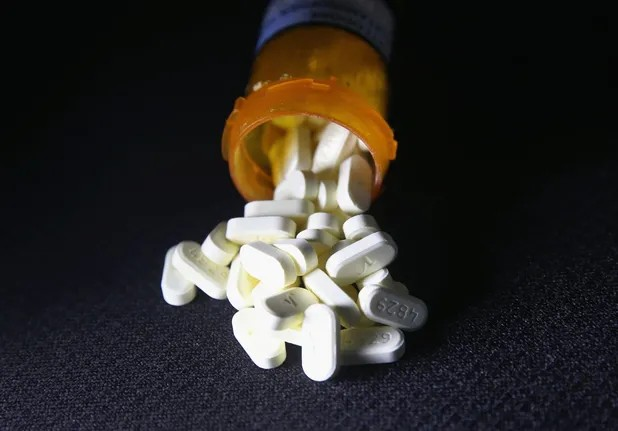

Since 2018, the Canadian government has been directly supplying addicts with the doses they need to prevent illicit drug trafficking; however, this policy has generated a problem of abuse in thousands of people, mainly young people, but also older people.
This, in turn, has led to cities such as Vancouver, Montreal, Toronto, Ottawa or Manitoba being flooded with homeless people, who have lost everything due to their addiction.
According to HealthCanada data from June of this year, 82 percent of opioid overdose deaths in Canada since 2017 were related to fentanyl.
Cocaine users protect themselves against fentanyl in Mexico City with $800 tests
A study carried out by the organization GetYourDrugsTested revealed that, on the streets of Vancouver, narcotics are distributed with inscriptions alluding to the Northeast cartel, based mainly in Tamaulipas, Mexico.
GetYourDrugsTested is an initiative supported by Vancouver CoastalHealth, the region’s health authority that offers a drug testing service and aims to prevent overdoses in the community.
In March 2024, an anonymous Vancouver citizen handed the Association a dark green pill that had the inscriptions CDN on one side and the number 80 on the other side.
CDN refers to the Northeast Cartel, while 80 is a legend that criminal groups put on their pills to pass them off as legitimate drugs. In this case, the sample was camouflaged as an 80-milligram dose of oxycodone.
After a rapid test, GetYourDrugsTested confirmed that this pill had tested positive for fentanyl and benzodiazepine.
In 2016, British Columbia, the province of Vancouver, Canada’s largest city, declared a public health emergency after fentanyl overdoses killed 200 people in just three months.
By 2023, the province will record more than 2,500 overdose deaths. An estimated 225,000 people use illegal drugs in British Columbia, and experts say a supply of toxic street drugs laced with fentanyl and other compounds significantly increases the risk of death.
Canada legalized marijuana use in 2018, with the goal of keeping profits out of the hands of criminals and organized crime and reducing crime.
However, experts say that this measure cannot yet be declared a success or failure because this opening to legal drug use has substantially increased the number of mental problems, hospital admissions and deaths from overdose and extreme addiction, according to a study by the medical journal Canadian Medical Association Journal (CMAJ).
The Canadian government created the so-called Supervised Consumption Sites (SCS) that provide a safe and clean space for people to carry their own drugs, prescribed by the same public health system.
From 2017 to January 2024, the Supervised Consumption Sites have reached a total of 4 million 600 thousand visits, of which 69 percent correspond to men between 20 and 59 years old; 24 percent to women of all ages and the rest to older adults.
Source: milenio