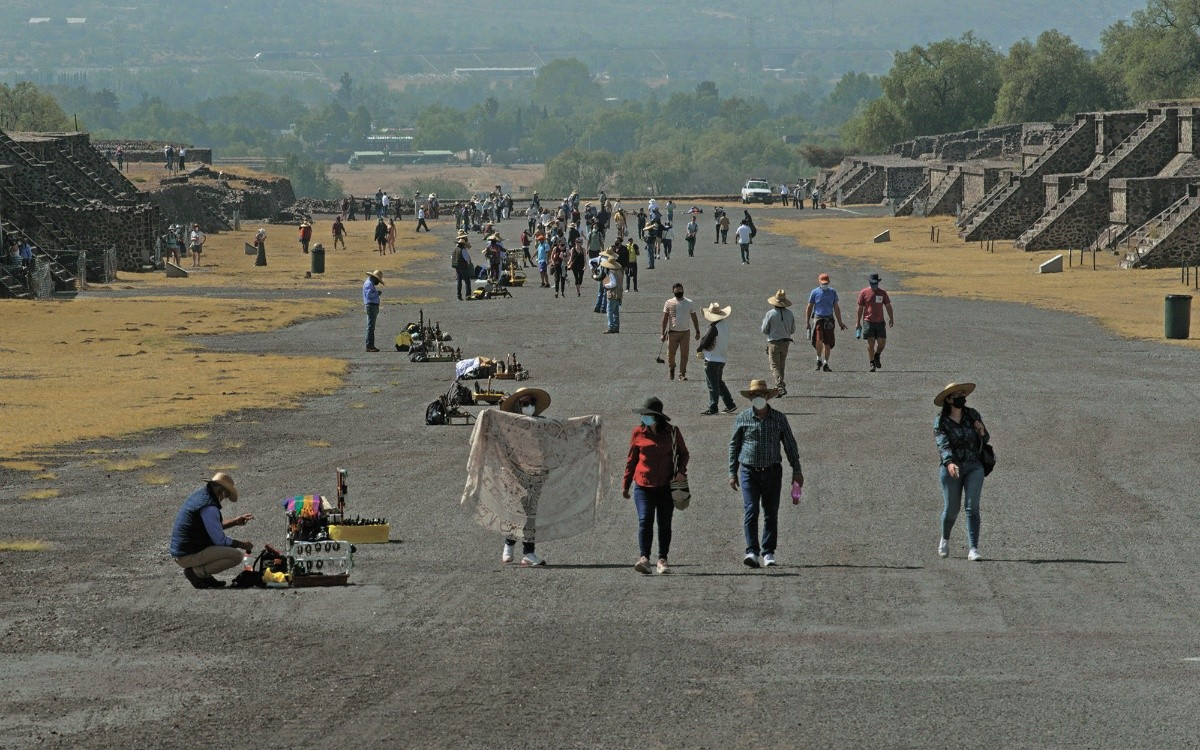


A group of 20 operators join forces to offer a more complete and sustainable experience, seeking to attract visitors who stay more than one night at the destination.
México Antique Teotihuacán is a group of 20 local tour operators who joined forces to promote tourism in the region through a diverse offer of experiences that highlight the cultural and natural riches of the Teotihuacán Valley, and that allow the destination to attract visitors who stay more than one night.
The municipality of San Martín de las Pirámides has an economy supported by tourism that reaches the archaeological zone of Teotihuacán, however, the entrepreneurs seek that the destination is not limited to this activity. “We are focused on offering a complete and authentic experience to our visitors, the collaboration between local tour operators has allowed us to create a portfolio of activities that not only promote tourism, but also support the sustainable development of the Teotihuacán Valley,” said Liliana Aguilar, a hotel entrepreneur.
Among the activities to be carried out are bicycle rides, gastronomic tours, ATV routes, temazcales and balloon flights, which during 2022 had a total of 15,000, positioning San Martín as the world capital of this activity after Turkey.
This group doubled its size in the last six months, with the strengthening of the region’s tourism cluster, after its participation in international fairs such as Fitur, in Madrid, and the Tianguis Internacional de Pueblos Mágicos, in San Antonio.
In San Martín de las Pirámides there are 400 rooms for lodging; the harvest of tuna and xoconostle follows tourism in economic importance, in addition, the manufacture of crafts, especially obsidian jewelry, is significant, with about 500 producers in the area, said Edgar Martínez Barragán, municipal president.
They are looking for new markets
Meanwhile, the average spending per person in Teotihuacán after the pandemic went from 1,200 pesos to 2,400 pesos, according to tour operators, which responds to the increase in international tourists from countries such as France, Colombia, Venezuela, Russia, Germany, the United States, Spain and China.
To attract and satisfy this market, various strategies are being implemented, such as training staff in languages and adapting menus to offer a fusion of local cuisine with options that attract tourists, mainly Asians.
“Many Chinese tourists who visit Teotihuacán are people who already live in Mexico and bring their family and friends to see the destination.” The increase in connections between Mexico and China, both culturally and commercially, has facilitated the arrival of Chinese tourists “who seek to explore beyond traditional destinations.”
Aguilar Sánchez also highlighted that agreements are being established with associations and organizations to promote Teotihuacán in China and facilitate the arrival of more tourists from that country, “we are making a conscious effort to attract and serve this market, since its growing presence is contributing to local economic development and to the increase in average spending in the destination.”
Seeking agreements
Aguilar Sánchez expressed the concern of the tourism business sector regarding the Lodging Tax (ISH) in the State of Mexico, which is currently 4%, which is not being used effectively for the promotion and dissemination of tourism in the destination, “despite the fact that hotels and tourist services comply with their obligation to collect this tax, there is no proportional investment in campaigns that attract visitors or in the improvement of the tourist infrastructure.”
For this reason, she stressed the urgent need to dialogue with the state government and the Ministry of Culture and Tourism to demand greater transparency and a more efficient allocation of these funds, since “the lack of promotion directly affects the visibility and growth of the destination, which impacts the local economy.”
In addition, 120 rooms in the Teotihuacán Valley that are not regulated, operating as hostels or through platforms, “which means that they do not contribute to the tax, this situation not only affects fairness in competition, but also the resources available for the promotion and development of the tourist destination,” concluded the businesswoman.
Source: eleconomista