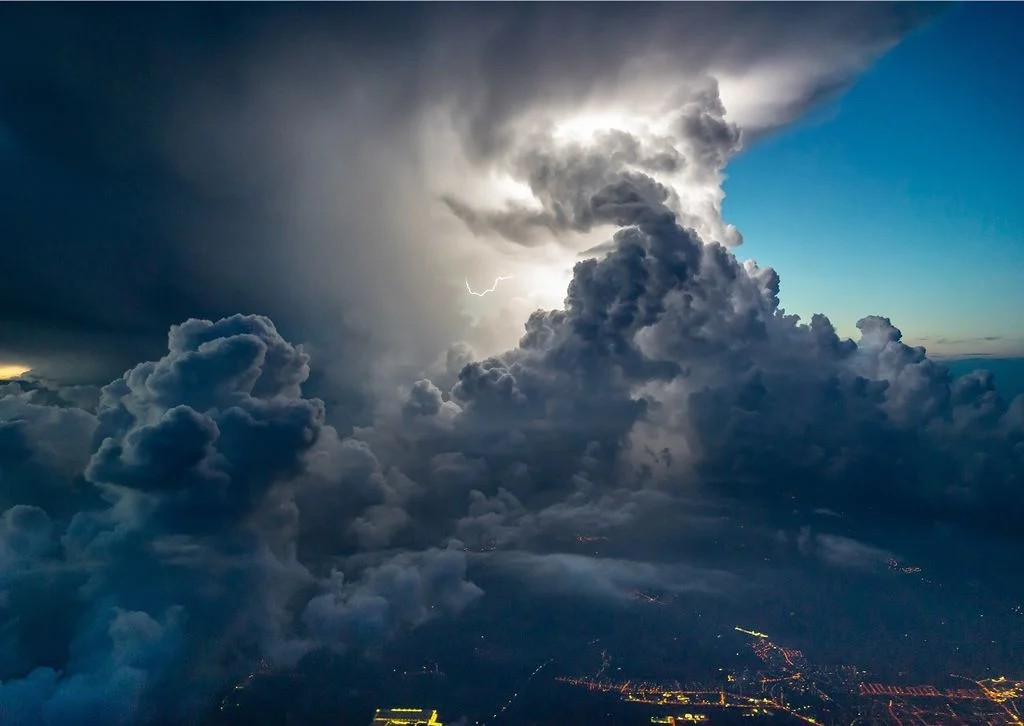

We are about to enter the peak period of the cyclone and rainy season, which is on average from this second half of August to the beginning of October, when it is common for the formation of cyclones that can approach Mexico and favor intense storms to be greater. Will this happen in 2024?
Weekly forecast and system behavior
This third week, from August 12 to 19, the most significant rains are observed in the states of the east, center, south, west and Sierra Madre Occidental due to tropical wave 16, troughs, the monsoon, relief, heat and divergence in height, being more occasional in the rest of the country. The formation of a tropical cyclone is NOT expected in these days.
Between the 19th and the 26th, there is likely to be a rainfall deficit in a large part of the Mexican territory, except in the central-southern strip from the south of Sinaloa-Nayarit to the Isthmus region, as well as in the Gulf of Mexico towards the Yucatan peninsula, since the rains would persist with the probability of a tropical cyclone off the Pacific coast.
At the end of that week, a cold front could approach the states of the northeast and north of the Gulf of Mexico, so the possible cyclone and this front would be monitored; it is also likely that the monsoon will gradually decrease its storm activity, being in its last days of this 2024 season.
Precipitable water in the tropics
Humidity will continue to reach Mexico, favoring heavy rains typical of the month, along with an increase in the frequency of cyclones.
For the last days of the month, greater cyclonic activity could be seen between the Caribbean and the Gulf of Mexico, without being able to ensure formation and trajectories for now; but this could increase rainfall in the Yucatan Peninsula, gradually extending towards the Gulf Coast, Isthmus and central-south, while the other regions would have a rainfall deficit (less quantity and more isolated).
Where would the greatest amount of rainfall occur?
The entire central-southern strip and Sierra Madre Occidental would receive the most constant and abundant rainfall, tentatively accumulating a total of 70-150 mm on average and punctual amounts that could range from 300 to 600 mm on mountainous portions. Although no impact from a cyclone is expected, if one were to arrive, this estimate could change.
Accumulated rainfall in millimeters
States in the east, center, south, west and Sierra Madre Occidental would record the greatest amount of rainfall this fortnight.
The most notable of these regions are the Sierra de Sonora, Chihuahua, Sinaloa, Durango, as well as a large part of Nayarit, Jalisco, Colima, Michoacán, State of Mexico, Guerrero, Morelos, Mexico City, Oaxaca, Veracruz, Tabasco, Chiapas, southern Guanajuato, Querétaro, Hidalgo and, in isolated cases, in Campeche, Yucatán and Quintana Roo.
Where is it normal for it to rain?
In the central-southern strip from Jalisco-Nayarit to Quintana Roo, including the Valley of Mexico, as well as in the Sierra Madre Occidental with flooding. In the rest of the country, rain is more occasional in August.
The other states in the northwest, north, northeast and east would have more scattered rains and less accumulated rainfall with 20-50 mm and local rainfall of 70-100 mm such as Baja California, Baja California Sur, Chihuahua, Durango, Coahuila, Nuevo León, Tamaulipas, Zacatecas, Aguascalientes, Guanajuato, Querétaro, Hidalgo, Puebla, Tlaxcala and San Luis Potosí.
No changes in the intensity of the heat
As has been commented, the summer heat of the north and coastal states will continue for the rest of the month with maximum values of 35 to 45 °C between Baja California, Sonora, Sinaloa, Chihuahua, Durango, Coahuila, Nuevo León, Tamaulipas, Veracruz and the Yucatan Peninsula, mainly.
Temperature anomaly in degrees Celsius.
The heat of 35 to 45 °C will continue in the north with anomalies of up to 3-4 °C, while areas of the central-southern strip will cool down due to constant rains.
Of course, in sectors of the Sierra Madre and the southeast, the expected rains will help to cool down momentarily, or at least reduce the intensity of the heat at night. The Altiplano and mountains of the central-south will maintain the coolest environment in the country with 10 to 25 °C on average.
Some important recommendations
It will be important to be aware of meteorological updates from Meteored and the indications of local authorities. You should have official documents in a bag, a first aid kit, non-perishable food, repair your home if necessary, keep drains clean, identify evacuation routes and shelters, among others.
We all need to be prepared, but especially the population living near rivers/streams, mountain/hill slopes and urban flood zones. Water simply reclaims its natural path, and we are the ones who expose ourselves by living in areas vulnerable to these negative effects, increasing the Risk of Socially Constructed Disasters.
Source: meteored