

Oaxaca, known for its cultural and gastronomic richness, is home to Crudo, a restaurant that defies expectations by fusing the art of Japanese cuisine with Oaxacan ingredients. Under the direction of Chef Ricardo Arellano, Crudo has become a unique culinary destination for those seeking an omakase experience with the distinctive personality of this famous gastronomic region.
What is an Omakase Bar?
The term “omakase” comes from Japanese and means “to trust” or “to leave in the hands of the chef.” At an omakase bar, diners sit in front of the chef, who prepares and serves a series of dishes selected based on the availability of fresh ingredients. This experience is personal and intimate, allowing for a direct connection with the chef and a constantly changing menu.
The Inspiration Behind Crudo Oaxaca
Ricardo Arellano, an architect by profession and a cook by vocation, has taken an unconventional path to create Crudo. His passion for Japanese cuisine, cultivated after his experience at Ticuchi under Enrique Olvera, merges with his love for Oaxacan ingredients. At Crudo, each dish is an expression of his creativity, where elements such as local herbs, pulque, and mezcal are integrated to offer an experience rooted in local culture.
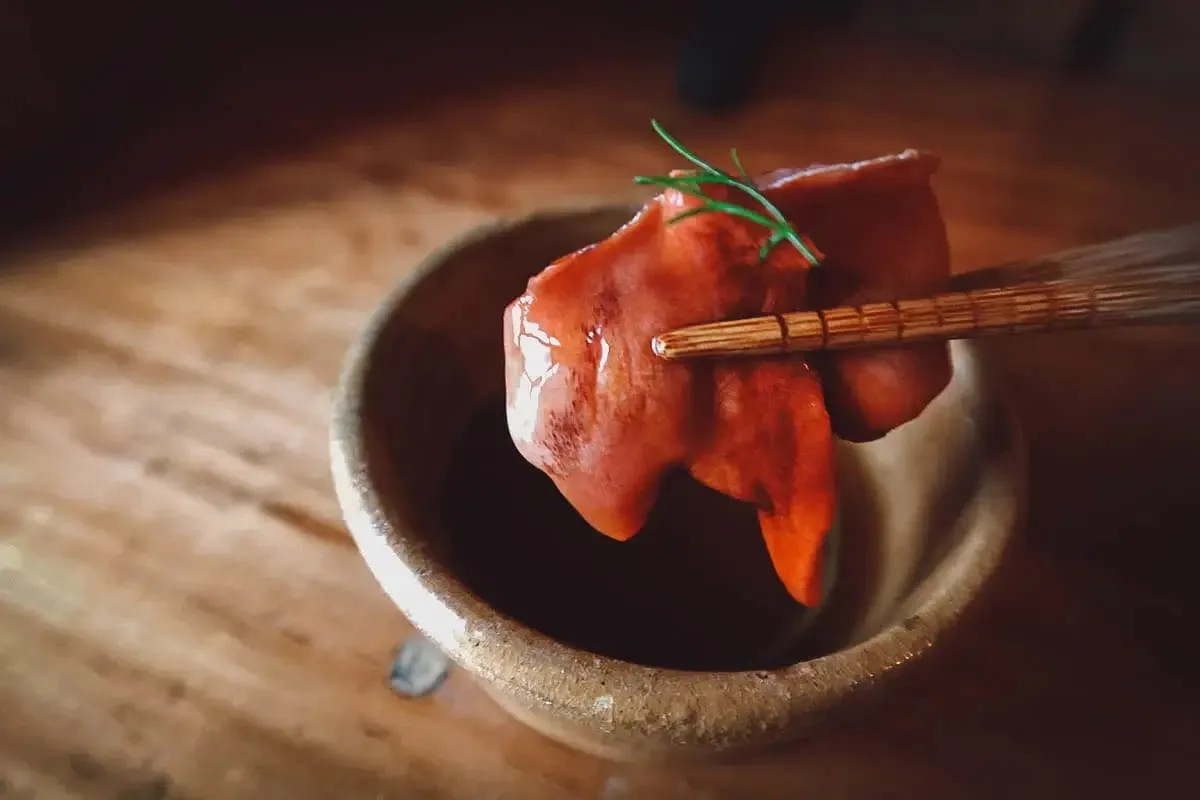
All of Crudo’s ingredients are of Oaxacan origin | Photo: Crudo
At Crudo, the omakase doesn’t follow traditional rules. Instead, Arellano offers a personal interpretation that celebrates the seasonality of the ingredients and the culinary richness of Oaxaca. Dishes such as tuna with grasshopper chixtentle, quintoniles, and black bean soy, or striped bass cecina, are examples of how the chef challenges traditional Japanese dishes to create something unique.
An Intimate Space
With just six seats around a bar, Crudo is more than a restaurant; is a space where simplicity meets an intimate and welcoming space. This environment is carefully designed with Oaxacan details, such as clay plates and palm chairs, that reflect the cultural heritage of the region. Every element of the space, from the warm tones to the arrangement of the utensils, is designed to evoke the local essence, creating an atmosphere that is both welcoming and sophisticated.
Each visit is a reminder of the versatility of Oaxaca, seen through the lens of Japanese culinary art.
Source: es-us.vida-estilo.yahoo