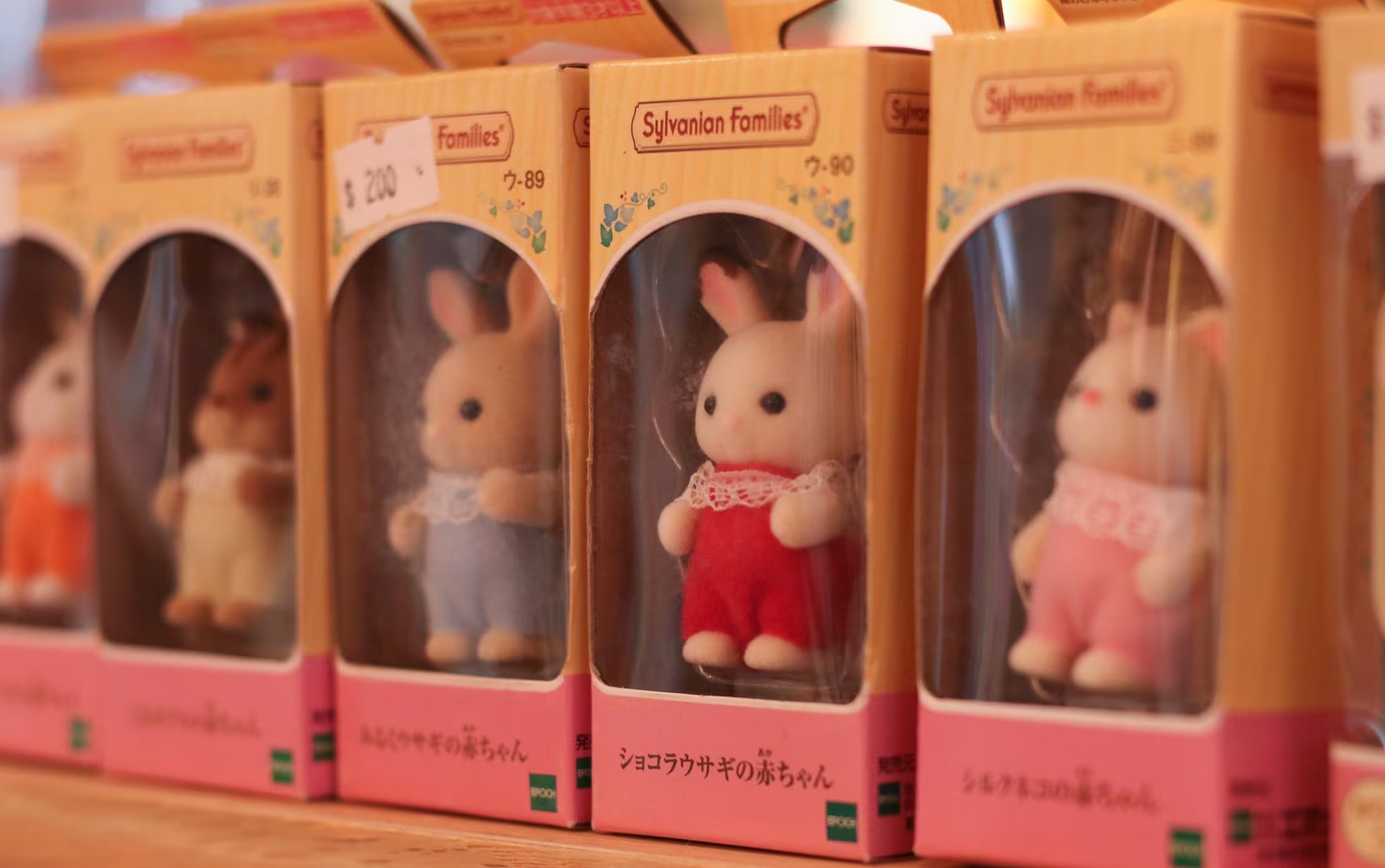

In the street markets that proliferate throughout Mexico City, especially on weekends, the capital’s residents buy food, household products, makeup and practically everything they need in their daily lives. Outside the Balderas metro station, in the city center, a market has been offering all kinds of toys for years, especially Hot Wheels cars from the Mattel brand. However, since December of last year, Sylvanian dolls (or Calico Critters, or Ternurines, depending on their origin) have taken over a large part of the stores and now, with the place more crowded than ever, it is known as the Ternurines market, where you can find classic and popular models, accessories and even merchandise related to this phenomenon.
The Japanese brand Epoch launched the Sylvanian in 1985 and over time they became classics for all ages. Epoch advertises these anthropomorphic animals as classic and timeless toys that promote family values. Their popularity has been such that they have starred in television series and over time became collector’s items in a specific niche around the world. Now, with social media, they have reached a mass audience and those family values have been relegated for a large part of their new clientele, who take advantage of social media to invent narratives where there is more drama than in a soap opera. In Japan there are official stores dedicated to the Sylvanian family and part of the current popularity is due to the fact that in 2019, the brand began selling surprise envelopes, where one does not discover which one they bought until they open the package, something that became a formula for success on social media and the reason for many to buy.
The story in Mexico is different. Rabbits, porcupines, mice, giraffes and more animals arrived in the country in the 90s through the company Fotorama. In an analogous world, the toys were popular, but they did not stand out over other more famous, striking and expensive ones. In 2024, through videos on social networks, people use them to make memes, tell experiences and invent stories. In the Balderas market, many of the stalls dedicated to Hot Wheels changed their focus to dedicate themselves partially or exclusively to these dolls, which in a short time became a trend for groups of all ages.
Omar Juárez, 46, has been in the Hot Wheels business for four years, but in December 2023 he saw that the demand for cute animals increased to such an extent that he decided to change his store to one dedicated exclusively to these dolls. Juárez says that there is no age distinction. From teenagers to parents accompanying their young children or even people over 50 years old want the cute animals for their own collection and spend between 400 and 650 pesos on each purchase.
Juárez says that since the ternurines took over the toy market, regular customers have learned to coexist with the new ones, who are not interested in cars, but are interested in finding the most sought-after dolls. “Right now, what they are looking for the most are the mascots, strawberries and hedgehogs,” explains Omar while showing the smallest dolls of the brand, which come dressed in outfits that increase their value to 300 pesos or more. He sells a box with the entire family (mother, father and two children) for 650 pesos and says that it sells as much as the individual dolls. The older and in better condition they are, the more valuable they are. The most expensive ternurine in a stand reaches 2,000 pesos and is a fox dressed as an English policeman.
The sale of toys is done through different channels. Amazon and Mercado Libre are one, as well as social networks, but in reality it is on the streets where the purchase, sale and exchange of ternurines is best managed. Not only because of the experience of buying them physically, but because of the proliferation of fake products through online sales.
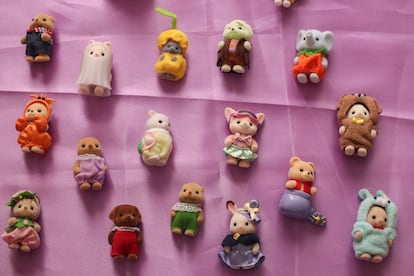
Next to Omar’s stand, Paola, 32, sells accessories. Although she has always dedicated herself to selling miniature objects, she now has many more things that fit perfectly in the imagination of the ternurines. Pots, stoves, armchairs, beds and everything that can create the environment for the ternurines can be obtained from her, although she says that the most sought after are drinks, glasses and caps, which change their appearance completely.
The accessories, which people look for to give a bit of their own personality to their dolls, are popular because of their price, most of them range from 35 to 50 pesos. There are accessories that completely tropicalize the Japanese dolls. Corn with chile, bags of chips, typical Mexican costumes, raincoats, mariachi hats, uniforms from Oxxo or Aurrera stores and even soccer jerseys are some of the objects that serve to transform a ternurin into a true chilango, as residents of Mexico City are called. There are also references to pop culture. Costumes from the Japanese cartoon Sailor Moon or kimonos that fit perfectly for the dolls have a higher price.
Ernesto Sánchez, 40, has a table with accessories, but he says that the strongest sales are concentrated at 5,000 pesos, when a woman took the mansion and various Sylvanian to fill it. Ernesto has had his business in Balderas for five years. He was one of the first to start selling old toys, which he maintains today in addition to the sale of ternurines, and he explains that with the passage of time, people’s tastes change and the new generations, with more purchasing power, look for other types of objects. While some go for the trendy ones, like the Sylvanian family, Ernesto says that he has seen how the millennial generation now looks for iconic toys from the 90s or the beginning of the new millennium, unlike past generations who are still on the hunt for 80s classics like Transformers or Hot Wheels.
The popularity of the ternurines has given way to more stalls on the street, including people who, without a space to sell, gather outside the subway entrance holding boxes with accessories and wait for someone to approach. “This always happens, since they are popular, they start selling more things and many are pirated,” explains Ernesto, referring to the new vendors who are on the fringes of the market and who sell what are popularly known as chafarines, cheap and lower quality versions of the originals. When asked about the trend, Ernesto explains that he had seen toys rise and fall in popularity, but nothing like the ternurines. Almost like a prophecy, the toy expert predicts good months for the sale of these dolls, and although he and other vendors confirm that in December 2023 the intensive sale of ternurines began, he believes that at the end of the year the loss of interest in them will begin.
Source: elpais