
On September 15, 2008, several fragmentation grenades were thrown at the population gathered in the main square of Morelia, Michoacán. In the midst of the “war against drugs,” what is considered the first act of narcoterrorism in the country was unleashed.
The official version accused Los Zetas of the crime, the most violent armed group at the time, but also one of the main enemies of the Sinaloa Cartel, with whom the former Secretary of Public Security (Genaro García Luna) had ties; another version collected by the journalist José Reveles in his book Necropolítica y narcogobierno states that those responsible were La Familia Michoacana.
Reveles writes that the grenades from Morelia belonged to a “batch of 100 stolen from a military detachment in the city of Iguala, Guerrero” and that the State Police of Michoacán arrested those responsible, but – “on orders from above” – they released them. At least eight people died and more than 130 were injured.
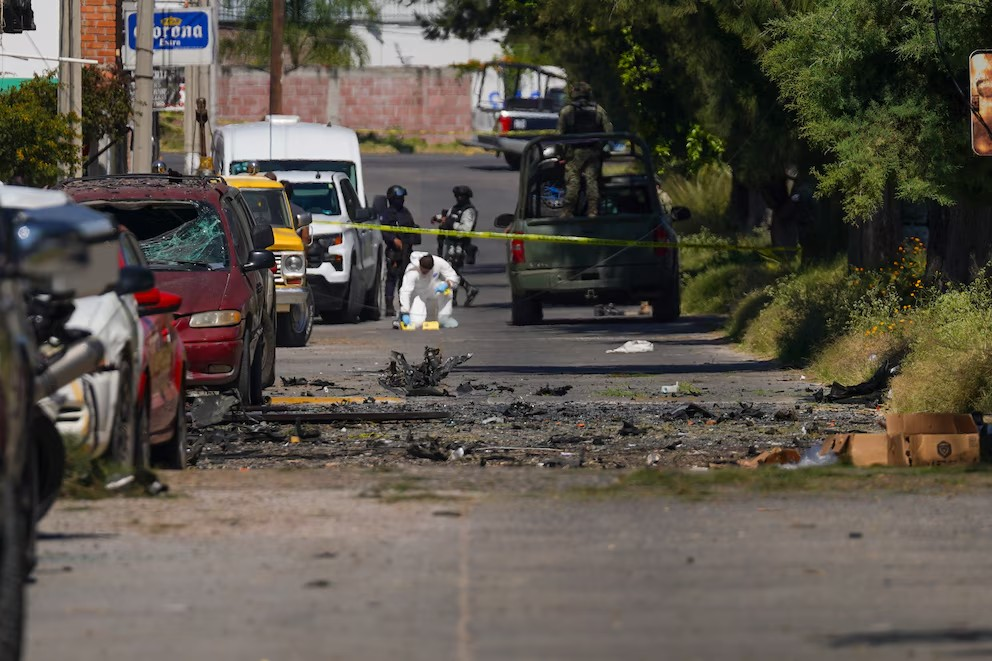
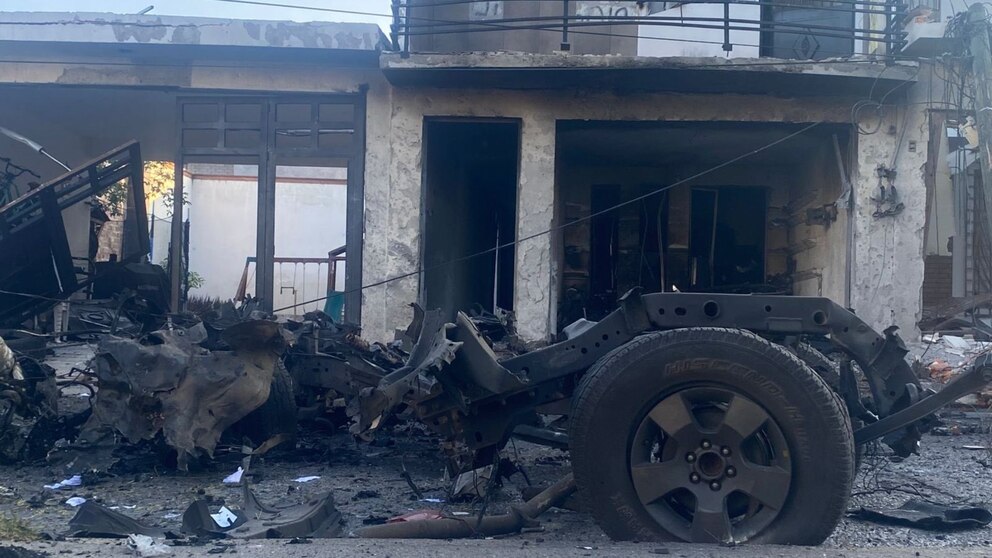
This week two car bombs exploded in the state of Guanajuato, the most violent in the country. The first exploded at 5:40 in the morning near the Municipal Presidency and the headquarters of the Municipal Police of Jejécuaro, resulting in a destroyed patrol car, 10 damaged commercial premises, homes and vehicles affected; around 6:00 a.m. the second car bomb exploded a few meters from the facilities of the Municipal Public Security Secretariat of Acámbaro: three police officers were injured.
When questioned about the acts, President Claudia Sheinbaum asserted that “they cannot be classified as terrorism”; Omar García Harfuch, her security secretary, added:
“The attacks in Guanajuato are due to a dispute over territory, this is about drugs. Terrorism has ideological overtones; Here it is a dispute between two criminal groups to fight each other and intimidate the authorities, either because some local authority is involved with some group or because the authority itself is fighting them. They are only fighting over the sale of drugs, of hydrocarbons.”
Is it or is it not narcoterrorism?
A few weeks ago the national president of the PAN, Marko Cortés, proposed to classify the crime of narcoterrorism in the Constitution; the senator also said that this would help the Mexican authorities to collaborate with other countries in the fight against organized crime.
According to Paul Piller, former CIA agent, terrorism is:
“Premeditated violence, politically motivated and perpetrated against non-combatant targets by subnational groups or clandestine agents, normally with the intention of frightening the population.”
There are four substantial elements in Piller’s definition that are highlighted by the researchers from the Colegio de México, Gerardo Rodríguez Sánchez Lara and Judith Nieto Muñoz:
Premeditation: there must be an intention, preparation and prior decision to commit the act
Terrorism is distinguished from other forms of violence by its political motivation
The targets are not combatants; terrorists attack people who cannot defend themselves (including police and military personnel who are not in defensive positions)
Those responsible are subnational groups or clandestine agents who are distinguished by not operating through regular military procedures
Based on this definition, both the grenades in Michoacán and the car bombs in Guanajuato are terrorist acts – not to mention the Culiacanazos and the narco-roadblocks – because they were carried out with premeditation; their political motivations are aimed at dominating control of areas that should be public; their targets were civilians (people and property) and non-combatant police officers; and those responsible did not operate with military procedures.
Source: infobae