
The import of Chinese cars, which began to skyrocket two years ago, brought Mexico’s Pacific ports to an unprecedented level of saturation. Today, after logistical adjustments and significant investments, the situation seems to have normalized, although the path to get there has been complex.
China has established itself as the main supplier of imported cars in Mexico, a position it reached in 2022, displacing India and Brazil. This transformation, driven by a rapid recovery in the supply chain after the pandemic, modified the usual flow of imports. Now, Pacific ports receive the majority of units, while Gulf ports, which used to handle most imported vehicles, have seen a decrease in their cargo.
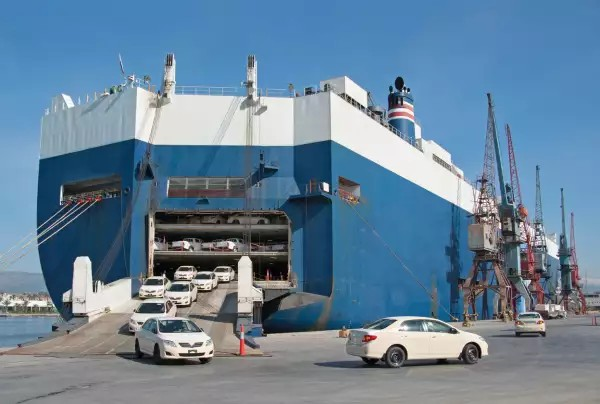
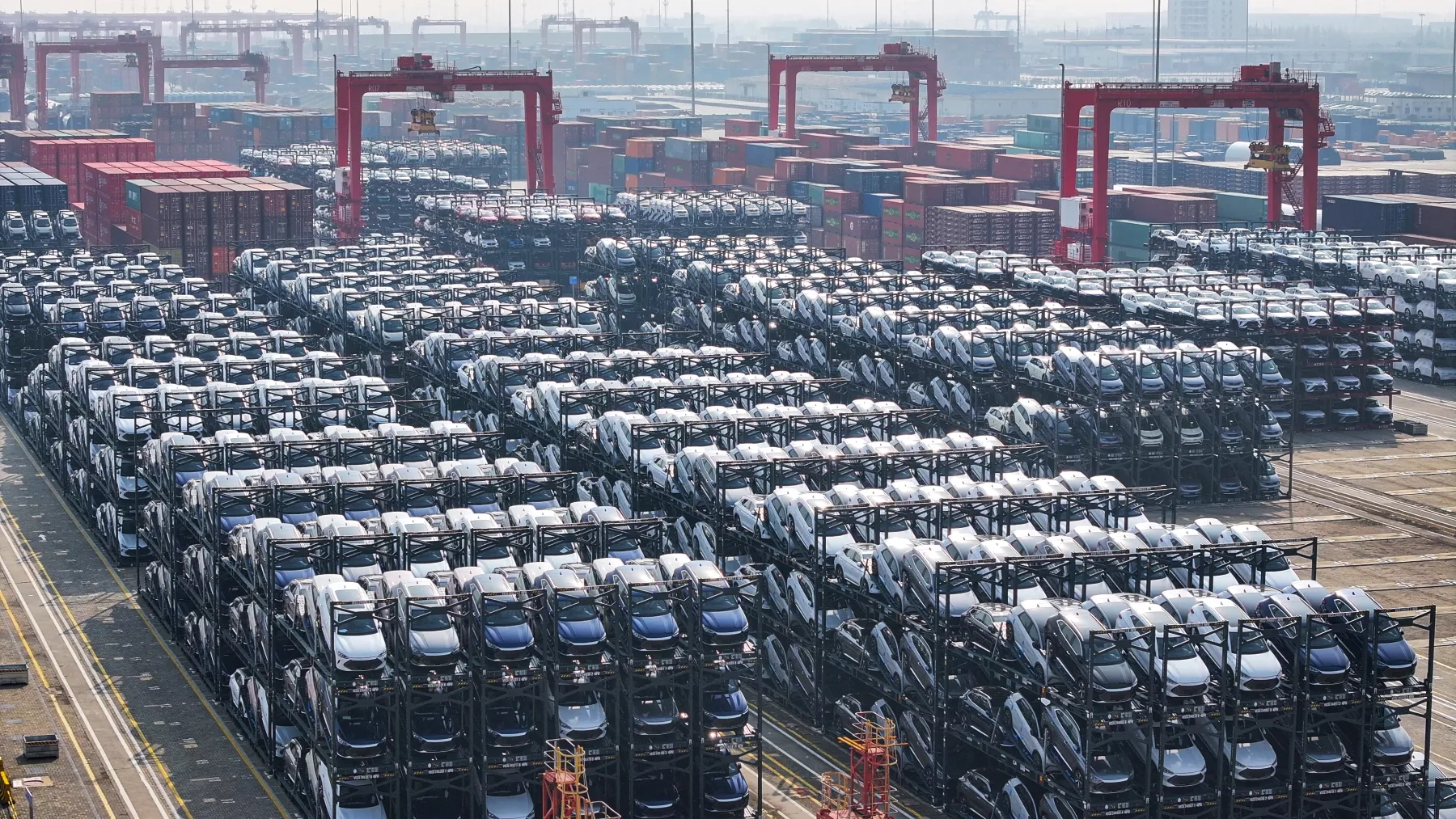
Faced with congestion and demand for greater handling capacity at Pacific ports, Chinese manufacturers began to adopt alternatives to traditional Roll-On/Roll-Off ships, known as “Roros”, which allow cars to be loaded on wheels and unloaded directly on land. Instead, they now opt to transport vehicles in containers, a method that facilitates stacking and maximizes space on ships.
José Ángel Sánchez, vice president of Grupo Chirey and Country Manager of Exeed, comments that the situation led to “a series of hidden creative ideas.” One of the innovations in logistics was to place cars upright inside containers designed especially for this purpose, which allows for optimizing space.
“People began to think, well, the rest of the goods come in containers. What if we put cars in containers? That’s how platforms and open containers emerged, in which the vehicle is stopped. Up to four cars can fit in these containers stacked, which maximizes loading efficiency,” Sánchez mentioned during the Expansión Summit 2024 Mexico of the Future.
These containers allow vehicles to be stacked efficiently, forming structures that, as Sánchez described, make ports “look like Legos.”
This innovation has allowed for better use of space, although some competitors warn that this method could increase the risk of damage to vehicles and affect their quality.
Other brands such as MG Motor have chosen to diversify their import routes to optimize the flow of vehicles. Josimar Hernández, MG product manager in Mexico, explained the strategy.
“Lázaro Cárdenas is the port with the greatest infrastructure at the moment; however, Mazatlán began to grow recently and the advantage we have of unloading in Mazatlán is a more stable flow of vehicles than in Michoacán, because in Lázaro Cárdenas not only we unload, all the companies unload as well. We can unload some in Lázaro Cárdenas and others in Mazatlán, depending on the inventory needs.”
The impact of the increase in imports has been evident in ports such as Lázaro Cárdenas and Mazatlán. From January to September of this year, the port of Lázaro Cárdenas registered the entry of 334,608 vehicles, an increase of 5.7% compared to the previous year, according to data from the Ministry of Infrastructure, Communications and Transportation (SICT).
Mazatlán, for its part, experienced an even greater increase: in the first nine months of the year, the port mobilized 132,180 units, 30% more than in the same period of 2023, compared to historical figures that ranged between 20,000 and 30,000 units annually.
Source: expansion