
On November 5, the election for the change of president will be held in the United States, the northern neighbor, Mexico’s number one partner that receives 85% of Mexican exports, but also with shared issues such as security and migration that have generated great challenges in recent decades due to their conflict.
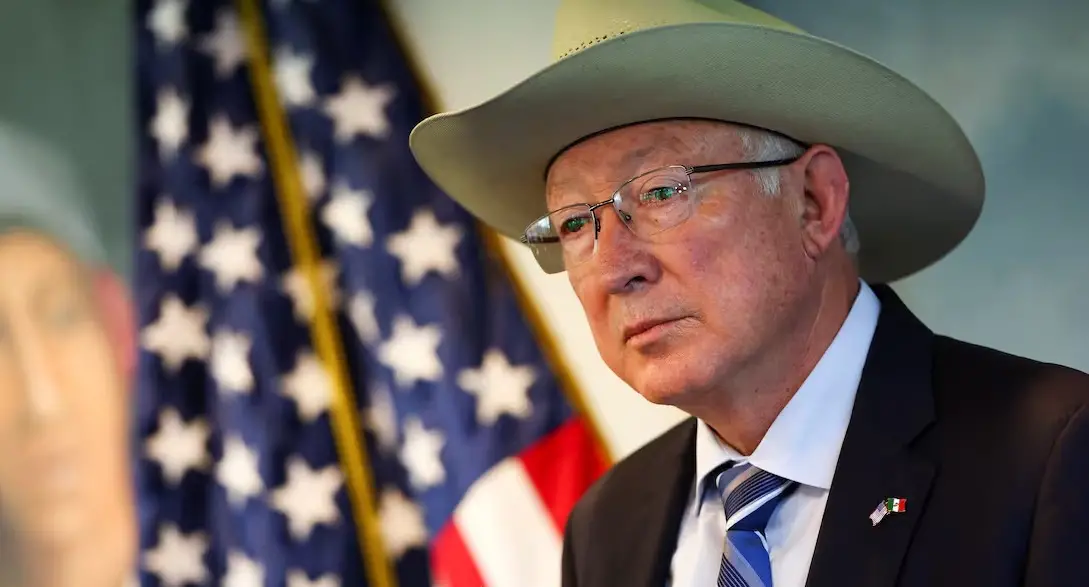
In the last 6 years, the critical point that has put binational cooperation at risk has been the issue of the fight against drug trafficking and Mayo Zambada, given the great uncertainty with which his arrest in the United States was carried out, shows that it has not flowed in the best way despite the fact that the US ambassador in Mexico, Ken Salazar, affirms that “our people are safer as a result” of that cooperation.
Under the argument of national sovereignty, the new federal government (2024-2033) confirmed that it will not change the binational policy that the previous administration maintained. This condition represents for both countries that they will continue without greater understanding on the issue of security. The media coverage given by the government from the “morning” press conference on the arrest of Genaro García Luna on December 9, 2019, until his sentencing on October 16, 2024, represents one of the two sides of the government’s coin in this area. Giving credence to the accusations made by Joaquín “El Chapo” Guzmán in his testimonies, in addition to those of other drug traffickers and former collaborators.
The other side of the coin is the treatment given to the arrest of El Mayo Zambada, a key figure of the Sinaloa cartel, 76 years old, on July 25, without the collaboration of the Mexican authorities who rather had fragmented information, as evidenced in the last “morning press conferences.” The official communication dismissed the statements of Joaquín Guzmán López, identified as the kidnapper and then double criminal for the then president, and of Mayo Zambada himself, pointing out that López Obrador benefited from bribes from the cartel he led.
Cooperation on migration issues refers to the participation of the Mexican government to contain migratory flows arriving through Mexico, an issue that has turned out to be the main motive for Vice President Kamala Harris and former President Donald Trump. According to the Pew Research Center, apprehensions at the border have decreased monthly from more than 260 thousand registered at the end of 2023, to 107,503 by August 2024, with intensified surveillance. The North American agenda promises to close illegal immigration with the Democrats and mass deportation with the Republicans.
The third crucial issue is the economy, since in 2006 the first review of the Mexico-United States-Canada Free Trade Agreement (T-MEC) will take place, a pact that will be immediately affected since in August 2023 the US requested that a meeting be held to resolve controversies with Mexico in the agricultural biotechnology sector (mainly regarding genetically modified corn), dairy products, automotive and solar panel production. Kamala voted against the treaty as a senator; Trump proposes that it be renegotiated for six more years (CNN, Karol Suárez, 10/18/2024). On the sidelines, there is nervousness in international markets given the judicial reform approved in an express manner. The coin is in the air, we will see what else accumulates in the first month of government with a Mexican president in which the violence in Sinaloa continues between Chapitos and Mayos who do not leave the visit of the deceased in peace.
Source: elsoldepuebla