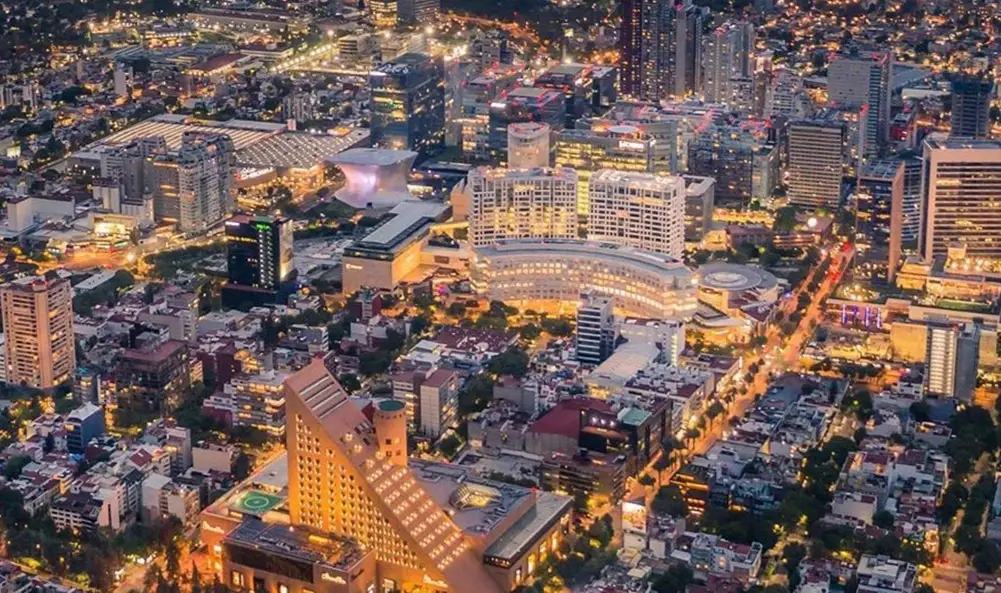

At the end of 2024, net absorption of office space throughout the city reached 239,468 square meters (m²), with a strong focus on the Insurgentes and Polanco submarkets, which together totaled almost 160,000 m².
This was highlighted by José Luis Rubí, director of Market Research at Cushman & Wakefield, who said that this pace of activity is at levels comparable to those prior to the pandemic, reflecting a recovery in demand for high-end properties.
“The evolution of the office market in Mexico City has been highly influenced by changes in the way companies of all kinds are organized. And these changes have been marked by technological progress,” said the executive.
According to the Mexico City office market report, he indicated that the office market has undergone a drastic change.
Following the pandemic, the market underwent a readjustment process in the construction of new buildings. Currently, the volume of space under development is 317,282 m², which represents less than a third of what was built seven years ago.
In terms of prices, the drop in previous years is stabilizing around $22.64 per square meter per month for Class A office rents, a level that shows a slight decrease of 2.8% compared to the end of 2023.
However, in premium areas such as downtown Mexico City, prices have exceeded $30 per square meter, reflecting the high demand for premium spaces.
José Luis Rubí highlighted that the evolution of the office market is linked to changes in labor dynamics and technological advancement.
Demand for offices in Mexico City recovers with absorption of over 120 thousand m²
The widespread adoption of hybrid work models has generated a 30% decrease in the absorption of space per employee compared to a decade ago.
This phenomenon has led tenants to look for buildings with high energy efficiency, well-designed spaces and strategic locations that offer comfort and accessibility to their employees.
As a consequence, the last six years have seen a strong migration of companies to class A buildings in more central areas.
While ten years ago, 44% of transactions were carried out in central area submarkets and 54% in class A buildings, in 2023 this figure has increased to 60% in central areas and 68% in class A buildings.
Source: realstatemarket