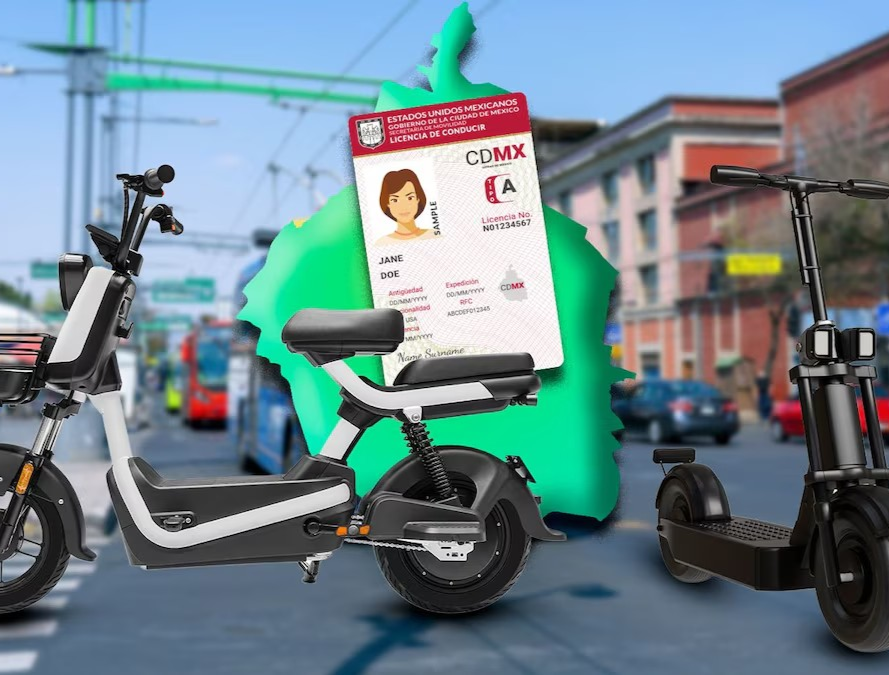

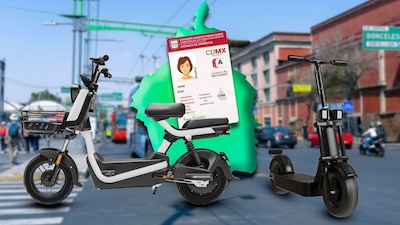
Watch out for the fine! Mexico City will begin regulating the use of electric bicycles and scooters starting July 1. Because of this, riders will be required to obtain a driver’s license and license plates, as well as wear a helmet to legally circulate in the capital.
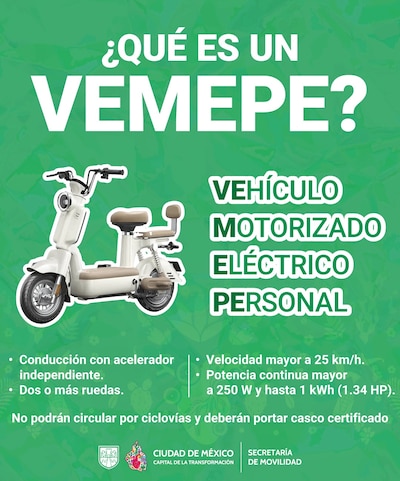
The new regulations are part of reforms to Mexico City’s Mobility Law approved by the local Congress, which created the category of Personal Electric Motorized Vehicles (VEMEPE).
Although the city government established a 360-day period to adjust regulations and define procedures, mandatory compliance will begin in July, and penalties will start being enforced in September 2026.
Which electric vehicles must be registered in Mexico City?
According to Mobility Secretary Héctor Ulises García Nieto, electric vehicles that must either be registered or carry a circulation hologram are divided into two categories:
- Personal Electric Motorized Vehicles (VEMEPE)
- Personal Electric Vehicles (VEP)
VEMEPE vehicles include electric scooters, electric mopeds, and electric bicycles that exceed speeds of 25 km/h and have a motor with a nominal continuous power of 250 watts up to 1.34 horsepower.
These vehicles must have:
- Driver’s license
- Vehicle registration card
- License plates
- Motorcycle helmet
Meanwhile, Personal Electric Vehicles (VEP) include electric scooters, skateboards, and unicycles.
These vehicles are exempt from registration only if they do not exceed 25 km/h. However, they must carry a circulation hologram to use restricted lanes and bike paths.
Mexico City Mayor Clara Brugada Molina explained that users who already own these vehicles will be able to register them for licensing from July 1 to November 20 through the city’s digital platforms.
In addition, all new electric vehicles sold in Mexico City after that date must already be registered or complete the mandatory registration process at the time of purchase.
How much will license plates cost and what are the fines?
Mobility Secretary Héctor Ulises García Nieto announced that license plates will cost 709 pesos, the same price as those for conventional motorcycles. However, the Mexico City government has not yet specified which website or platform will handle the registration process.
The Secretariat of Citizen Security warned that fines will begin on September 1, while July and August will serve as an adaptation and awareness period.
The fines will increase depending on the number of violations:
First and second offenses:
- 10 UMAs (approximately 1,175 pesos)
Third and fourth offenses:
- 15 UMAs (approximately 1,762 pesos)
Repeat offenders with more than five violations:
- 20 UMAs (approximately 2,350 pesos)
What driver’s license do you need for an electric bike or scooter?
Drivers without a license must apply for one starting in July. Those who currently hold a Type A license may upgrade it upon expiration to:
- A1 license: motorcycles only
- A2 license: motorcycles and cars
People who already have a permanent Mexico City driver’s license will not need a new motorcycle license because their current document will remain valid for motorcycles and automobiles.
To begin the process, users must first create a Llave CDMX account to complete digital procedures.
Permanent Driver’s License
Cost: 1,500 pesos
Requirements:
- Pass the SEMOVI theoretical exam if applying for the first time
- Valid official ID: INE, passport, professional ID, or military card
- Proof of address not older than 3 months
- CURP (printed or digital)
- Paid payment form
- Active Llave CDMX account
Type A1 License
Cost: 572 pesos
Validity: 3 years
Requirements:
- Pass the SEMOVI theoretical exam
- Valid official ID
- Proof of address
- Payment receipt
- Generate payment form
- Schedule an appointment at a SEMOVI office
- Present original and copied documents
Type A2 License
Cost: 1,049 pesos
Validity: 3 years
Requirements:
- Pass the SEMOVI theoretical exam
- Valid official ID
- Proof of address
- Payment receipt
- Generate payment form
- Schedule an appointment at a SEMOVI office
- Present original and copied documents
New rules for scooters and electric bikes
The new regulations include the following restrictions:
- Riding on sidewalks is prohibited
- Riding in public transportation lanes is prohibited
- Riding in central lanes of controlled-access roads is prohibited
- Helmet use is mandatory
- Riding under the influence of alcohol is prohibited
- Riding on roads with speed limits above 50 km/h is prohibited
According to the Mexico City government, the purpose of these reforms is to improve road safety and protect the most vulnerable road users, such as pedestrians and cyclists, following the mobility hierarchy principles.
Source: elfinanciero