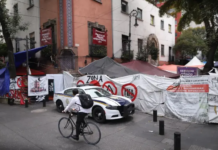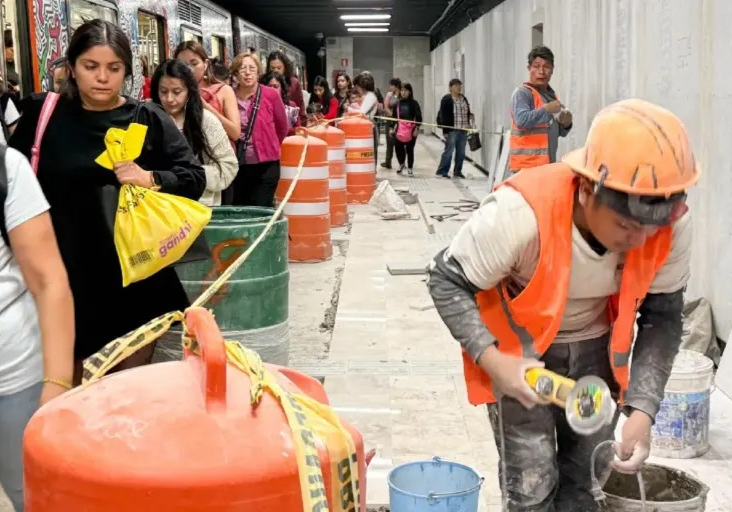

The Collective Transport System (STC) Metro announced that it will temporarily suspend service on a section of Line 2—running from Cuatro Caminos to Taxqueña—during the upcoming weekend to expedite station rehabilitation work along the route’s surface-level section.
The service modification will begin at 8:00 p.m. on Saturday, May 23, at which time trains will operate exclusively between the Pino Suárez and Cuatro Caminos stations. Consequently, the segment between San Antonio Abad and Taxqueña will remain out of service.
Read: Metro receives an extra 1.5 billion pesos ahead of the World Cup; 500 million go toward branding while maintenance complaints persist.
Meanwhile, for Sunday, May 24, the Metro specified that service will run solely from Pino Suárez to Cuatro Caminos; therefore, there will be no train runs between Taxqueña and Pino Suárez throughout the entire day.
In light of this partial suspension, the circuit between Taxqueña and Pino Suárez will be covered by buses from the Passenger Transport Network (RTP), which will make stops at each of the affected stations. This service will be free of charge for passengers.
“The Metro requests the understanding of the traveling public regarding the disruptions caused by the rehabilitation works, and reiterates its commitment to improving the network’s facilities through projects that will endure long after the soccer World Cup hosted in Mexico City has concluded,” the agency explained.
In a statement issued later, the Metro outlined alternative mobility options for travel between the southern and central parts of the city, and vice versa.
“Passengers have the option of utilizing Trolleybus Line 1, which begins its route at Central del Sur and runs along Eje Central Lázaro Cárdenas,” the agency suggested.
It also noted that Metrobús Line 5—which runs from Río de los Remedios to Preparatoria 1 in Xochimilco—serves as another viable option for south-to-center travel. “This Line connects with stations on Line 8, specifically Escuadrón 201, Aculco, Apatlaco, and Coyuya. In the Tasqueña area, it is possible to board the Metro at Ermita (Line 12), transfer to Line 3 at Zapata, and continue traveling toward the city center,” he specified.
In addition to Ermita, the stations Mexicaltzingo and Atlalilco are also located in the southern sector of the network; the latter offers a connection to Line 8, which also runs through the city center.
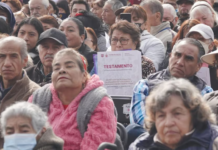
In response to complaints from hundreds of commuters regarding construction work at various Metro stations, the Director of the Collective Transport System, Adrián Rubalcava, asked the public to exercise a little patience, assuring them that “the result will be worth it.”
In a message posted on his social media channels, the official stated that he has taken note of all the complaints and inconveniences caused by the construction work, acknowledging the impact these projects are having.
Read more: CDMX Metro construction work is 80% complete; will be finished before the World Cup, Brugada assures
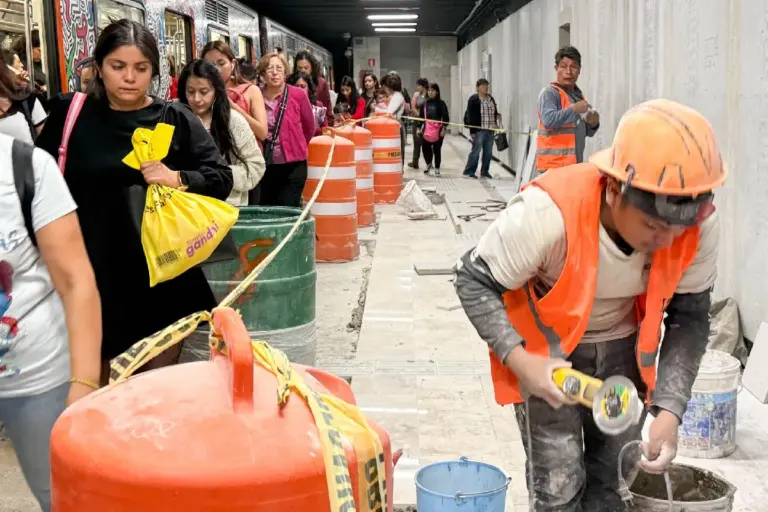
“Believe me, I am concerned about how you are feeling. I understand that you are frustrated by the dust, the heat, and the noise while walking along the platforms; however, this is an undertaking I have committed to—and for which I accept full responsibility. But please believe me: we are truly working to deliver a better Metro system, because Mexico deserves it, and because you deserve it. Please bear with me for just a little while longer; the final result is going to be incredible,” he wrote.
Users complain that the renovation was not carried out gradually
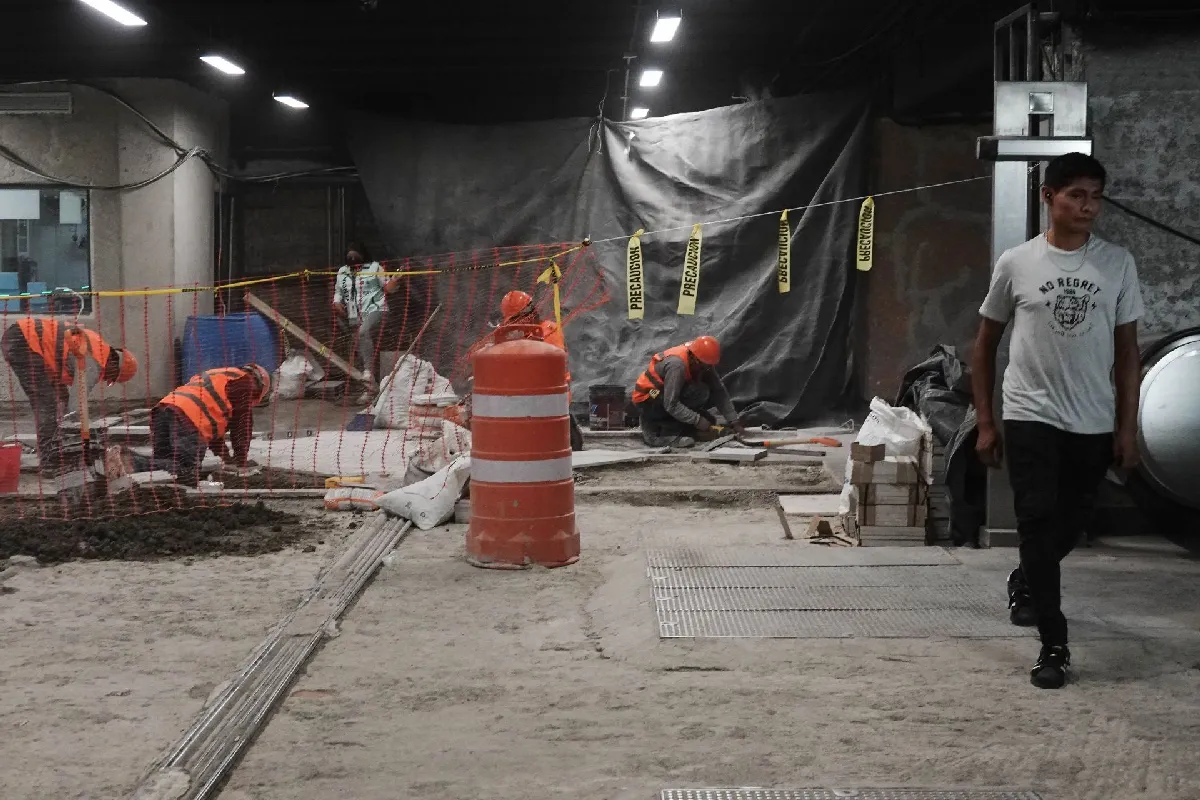
Since February 9—when renovation work on Line 2 first began—commuters have spent three months navigating around construction materials, station closures, and schedule changes that have significantly disrupted their daily commutes.
You might be interested in: “The Metro doesn’t just need maintenance; it needs a total overhaul,” says Brugada, ruling out a fare hike
Users have voiced complaints that the renovation project was rushed through specifically for the upcoming sporting event, rather than being implemented in a gradual, phased manner. On this line—as on the others where construction is underway—there are reduced platform areas, stairs under maintenance, and suspended elevators and escalators, which disproportionately impact people with physical disabilities or reduced mobility.
Source: grupoanimal