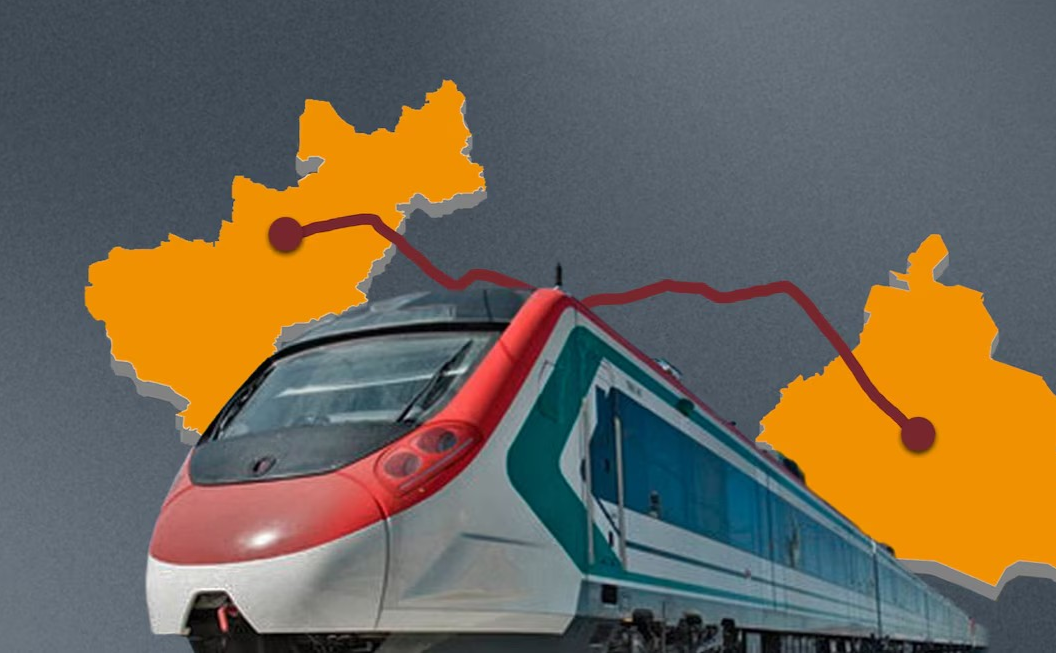

The ambitious connectivity project of the new administration includes the opening of various passenger train lines that will connect, mainly, Mexico City (CDMX) with neighboring cities, as is the case of the train that will connect Querétaro with the capital of the country.
President Claudia Sheinbaum Pardo inherited the purpose of reviving train travel; to date, they have on the horizon the completion of the Lechería-AIFA train, and the development of the AIFA-Pachuca Querétaro-Irapuato, Santillo Nuevo León, and Mexico-Querétaro routes, the latter in particular has attracted the attention of citizens, due to the fact that the trip could be around 90 to 120 minutes, that is, between one and a half hours or two hours of travel from end to end.
The same trip by highway or road takes between three and four hours depending on the vehicle load on the main access roads.
In the most recent report, the federal government shared that the construction of the Mexico-Querétaro train route will begin in April and could take up to two years to complete its construction, that is, the first runs would be in 2027; a project that will be carried out by military personnel from the “Felipe Ángeles” engineering group of the Ministry of National Defense (Defense).
Mexico-Querétaro train route
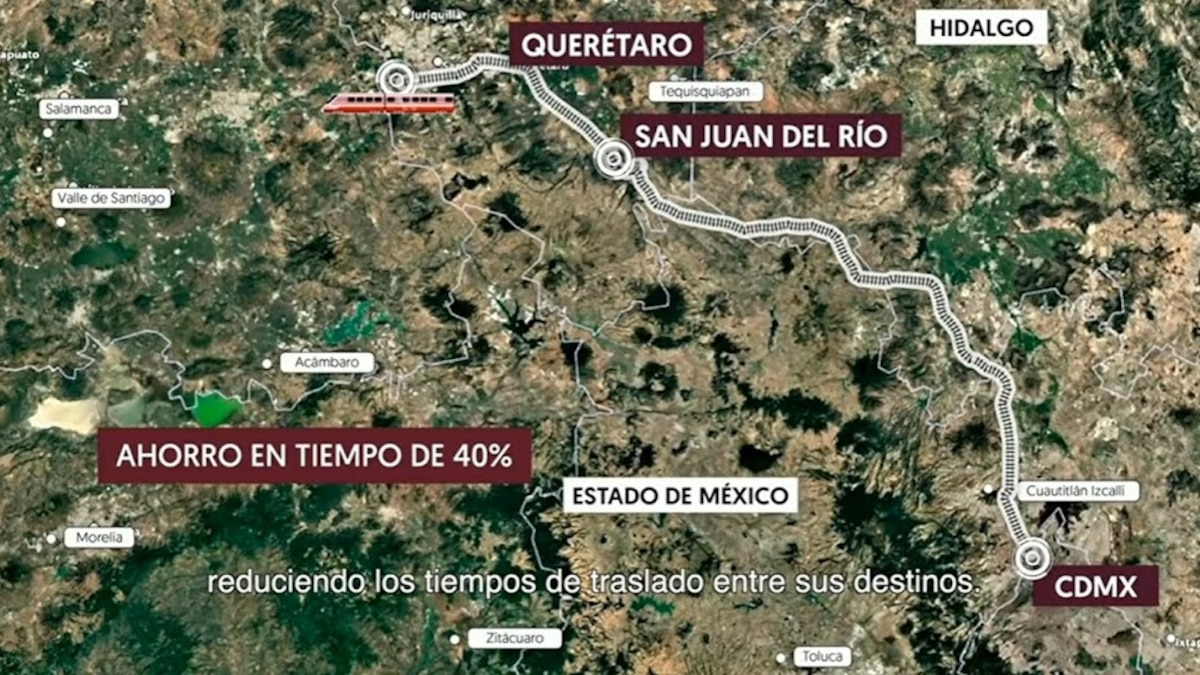
The train that will connect both cities, according to projections, will have three stations, with the Buenavista (CDMX); Tula (Hidalgo); San Juan del Río (Querétaro) route, which will serve the populations of Polotitlán, Nopala and Escobedo.
Currently, military engineers are carrying out topographic studies, cartography; geology campaigns; geophysics; geotechnical, geohydrological, hydrological; hydraulic; drainage reports and studies; the geometric layout, the geometric project of the track and the platform; the architecture and harmonization of the railway infrastructure; the conceptual design of the electrical, hydraulic and sanitary networks; signaling; as well as the traction and power systems that correspond to the catenary that feeds the electric train; among other technical complements.
According to federal authorities, the Defense will assume 60 percent of the resources necessary for the basic engineering, which were transferred on January 10. Meanwhile, the remaining 40 percent of the investment will be made with specialized companies.
Likewise, informative meetings have been held in the states and municipalities involved; dependencies of the Government of Mexico, to make known the progress of the projects, the characteristics and general considerations of infrastructure.
Source: infobae