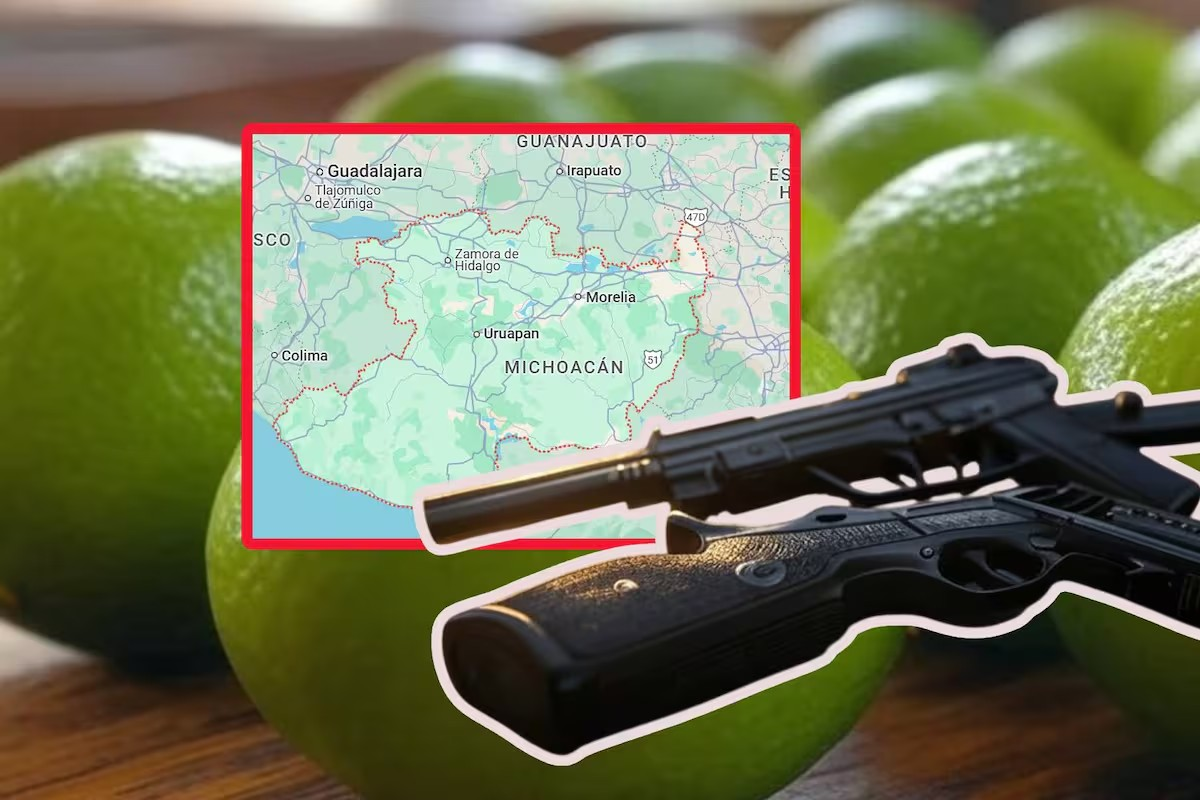

Lemon packing plants in the Apatzingán Valley, Michoacán, remain closed indefinitely due to persistent extortion by organized crime, confirmed producers and the Association of Citrus Growers of the Apatzingán Valley (ACVA).
According to Milenio, despite security operations and the arrest of alleged perpetrators, the situation in the Tierra Caliente region has worsened, seriously affecting the citrus industry.
Organized crime demands two pesos for each kilo of lemon sold, a significant increase compared to the 50 cents paid two years ago.
Organized crime seeks to control the lemon industry in Michoacán; administrative offices closed due to threats
The ACVA reported that, after the intervention of the Public Security Secretariat, they are in a restructuring process. Meanwhile, the Tianguis Limonero remains guarded by federal forces, and producers can use the facilities, although with caution.
Impact on the industry and producers
Juan Carlos Anaya Castellanos, director of Grupo Consultor de Mercados Agrícolas, explained in an interview on MVS Noticias that lemon producers face a critical situation.
“It is a drug tax that impacts producers, packers and, ultimately, the consumer,” he said.
Anaya highlighted that, in recent years, extortion has gone from 50 cents to two pesos per kilo of lemon, which represents millions of dollars for producers.
Violence and extortion have led to the abandonment of land and the takeover of entire areas by organized crime.
“Many producers have left their fields because they do not want to deal with crime. Others have been absorbed by these illicit networks, since they have no other option to survive,” Anaya lamented.
The ACVA asked for “sensitivity” in the face of the difficult situation faced by the lemon industry and avoided pointing fingers at producers for the suspension of activities.
Organized crime seeks to control the lemon industry in Michoacán; administrative offices closed due to threats
“It is not fair to point out the sector as responsible for not issuing complaints, when the main generators of violence in the region have arrest warrants,” the association said in a statement.
Anaya compared the situation in Michoacán with what is happening in Tamaulipas, where sorghum and corn producers also live under the shadow of organized crime.
“In Michoacán, Guerrero and Chiapas, producers have nowhere to go. The lemon leader was murdered months ago, and that has generated a climate of fear,” he explained.
This phenomenon not only affects lemon growers, but also avocado and other crop producers.
You may be interested: Family from Jalisco disappears while traveling to Michoacán; they were going to pick up the body of a relative
“It is a real shame to see how the Mexican countryside suffers from insecurity. Official reports say that things are improving, but the reality in the countryside is very different,” Anaya added.
Consequences for the consumer
Extortion and violence in the countryside have a direct impact on the final prices of products.
“It is a drug tax that impacts producers, packers and, ultimately, the consumer,” said Anaya. This means that the additional costs generated by extortion and insecurity are passed on to the prices paid by consumers.

Source: elimparcial