
The Trump administration has ordered two US intelligence agencies to train their satellite surveillance capabilities in the border region with Mexico as part of a broad crackdown on illegal immigration and drug cartels.
The National Geospatial-Intelligence Agency (NGA) and the National Reconnaissance Office (NRO), both part of the Department of Defense, monitor spy satellites and analyze imagery for the Pentagon and other intelligence organizations.
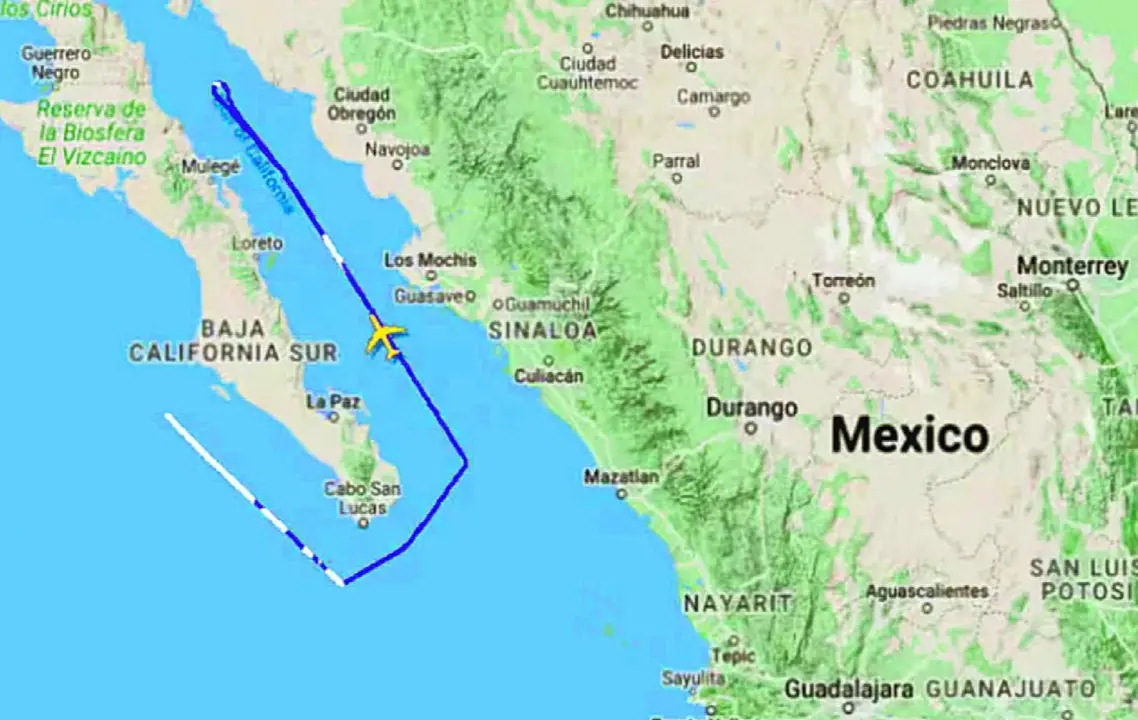
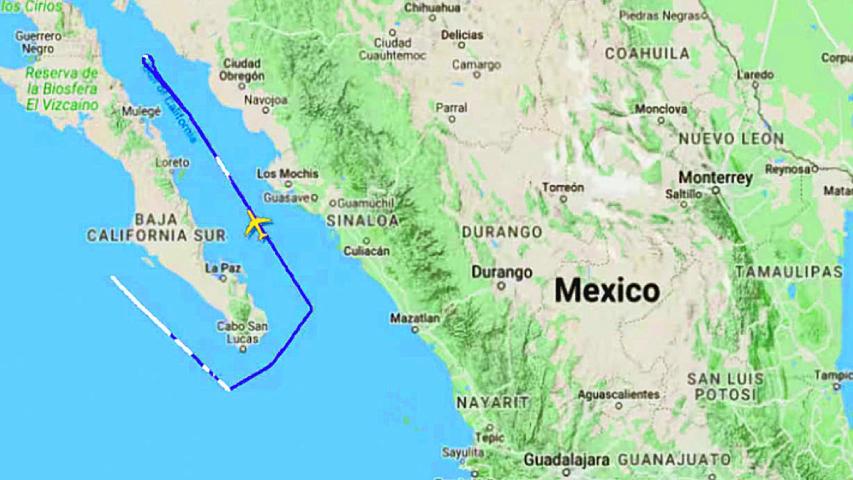
Defense Secretary Ricardo Trevilla clarified that US military flights along the border with Mexico have occurred within international airspace and in compliance with current regulations.
Their participation, along with the troop deployment, demonstrates the growing militarization of the southern border, where President Donald Trump has declared a national emergency.
Reuters could not determine whether the effort, which has not been previously reported, would collect imagery of the US mainland.
When asked by Reuters about its role in border enforcement, the NGA replied that it had created a working group to coordinate its “support for the U.S. border mission,” while the NRO said it was partnering with the intelligence community and the Pentagon “to secure America’s borders.”
Its involvement comes in response to Trump’s sweeping executive actions aimed at halting unauthorized border crossings and trafficking, as well as deporting those in the United States illegally, estimated at up to 14 million people.
The White House and the Department of Defense did not respond to a request for comment. Trump made immigration enforcement a central part of his campaign that catapulted him to the presidency on January 20.
While the U.S. government has deployed artificial intelligence (AI) and drone surveillance at the border for years, the latest initiative seeks to expand the use of military capabilities typically built for conflicts abroad.
The government could use AI to identify objects or people of interest by scrutinizing satellite imagery and other data sources, much like the Department of Defense does on the battlefield, two sources close to the initiative said.
Although Reuters could not determine the exact scope of this effort, the new focus on the border could force the government to grapple with safeguards against intelligence gathering on Americans, three experts said. While laws generally restrict US spy agencies from monitoring citizens and other legal residents, they allow immigration authorities to conduct physical searches “within a reasonable distance of any external border of the United States.” Regulations estimate this distance at 100 nautical miles (about 185 kilometers) from the border, an area that includes cities such as San Diego and El Paso.
“If they abide by the law, these agencies should only collect on the other side of the border, on foreign soil,” said Paul Rosenzweig, a lawyer specializing in national security and privacy law. “But how they implement that, and whether they do it, are legitimate oversight questions.”
A spokesperson for the Office of the Director of National Intelligence, the government’s primary unit for integrating intelligence efforts, told Reuters that all intelligence activities are “lawful and authorized” and are conducted “in a manner that protects the civil liberties and privacy of American individuals.”
The NGA and NRO declined to detail what they are collecting and whether that surveillance could include U.S. territory, citing the need to protect operational details. The NGA works on a wide range of tasks, including mapping Earth features and briefing commanders on the exact location of U.S. forces and their adversaries.
Source: eleconomista