
Researchers warn of impending disaster as salinization affects water supply and ecosystems on the peninsula.
The waters of the Yucatán Peninsula, a tropical paradise famous for its crystal-clear cenotes and turquoise lagoons, are facing an unprecedented threat. Rising sea levels and changes in aquifer recharge are causing the groundwater to become increasingly saline, posing a severe risk to freshwater supplies and ecosystems.
According to a study by researchers at the National Autonomous University of Mexico (UNAM), the peninsula’s only source of water supply is under threat. By 2100, coastal residents will have to move approximately 18 kilometers from the coast to find fresh water, leaving many communities without access to clean drinking water.
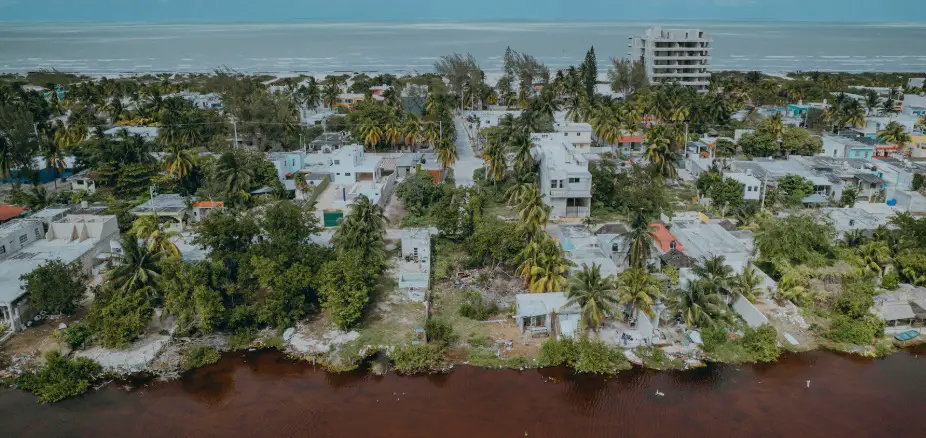
The problem is already affecting several areas along the Yucatán coast, where saltwater intrusion has compromised wells and aquifers. In Sisal, a coastal town in the state of Yucatán, residents have reported that their wells are no longer providing fresh water. Irineo Novelo, a communal land commissioner from Sisal, remembers when his father used to dig holes in the sand to access clear water.
“We relied on those wells for our daily needs,” Novelo said. “But now, even if we dig deeper, the water is salty and undrinkable.”
Biologist Erick Soto, who has been monitoring salinity levels in nine wells along the peninsula, confirmed that saltwater intrusion is a growing concern. “In some areas, seawater is already present at depths of just 16 meters,” he said.
The researchers warn that unless urgent action is taken to address the issue, the consequences will be dire. “Saline intrusion will prevent species like flamingos from reproducing,” Canul-Macario explained. “Phytoplankton, a crucial food source for these birds, will dehydrate due to increased salinity.”
The situation is further complicated by the rapid growth of tourism and real estate development in the region, which has led to displacement of local populations and increased demand on freshwater resources.
To mitigate this crisis, researchers propose several solutions, including the installation of desalination plants, impermeable walls along the coast, rainwater harvesting, and artificial freshwater recharge. However, these options come with significant costs, ranging from $2 to $3 per cubic meter of desalinated water.
“We need to act quickly,” Canul-Macario emphasized. “The scenarios we project are not immediate, but if we wait too long, the consequences will be severe.”
As the residents of Sisal and other coastal communities anxiously await solutions to this pressing issue, they remain worried about their future. Irineo Novelo fears that his community may eventually depend on desalination plants for its water supply.
“We hope science finds more advanced ways to make seawater suitable for human consumption,” he said, echoing the concerns of many others in the region.
Source: Mongabay