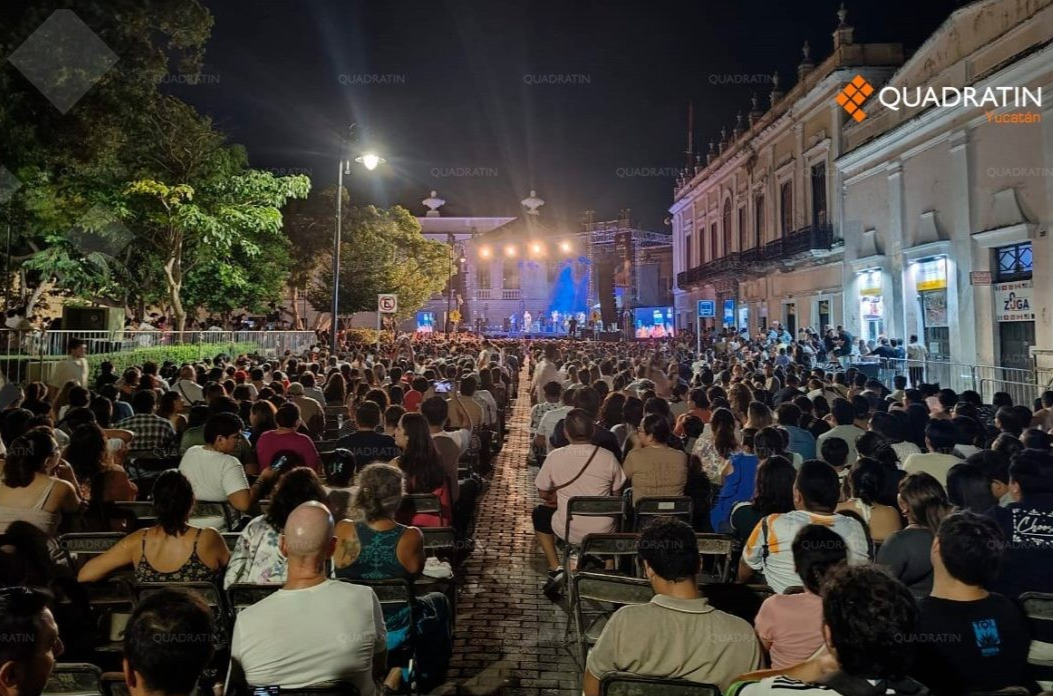

The mayor of Mérida, Cecilia Patrón Laviada, inaugurated the twentieth edition of Noche Blanca (White Night), highlighting the event as a reflection of the cultural, artistic, and gastronomic identity of the Yucatecan capital, as well as a space for community gathering in the Historic Center.
During her address, the mayor noted that this celebration “speaks to who we are as residents of Mérida,” bringing together artistic expressions, traditions, and culinary offerings in different parts of the city.
“During Noche Blanca, we all come together in this space, in our Historic Center, of which we are so deeply proud,” she expressed.
The mayor acknowledged the participation of artists, cultural promoters, business owners, and authorities who make the event possible, and also thanked the Mérida City Council’s Directorate of Identity and Culture, which coordinated the activities months before the opening.
She also highlighted the collaboration of the local gastronomic sector, represented by the National Chamber of the Restaurant and Seasoned Food Industry (Canirac), in a context where Yucatecan cuisine has gained international recognition following its inclusion in the Michelin Guide.
Cecilia Patrón emphasized that culture and art are integral to daily life in Mérida through ongoing programs such as Semana Meridiana (Merida Week), and affirmed that during Noche Blanca (White Night), disciplines such as dance, music, theater, and painting converge in a five-kilometer route through the Historic Center.
“The most important aspect of culture and art is the community unity that makes Mérida unique and distinctive,” she stated.
The mayor also emphasized that these types of activities strengthen social cohesion and the use of public space, considering that “social peace is achieved through this, through shared public spaces, through caring for our shared home, Mérida, through culture and art.”
The 20th edition of Noche Blanca featured cultural and artistic activities both on the eve of the event and on the main day, with venues spread across galleries, parks, theaters, cultural centers, and public spaces in the city’s historic center.
The evening concluded with a performance by the Latin band Bacilos in the city’s Plaza Grande.

Source: yucatan.quadratin