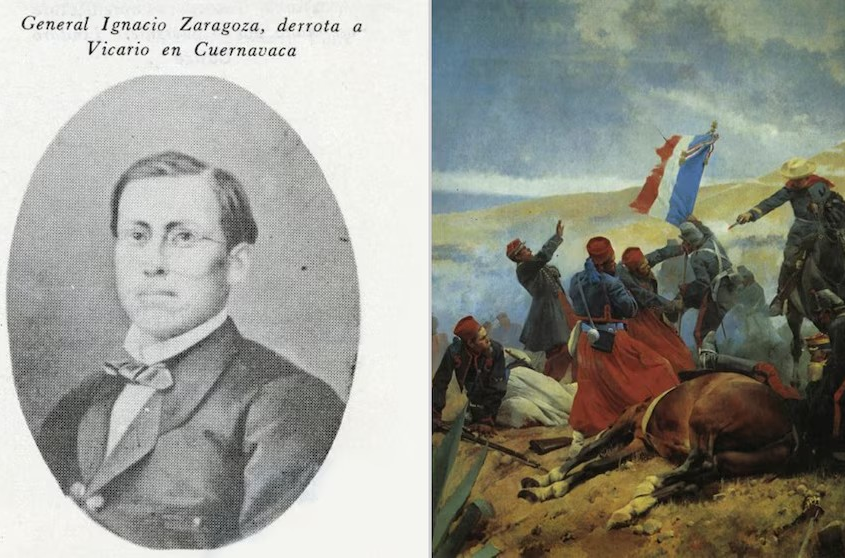

On May 5, 1862, Ignacio Zaragoza achieved a feat that will go down in history. That day, in the city of Puebla, the general led a Mexican army weak in soldiers, ammunition, and training against French troops superior in virtually every aspect of the war.
The outcome of the battle surprised everyone: the Mexican troops defeated the army inherited from Napoleon’s glories at Austerlitz and Marengo (curiously, at that time, France was led by a member of the House of Bonaparte). Zaragoza told President Benito Juárez in a telegram: “The weapons of the Supreme Government have been covered in glory.”
The triumph was celebrated in the capital (the first city to learn of it through Zaragoza’s telegrams) and in various parts of Mexico, as it emboldened a country and an army morally depressed by seeing, once again, foreign troops advancing on national territory, in a context equal to, or even more disastrous than, other interventions that resulted in Mexican defeats.
However, one of the cities that did not celebrate was the one that witnessed the victory, the capital of Puebla. General Zaragoza’s telegrams after the battle attest to this.
Puebla was a conservative city, detractors of Benito Juárez’s government, secularism, and the republican system. For this reason, the inhabitants welcomed the French intervention and, years later, showed great support for the invading emperors Maximilian and Carlota.
In a telegram from General Zaragoza on May 7, addressed to the Minister of War, Miguel Blanco Múzquiz, he states that he will be careful in his actions to avoid “false news and alarms that circulate in traitorous and selfish Puebla. This city is beyond repair.”
On May 9, Zaragoza sent another telegram to the Minister of War, this time addressing the enemy’s positions and the actions of his army. He then addressed the issue of donations and said that “as far as money goes, nothing can be done here because these people are generally evil and, above all, very indolent and selfish.”
Later, in that same telegram, Zaragoza said: “How good it would be to burn Puebla! It is in mourning for the events of the 5th. This is sad to say. But it is a regrettable reality.”
Who was Ignacio Zaragoza?
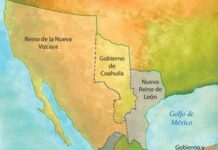
Ignacio Zaragoza was born in 1829 in Bahía del Espíritu Santo, in what was then the state of Texas. He joined the Liberal Army to fight against the dictatorship of Antonio López de Santa Anna in the Ayutla Revolution.
During the Reform War, Ignacio Zaragoza distinguished himself as a commander of the Liberal forces, distinguished himself in several battles in the north of the country, and rose to the rank of general. His loyalty to President Benito Juárez and his project was constant.
Zaragoza distinguished himself in the Battle of Puebla on May 5, 1862, during the Second French Intervention. However, the general died shortly after his greatest triumph, on September 8 of that year, a victim of typhoid fever.
Source: infobae