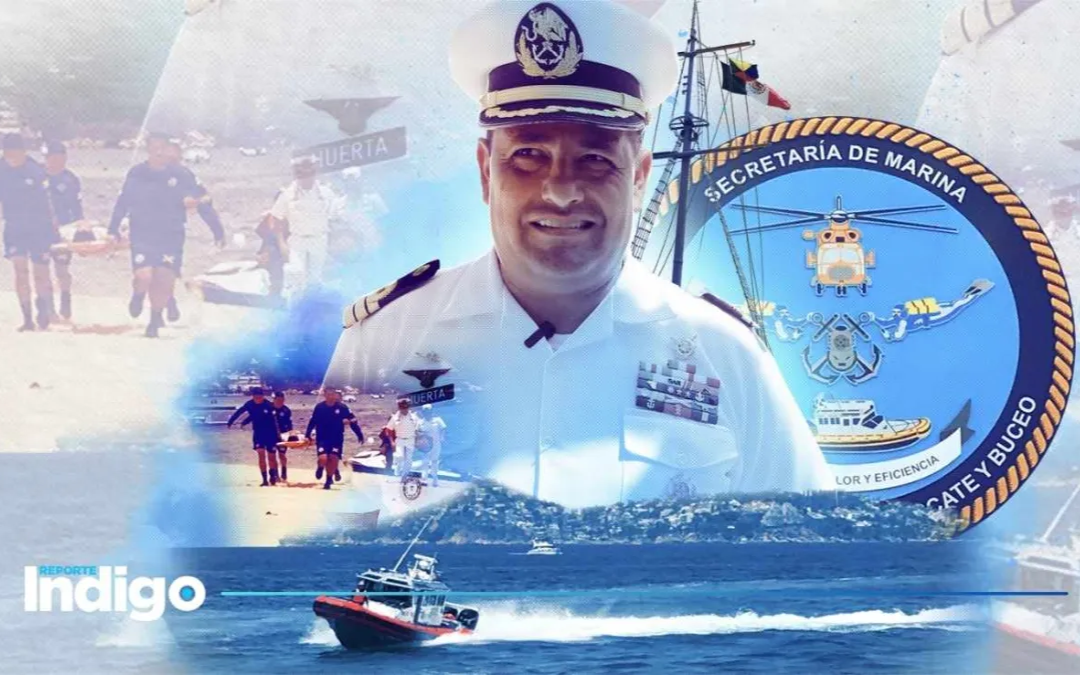

The Mexican Navy’s Search, Rescue, and Diving School has grown by 900 percent since its creation in 2007, according to Captain Nicolás Lorenzo Huerta Pérez, director of the school.
“We have had an average of 250 to 300 personnel graduate from this school each year. We have graduated 1,400 by 2024, and this year we project the graduation of 1,800 personnel for the Mexican Navy’s Search and Rescue service.”
Captain Huerta Pérez stated that the school he leads has a tradition of honor and commitment to the institution and to the public since the creation of the first underwater work section, derived from the increase in the physical and aquatic technical capabilities of the personnel.
“So they can respond more quickly and with much better preparation to calls for help and emergencies from the public,” he declared.
Since 2007, a total of 6,667 personnel have graduated from this school, 960 of whom are women and 5,707 men, who are highly trained to safeguard human life at sea.
Commitment is necessary
Admission to this important school of the Secretariat of the Navy, located at the facilities of the Eighth Naval Region in the port of Acapulco, Guerrero, is exclusively for personnel already serving in the Mexican Navy.
“The intention is to have 1,800 trained personnel and deliver them, which is what the Mexican Navy’s search and rescue service demands. At this school, we have the spirit, as our motto states: discipline, valor, and efficiency,” said Nicolás Lorenzo Huerta Pérez, frigate captain and director of the school.
He also stated that each incoming student requires “physical and mental strength” for the operations carried out through the 34 Naval Search, Rescue, and Maritime Surveillance Stations, better known as ENSAR, which are distributed along the country’s three coastlines—in the Pacific Ocean, the Gulf of Mexico, and the Mexican Caribbean (Atlantic Ocean), with 70 Defender-class vessels and 10 MLB-class vessels.
It is worth noting that the school’s own statistics indicate that of every 10 personnel who enter the Basic Diving and Underwater Operations Course, only five graduate, due to their physical capabilities.
The nearly 7,000 personnel operating at the ENSAREs have had very encouraging results, having rescued more than 8,000 national and international sailors and tourists on Mexican beaches and coasts.
First Mate Naydelin Wendolin Carrillo, an expert in maritime search and rescue and also part of the training team at this school, stated that rescuing a person at sea is a huge challenge “because you not only have to inspire them with encouragement and confidence, but you also have to support their weight while you save their life.”
This Mexican Navy School is divided into two sections: the Diving Section and the Search and Rescue Section. The Diving Section offers four courses: Diving and Underwater Work; Combat Diving (for Marines); Basic Diving and Hyperbaric and Underwater Medicine, as well as Hyperbaric Chamber Operation.
“We undergo specialized training, since in addition to being calm and focused enough to perform your work, you must ensure the safety of the person at risk, and you become their lifeline,” explained Naydelin Wendolin Carrillo, First Mate.
The Search and Rescue section offers: Surface Rescue Swimmer; Helicopter Rescue Swimmer; Beach Lifeguard; Intensive Basic Swimming; Operation of Defender-Class vessels (fast-response, high-speed vessels that reach speeds of up to 90 kilometers per hour); Operation of rescue jet skis; and Operation of MLB vessels (for immediate response to hurricanes and storms).
Safeguarding Human Life at Sea
The head of the Search, Rescue, and Diving section and instructor of this school’s courses, Lieutenant Noel Adrián Gómez García, General Corps, Underwater Works, explained that one of the main functions of the Navy is the safeguarding of human life at sea.
“In holiday season, lifeguard operations deploy personnel to all the beaches in the country’s various ports. These personnel undergo rigorous training in a month-and-a-half-long course prior to the start of Operation Lifeguard,” he explained.
The Mexican Navy strengthens its maritime rescue operations through the Search, Rescue, and Diving School located in Acapulco, Guerrero.
This was explained to Reporte Indigo by its director.
During holiday seasons, such as the recently concluded Easter holiday, domestic and foreign tourists engage in some bad practices, such as: “They don’t know how to swim very well; sometimes they enter the sea after having consumed alcoholic beverages and food, which causes problems for them returning to land. This is where the beach lifeguard comes into play to safeguard the lives of these people.”
They work year-round
Lieutenant Gómez García, a native of the port of Acapulco, Guerrero, with 27 years of service in the Mexican Navy, noted that the Naval Search, Rescue, and Maritime Surveillance Stations have a command center that operates 24 hours a day, 365 days a year, and receives phone calls and radio calls from vessels on the international emergency channel on VHF channel 16-Marine Band.
“As soon as we receive an emergency call, we gather all the necessary data, information about the type of emergency, and the support required. The personnel is organized, and in less than 10 minutes they have to immediately deploy to provide urgent support to the vessel requiring assistance.”
Finally, Lieutenant Noel Adrián Gómez, who, incidentally, holds the record for swimming across Santa Lucía Bay (Acapulco Bay) freestyle, explained to Reporte Índigo what the greatest satisfaction of a Mexican Navy sea rescuer is: “bringing people to safety, and the main satisfaction is with myself, being able to help my fellow countrymen and foreign tourists.”

Source: reporteindigo