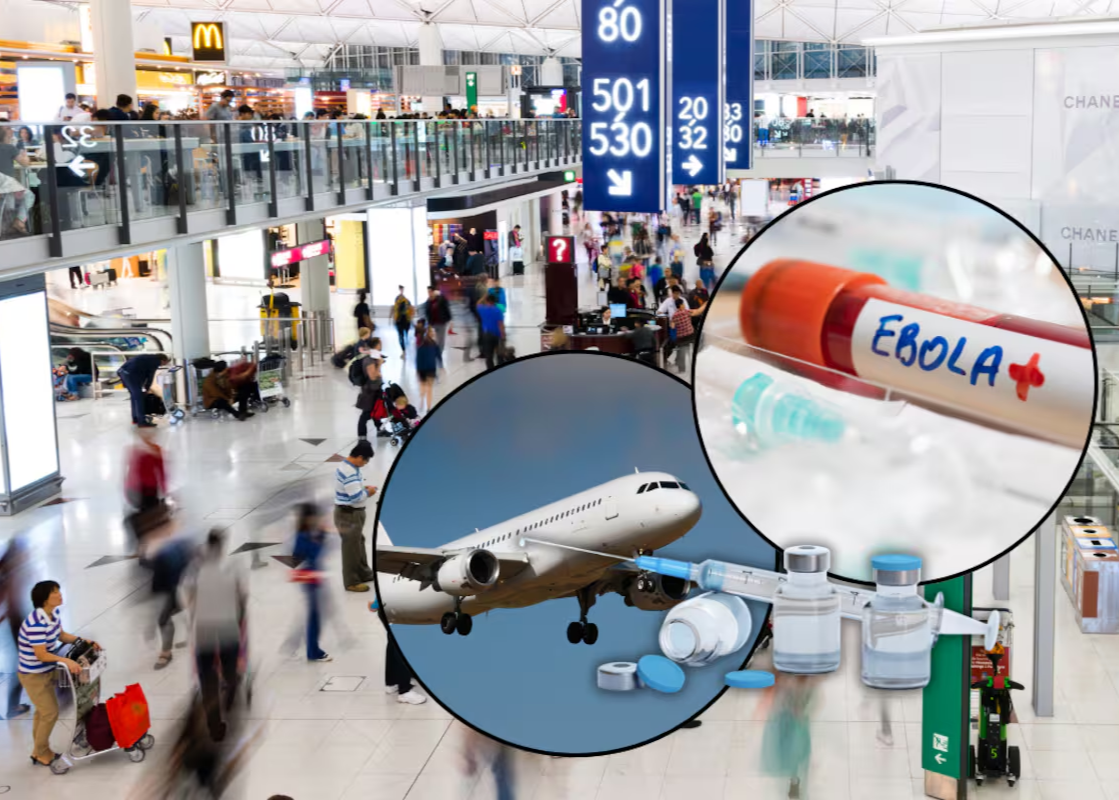

Mexico has begun preparing preventive health protocols in response to the Ebola outbreak reported in some regions of Africa and the expected arrival of massive numbers of visitors for the 2026 FIFA World Cup. Although there are currently no confirmed cases in the country, the Ministry of Health announced that epidemiological surveillance measures are already being implemented at international airports and entry points into Mexico.
The information was announced on May 26 during the Mexican government’s morning press conference by Health Secretary David Kershenobich, who explained that health authorities are maintaining constant monitoring of the international evolution of the virus and working on preventive measures for any possible scenario.
The federal agency stated that its official information comes from international health organizations and from epidemiological monitoring carried out by the Mexican government.
“We are committed to providing the safest possible environment. We are implementing epidemiological surveillance protocols (…) we are prepared for any eventuality,” the official stated during his appearance at the National Palace.
WHY IS EBOLA A CONCERN AHEAD OF THE 2026 WORLD CUP?
The issue gained attention because Mexico will be one of the host countries of the 2026 FIFA World Cup, an event expected to receive visitors from many nations. Among them is the national team of Congo, one of the African countries currently facing health alerts related to the virus.
In addition to Congo, Mexican authorities said they are also closely monitoring the epidemiological situation in Uganda and South Sudan, where recent Ebola cases have also been detected.
Kershenobich explained that international monitoring is constant because the outbreak’s behavior can change rapidly.
“It is important to remain attentive to how the situation evolves (…) conditions could worsen before improving,” he said.
WHAT MEASURES WILL BE IMPLEMENTED AT MEXICAN AIRPORTS?
The Ministry of Health announced that international airports will have health screening filters and surveillance measures aimed at identifying possible risks among international travelers.
The announced actions include:
- Document checks for passengers
- Review of travel itineraries
- Permanent epidemiological surveillance
- Preventive sanitary measures
- Monitoring of suspicious symptoms
Although authorities did not specify whether travelers from certain regions would undergo special testing, the government stated that the objective is to detect any potential case quickly and prevent transmission.
HOW IS EBOLA TRANSMITTED?
Ebola is not transmitted through the air like many respiratory viruses. According to the explanation provided by health authorities, infection occurs through direct contact with bodily fluids or secretions from an infected person.
The main transmission methods include:
- Blood
- Sweat
- Saliva
- Vomit
- Urine
- Other bodily fluids
For this reason, authorities stressed the importance of maintaining prevention and monitoring protocols at international points of entry.
WHAT ARE THE SYMPTOMS OF EBOLA?
The Ministry of Health reminded the public that some of the most common symptoms of the virus include:
- High fever
- Muscle pain
- Sore throat
- Diarrhea
- Unexplained bleeding
Authorities recommended paying attention to official information and avoiding the spread of rumors or unverified reports regarding alleged cases in Mexico, since there are currently no confirmed infections in the country.
MEXICO MAINTAINS SURVEILLANCE, BUT THERE IS NO NATIONAL HEALTH ALERT
The federal government clarified that Mexico is not currently facing a health emergency related to Ebola. The announced measures are part of a preventive strategy associated with hosting major international events such as the 2026 World Cup.
Health authorities emphasized that monitoring will continue as the international situation evolves and reiterated that the country seeks to guarantee safe conditions for both residents and foreign visitors during the sporting event.

Source: elimparcial