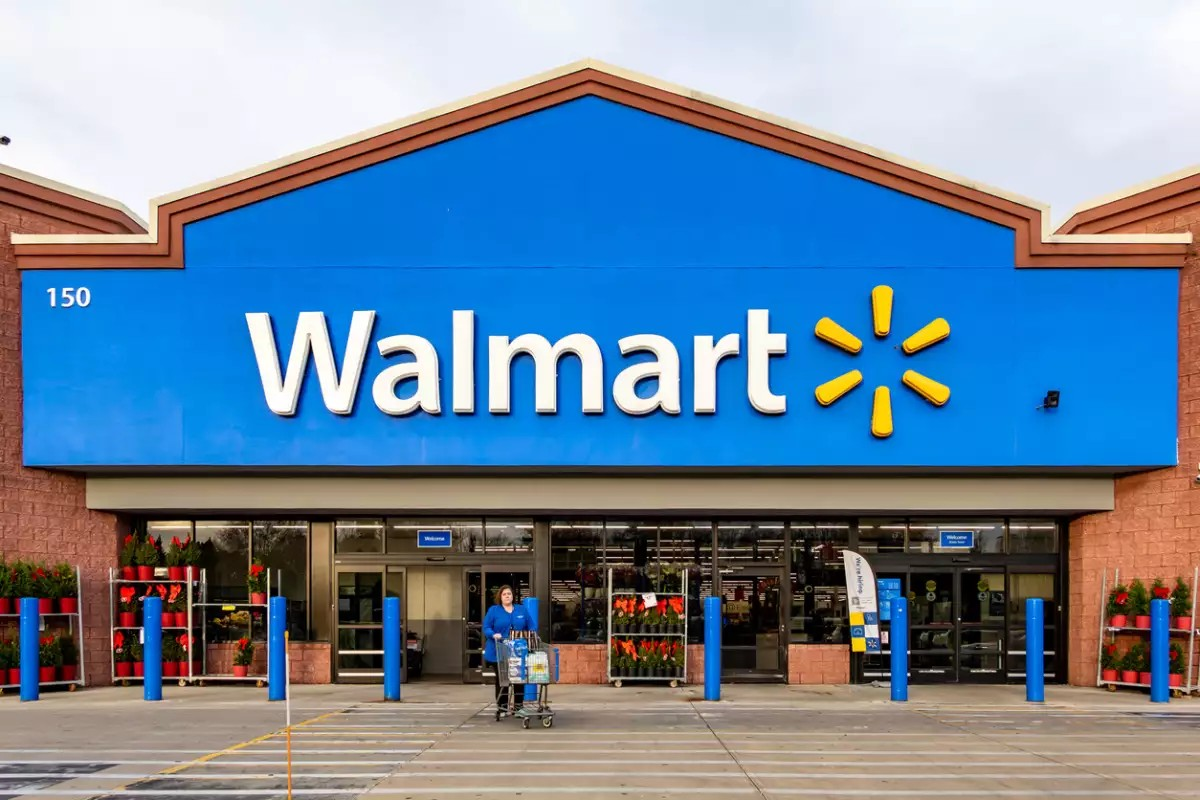

The impact of the imposition of tariffs between Washington and China has reached Walmart. The retail giant began raising prices in the United States, which has raised concerns among consumers about the measures the company will take in the Mexican market.
John David Rainey, chief financial officer of Walmart Stores, said last week that the price hike is due to the impact of the current 35% tariff the United States maintains on Chinese imports, as part of its sales base depends on supplies from some manufacturers based in Asia.
In Mexico, the outlook is different because tariff payments are paused for 90 days starting April 4, which rules out any additional expenses; although it could be affected by the cost adjustments at its headquarters.
Carlos Hermosillo, an independent consumer analyst, believes the effects in Mexico would be very limited. “With that in mind, only a few categories will be affected: electronics, furniture, and the like, and very little in terms of groceries and perishables, which represent the vast majority of sales,” he states.
The specialist points out that while there could be an indirect impact on some products imported from the United States that eventually reach Mexico, the bulk of the portfolio is protected. “Walmart Mexico’s supply structure is different, with a very strong integration toward the national market,” he adds.
Walmart’s Local Network
This protection has been built over the past few years. At the end of 2024, Walmart de México had 31,725 national suppliers, in addition to 14,459 more in Central America, according to its Annual Report. Together, they supply a commercial network that exceeds seven million square meters of sales floor.
89.4% of Mexican suppliers to the Bodega Aurrera, Walmart Supercenter, Walmart Express, and Sam’s Club chains are small and medium-sized businesses, making the company one of the main drivers of the local consumer ecosystem.
“Walmart’s price increases are entirely due to tariffs, while in Mexico it is completely protected from these external effects due to the solid development of its local supply network. This reduces all exposure to global factors and not only gives them greater resilience, but also allows them to be more agile in terms of costs and logistics,” says Julián Fernández, general director of MAR Capital.
Edmundo Delgado, vice president of Walmart Supercenter and Walmart Express, stated at the end of February that the company conducts ongoing evaluations to identify which imported products can be substituted with domestic suppliers.
These measures not only strengthen the company’s commercial sovereignty in Mexico but also allow it to maintain competitive margins, especially in a context where low consumption has intensified the so-called “price war” in the retail sector.
“In the country, more than a threat of high costs, the enemy to be defeated is the generalized decline in consumption,” warns Hermosillo. “That is what fuels competition among supermarkets to offer the lowest prices.”
The 90-day tariff pause announced by the Mexican government as of April 4 also plays in Walmart’s favor. While it is in effect, there will be no new additional costs on products of Chinese origin that arrive directly to the country.
However, the chain does not rule out the possibility of marginal adjustments in some imported categories if the global environment of trade pressure persists. For now, its main defense is at home: its network of national suppliers allows it to maneuver with agility and avoid transferring international pressure to Mexican pockets.

Source: expansion