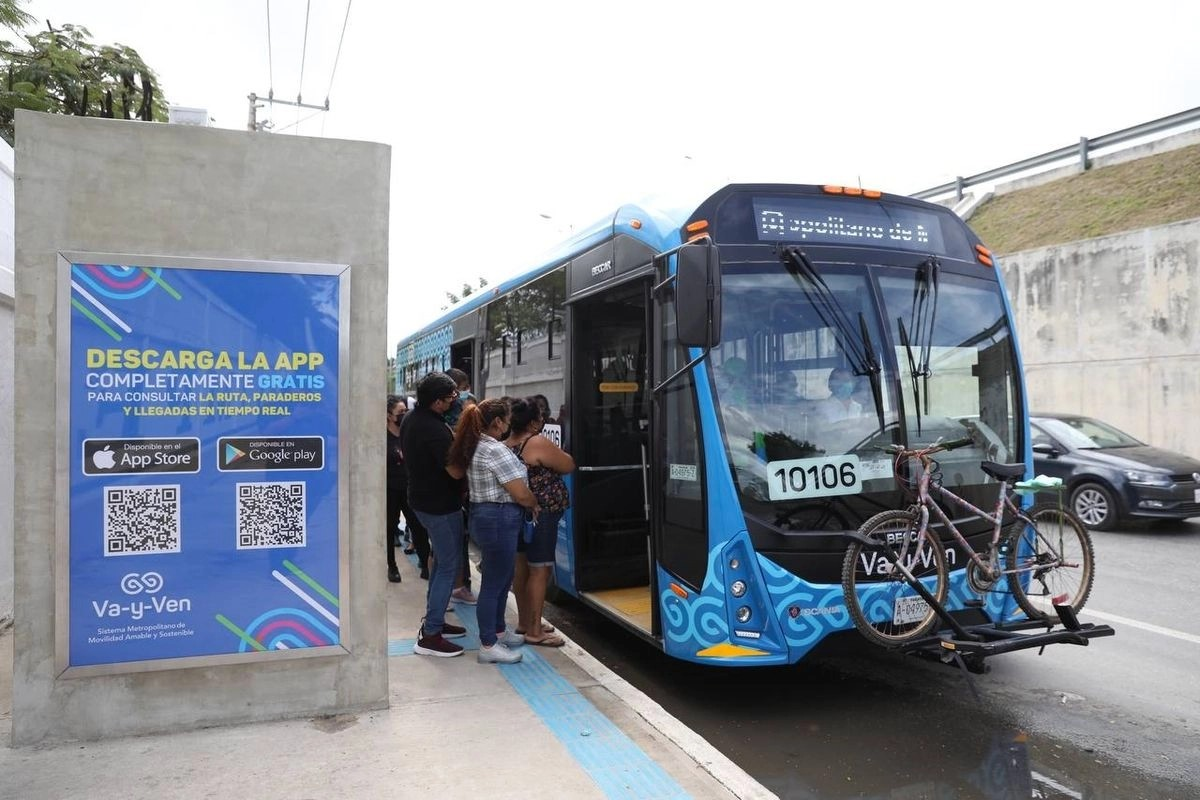

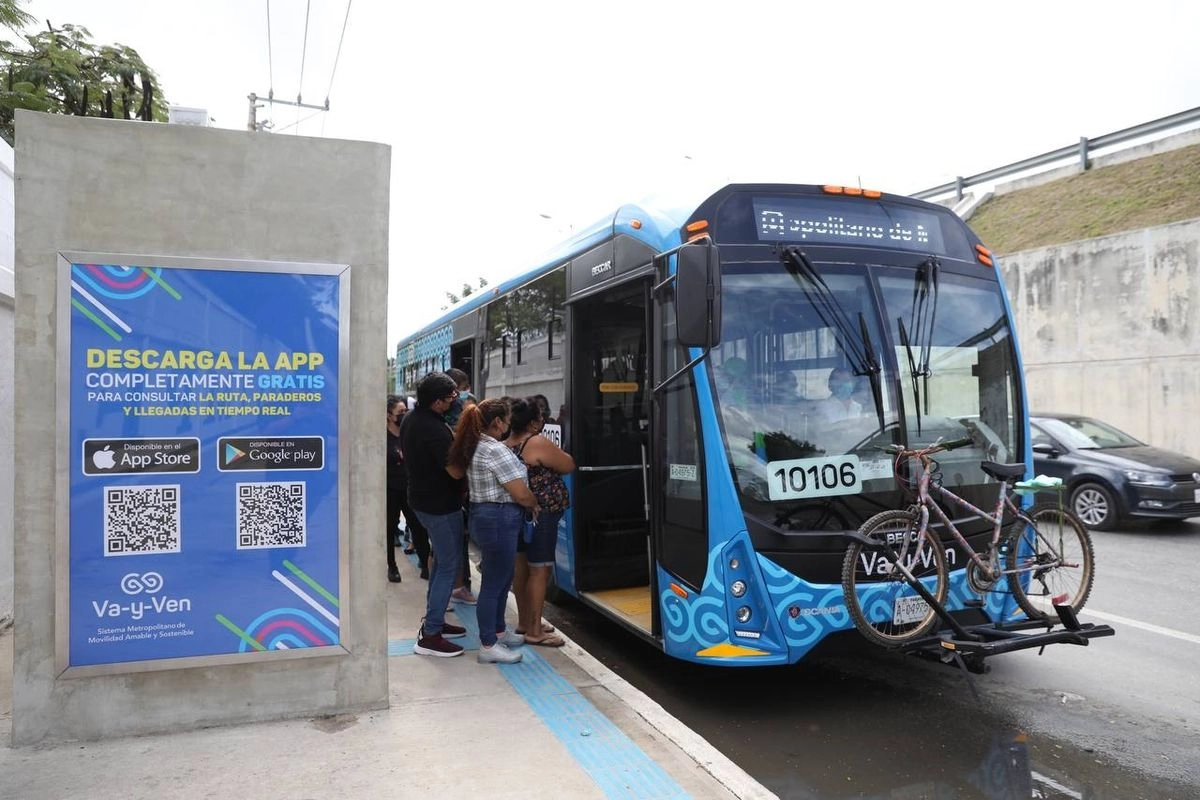
Concessionaires of the public transportation system known as “Va y Ven” (Va and Ven) will gradually remove dozens of units from circulation in the coming days, as long as the Yucatán Transportation Agency (ATY), a subsidiary of the Yucatán government, fails to make a series of late payments. This is despite the fact that the transportation system is experiencing a severe economic crisis, affecting 500,000 users.
On Thursday, the 17th of this month, the 11 main concessionaires of the “Va y Ven” public transportation system decided to remove 149 of a total of 492 units from circulation, distributed throughout Mérida, the metropolitan area of Mérida, and the municipalities of Valladolid and Tizimín, in the eastern part of the state.
Later that evening, the business leaders held a meeting with the Secretary General of Government, Omar Pérez Avilés, and the director of the ATY (Transportation and Transportation Authority), Jacinto Sosa Novelo, to reach a provisional agreement while the overdue payments are covered. However, the business leaders insisted that this measure “is not an extraordinary cut; it is only for the second shift (service after noon). The reduction in buses will also continue over the weekend, as is customary,” explained David Quintal Medina, a representative of the 11 concessionaires.
He specified that starting this Friday, Saturday, and Sunday, they plan to reduce the number of buses by 40 percent, or approximately 221, and, on Monday the 21st, starting at 10 a.m., by 50 percent, or 246 of the total 492 in service. The total number of public transportation users in Yucatán is 500,000.
Despite these cuts in urban public transportation services, the concessionaires insisted that they are not making extraordinary cuts and that on Saturdays—for example—they always reduce the number of vehicles due to demand. “We’re not changing anything there,” David Quintal emphasized. “We’ve made calculations with the aim of impacting users as little as possible,” he explained.
The businessman summarized the current transportation situation: “Basically, the ATY (Mexico City Transit Authority) has stopped paying mileage for the routes.” However, he declined to provide figures for the state government’s debt with the 11 concessionaires.
For his part, Pérez Avilés said that one of the first agreements reached was a guarantee to maintain 100 percent transportation service during peak hours (from 5 a.m. to noon), a measure that will benefit thousands of users who use the system for daily commutes.
For his part, the head of the ATY, Jacinto Sosa Novelo, emphasized the importance of maintaining this space for ongoing dialogue between the State Government and concessionaires as a key mechanism for addressing the sector’s challenges.
Some history
In March of this year, Sosa Novelo presented his first report on the poor financial, technical, and operating conditions, which make the “Va y Ven” system unsustainable.
He explained to deputies that up to that point, there had been a loss of 663.4 million pesos, in rounded figures, and that, by the end of 2025, the deficit would be almost 1.858 billion pesos. “The model is unsustainable; it’s only a business for one group,” the official charged.
For his part, President Joaquín Díaz Mena said at the time that he had suffered an “irresponsible economic disaster” in this regard, although he also did not directly mention former governor and now PAN senator Mauricio Vila Dosal, considered the main promoter of the Va y Ven system, who at the time promised a cutting-edge mobility system for Yucatecans.
Source: jornada