
Huachicol, in its various forms, is an illegal industry deeply rooted in Mexico.
Fuel theft is the origin of the phenomenon, but over time other crimes have been added, such as smuggling, corruption, and money laundering.
Huachicol, like oil, has many derivatives.
And now it’s on the lips of many Mexicans for several reasons: the record-breaking seizures and raids by Claudia Sheinbaum’s administration, the revelations—many in the United States—about the scale of the crime, and speculation about the depths of the criminal organization.
Much of this latest episode of huachicol has to do with Donald Trump’s arrival as president of the United States. His agenda to combat drug trafficking and organized crime has put enormous pressure on Mexican authorities, who have had to strengthen their strategies to pursue phenomena like this.
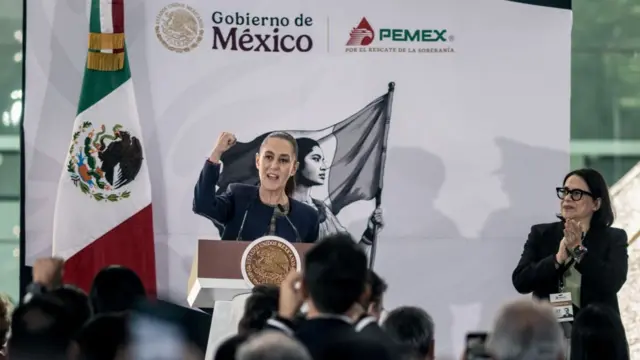
Added to this is something that many believe is not unrelated to Trump: Sheinbaum and her Secretary of Security, Omar García Harfuch, implemented the most ambitious campaign a Mexican government has ever launched against this crime.
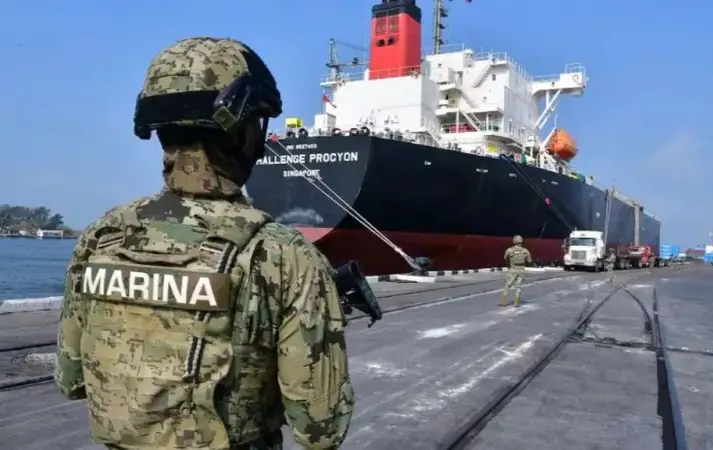
This week, García Harfuch once again released the results of his ministry in less than a year: hundreds of arrests, dozens of tanker trucks seized, and the recovery of more than 40 million liters of stolen gasoline.
Last year, however, saw the highest fuel theft rate in 15 years, according to the Citizen Energy Observatory (UCE).
At the same time, huachicol is at the center of a political scandal shaking the ruling coalition due to the alleged involvement of Tabasco state leaders in part of the oil criminal structure.
What, then, is huachicol, and how did it become Mexico’s largest criminal industry?
The term apparently comes from the Mayan language, which refers to “huach” as a “thief.” The suffix “col” was added in reference to an illegal activity. But there is also a theory that it comes from the Latin “aquati,” meaning “watered down.”
At the beginning of the 20th century, it was used to define the illegal act of adulterating liquor, but over time it was transferred to the world of fuel, albeit with a similar connotation suggesting adulteration.
Fuel theft in Mexico is a centuries-old crime, but the first version of modern huachicol emerged from the depths of Pemex, the Mexican state oil company created in 1938.
“It was the Pemex employees themselves who started stealing fuel,” says Ana Lilia Pérez, one of the journalists who has investigated the issue the most. “And to hide the stealing, they mixed the fuel with other substances.”
They stole it in many ways, but the main one was through clandestine taps—some precarious, others sophisticated—along the pipelines. Pemex estimates that criminals open an average of 10,000 clandestine taps each year.
Today, it is estimated that there are nearly 22,000 active taps, almost two for every formal gas station.
“For years, it was a problem that no one wanted to see,” says Pérez. “Governments did nothing to stop it, and thanks to that, it grew bigger and bigger.”
But not only because of that: faced with the economic boom in drug trafficking, the cartels found in huachicol the most efficient way to launder their assets while generating new income by setting up networks of gas stations and, there, selling smuggled or stolen gasoline.
“Since 2006, drug traffickers have become fully involved in huachicol, colluding with businessmen, transporters, people from the energy sector, customs, and tax authorities,” explains the journalist, who has interviewed several drug lords on the subject.
“It was a way for them to have an industry as large and lucrative as drug trafficking, but one that no one was looking at,” she adds.
It grew so much that they even created a saint for it: the “Holy Child Huachicol,” a Divine Child Jesus who, instead of carrying a staff and flowers, carries a can and a hose.
Andrés Manuel López Obrador, who governed from 2018 to 2024, was the first president to launch a frontal fight against crime: oil fields were secured, transporters received escorts, tens of thousands of illegal taps were shut down, and just under 8 million liters of oil were recovered, less than a quarter of what Sheinbaum has seized in 10 months.
Although AMLO—who once said that the crime was “practically eliminated”—made unprecedented efforts, experts assure that huachicol never grew as much as it did during his administration, not only because illegal taps continued to increase, but because the diversification of the business was consolidated.
“AMLO’s measures, although the first, were insufficient,” says Pérez.
The industry, which emerged in the late 19th century, was in the hands of foreign companies until 1938, which enjoyed easy access to resources and paid few taxes.
That year, President Lázaro Cárdenas nationalized the industry, turning Pemex into a symbol of sovereignty for a nation at odds with European and US imperialism.
In the 1970s and 1980s, Mexico became one of the world’s largest crude oil producers thanks to the discovery of the Cantarell field in the Gulf of Mexico.
But, in the meantime, the other fields were abandoned. Pemex concentrated on managing Cantarell, and after two decades, the field was no longer sufficient.
With that came debt, corruption scandals, losses, and then, to top it all off, fuel theft. On top of that, the international price of oil plummeted.
The Mexican oil industry is no longer what it once was. Pemex, which has 130,000 employees, nearly 500 production fields, and six refineries operating at half capacity, is today the world’s most compromised oil company, with a debt of US$20 billion.
Source: bbc