
The budget initiative that President Donald Trump calls “The Big and Beautiful Act,” criticized for its impact on the U.S. public deficit and the immense spending dedicated to immigration issues, will have significant economic consequences for migrants and, consequently, for the countries they come from, particularly Mexico, according to estimates contained in various studies.
For example, although the tax on remittances was significantly reduced compared to the original proposal, which was 5 percent—some congressmen even proposed as high as 15 percent—the 1 percent tax approved on July 3 will cause a 1.6 percent drop in remittances overall, which specifically in the case of Mexico, the main affected country, represents more than $1.5 billion annually, according to the Center for Global Development.
The Washington-based organization also warns that this measure could push migrants to use informal channels to send remittances to Mexico, increasing the risk of fraud and co-optation by criminal networks.
Furthermore, the law establishes that access to basic health programs, such as Medicaid and Medicare, the SNAP child assistance program—which provides food stamps, among other benefits—and the Child Tax Credit will be exclusive to citizens and permanent residents.
In total, between 12 million and 17 million people will be affected, including at least 2 million children, many of whom are refugees, asylees, and undocumented migrants, according to the National Immigration Law Center.
On the other hand, new fees and fines are being imposed or existing ones are being “dramatically increased,” for example, $1,000 for asylum applications and $550 for work permits, or a $250 increase for tourist visas, adding to the current $185 for a total of $435.
Mexico will pay part of the US deficit
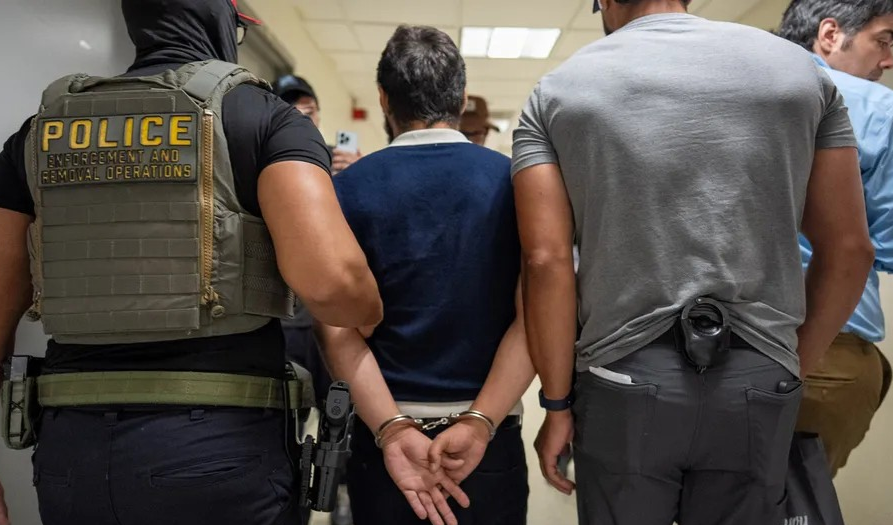
The law promoted by President Donald Trump reduces taxes on the highest incomes while providing for a huge increase in spending in various areas related to immigration, which “represents the largest investment in detention and deportation in the history of the United States,” says the non-profit and non-partisan American Immigration Council, which estimates that these items combined reach $170 billion.
For example, Immigration and Customs Enforcement (ICE) will have more resources than the Federal Bureau of Investigation (FBI), multiplying its budget from $8 billion annually to $30 billion.
This combination of increased spending and lower revenue will add $3.3 trillion to the public debt over 10 years. Part of the deficit, experts warn, will be covered by migrants.
This is the justification for the new 1 percent tax on remittance transfers, effective January 1, 2026. It will apply to 23 million green card holders, 14 million nonimmigrant visa holders, and 12 million undocumented migrants, explained the Overseas Development Institute.
Migrants already pay 6 percent in fees to remittance service providers—such as Western Union and MoneyGram—banks, and money transfer apps. In contrast, the UN Sustainable Development Goals and the Global Compact for Safe, Orderly, and Regular Migration set a target of not exceeding 3 percent in remittance transfer costs.
By far, the most affected country will be Mexico, according to estimates by the Center for Global Development, despite President Sheinbaum’s hope that a reduction in fees for the government’s Financial Welfare Card will help migrants opt for electronic transfers, which are not subject to the tax.
Charging more for visas, asylum, protection…
Another measure to offset the tax cuts for high-income earners and the growing immigration budget is a general fee increase, according to the National Immigration Law Center.
Some examples of those that are increasing are the nonimmigrant visa issuance fee (tourism and study), from $180 to $435; Temporary Protected Status, which costs $50 and increases to $500; and the parole fee, a temporary permit to enter the United States, generally for humanitarian reasons, which rises from $630 to $1,000.
Among the new ones, the asylum fee stands out, at $100 initially and then another $100 for each year the application remains pending (so that delays in the bureaucratic process are paid by the applicant). The special immigrant juvenile fee, which is humanitarian protection for children abused or abandoned by one or both parents, rises to $250.
In addition, a $5,000 fine is imposed for crossing the border without authorization. This penalty will be applied without exception to asylum seekers, despite their right to request protection.
Money Flows for Deportation and Jails
“A Big and Beautiful Law” is expected to raise approximately $45 billion for the construction of new immigration detention centers, including family detention facilities. Averaged over the next 51 months, this represents an additional $10.6 billion increase per year for detention, warns the American Immigration Council.
The controversial legislation also allocates $3.5 billion for state and local cooperation with ICE, which could lead states to build their own detention centers and lease them from the federal government, as Florida has already done.
“The consequences of allocating such large sums of money to increase detention without adequate oversight will exacerbate the harmful and inhumane conditions that have been endemic in the detention system for years, including medical neglect, overcrowding, excessive use of solitary confinement, and preventable deaths,” the Council warns.
In addition, the law provides a lump sum of nearly $30 billion for ICE deportation operations, including funds to hire up to 10,000 additional agents over five years, modernize its fleet, and cover costs related to deportation transportation, as well as hire new attorneys to represent the Trump administration in immigration court.
The American Immigration Council also estimates that “A Big, Beautiful Bill” funnels $46.6 billion for border wall construction, more than triple what the Trump administration spent during its first term, despite the fact that it did not significantly improve or contribute to an effective border management strategy.
“It also provides $7.8 billion for CBP to hire and retain 3,000 new Border Patrol agents, as well as for new vehicles and infrastructure at the Federal Law Enforcement Training Center. It also allocates $450 million for Operation Stonegarden, a program that funds cooperation with state and local law enforcement agencies at the border.”
The civil rights organization advocating for migrants in the United States states that the federal budget “includes $1 billion for the Department of Defense to support military operations at the border. This includes the deployment of military personnel to support border operations and the temporary detention of migrants.”
Source: milenio