
Operation Liberation, deployed since the beginning of this week by authorities in the State of Mexico, is due to the presence and expansion of the Familia Michoacana (Family Michoacana), a criminal organization that has consolidated its position in the so-called “hot zone” and now operates in nearly 60 percent of the state’s territory.
Its influence is mainly concentrated in northern and southern municipalities, where its activities have been fully identified by federal and state authorities.
Days of tension and blockades following Operation Liberation
Victims, out of fear, refused to report to authorities
Although a high incidence of extortion reports is not reported in these regions, the criminal cells’ modus operandi includes the use of violence and direct threats.
Fearing retaliation, the victims avoid going to the authorities.
The majority are producers, merchants, and business owners in the construction and basic food sectors.
Sources within the State of Mexico Attorney General’s Office (FGJEM) informed MILENIO that this organization has imposed a system of economic control based on intimidation.
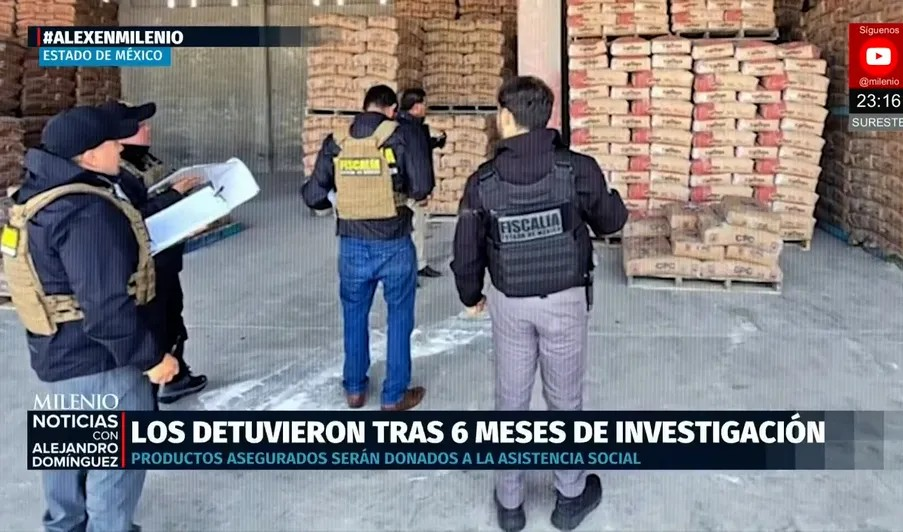
As part of this dominance, it has monopolized the distribution of essential products such as chicken, eggs, tortillas, meat, beer, and construction materials in at least 75 municipalities.
The fear of suffering greater harm has caused victims to accept payment fees and hand over part of their earnings without question.
The lack of formal complaints has complicated the prosecution of cases, although the Attorney General’s Office and other agencies already have open investigations and identified profiles within this cell.
Complaints from northern and southern Mexico
Acknowledged by the authorities themselves, the percentage of extortion complaints in the southern and northern regions of the State of Mexico is minimal.
The low number of reports is due to the stranglehold imposed by criminal groups and the constant intimidation of victims, which has allowed them to operate unrestricted, according to figures from the National Public Security System (SNSP) for the first half of 2025.
Between January 1 and June 30, the State of Mexico registered 1,398 extortion investigations.
Of that total, only 43 were initiated in southern municipalities and 60 in the north; that is, both regions accounted for 103 complaints, representing just seven percent of the state total.
In contrast, Toluca ranked first with 175 cases, followed by Ecatepec with 152.
The nature of extortion varies by region: in urban and densely populated regions, such as the Toluca Valley or the Valley of Mexico, telephone or digital extortion predominates; However, in the north and south of the state, the collections are made directly and under physical threats.
Familia Michoacana, present
According to the authorities’ analysis, 25 criminal groups and syndicates operate in the state, but the Familia Michoacana stands out with the greatest reach: operating in at least 75 municipalities across all regions of the state.
It is established that they are responsible for collecting fees from ejidatarios (communal landowners), sawmill owners, butchers, miners, merchants, and construction entrepreneurs to allow them to work. Specifically, this practice is more prevalent in the south and north.
Violence and intimidation are the main tools used to force victims to pay the fees. If they do not pay, they are kidnapped or, as it has been colloquially called, abducted, and even executed if they do not agree to cooperate in the extortion scheme.
The various cells operating in the southern and northern zones target intermediaries of consumer products, such as chicken, eggs, tortillas, beer, meat, sand, construction materials, among others, to purchase these products solely from them.
To control raw materials, products, and even tourist transportation services, they place insignia on authorized and controlled products, thereby generating a monopoly and huge economic profits for the criminal group.
As an example of this, authorities have even identified mezcal from Malinalco, which, to be marketed in the region, must have a strawberry decal, alluding to José Alfredo Hurtado Olascoaga, alias “El Fresa.”

Source: milenio