
Government authorities and public transportation concessionaires in Yucatán learned today that, according to an official assessment, the current bus service mobility system in the Mérida metropolitan area is unsustainable: “It does not protect citizens’ wallets or time, nor does it guarantee the financial stability necessary for future improvements.”
As a second meeting was held Tuesday night between the state government, the Yucatán Transportation Agency (ATY), and transportation companies, it was reported that the fleet currently exceeds 800 units and the state government pays for more than 1.5 million kilometers per month at an average of 800,000 pesos per day, which amounts to 1.2 billion pesos per month, but only around 110,000 people are transported daily.
“This indicates that buses are operating at a third of their capacity and that the state is ultimately covering routes, not effective transfers,” emphasized Secretary General of Government Omar Pérez Avilés, accompanied by ATY Director Jacinto Sosa Novelo, representing Governor Joaquín Díaz Mena.
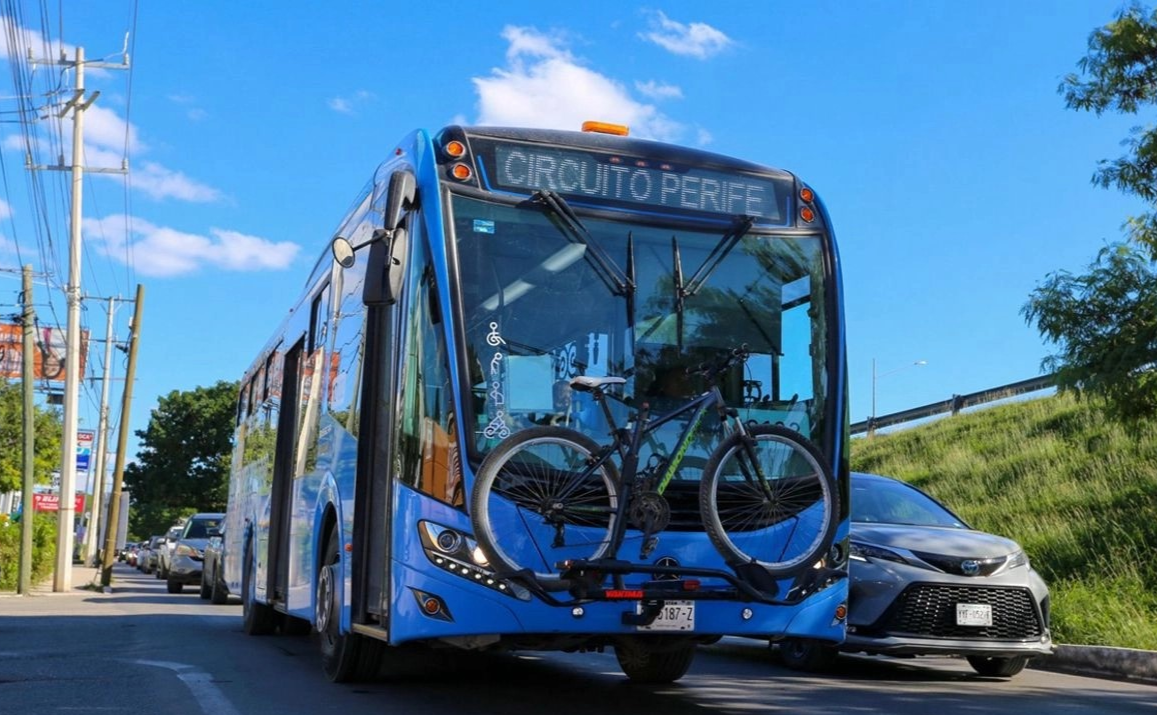
The bus service in the Mérida metropolitan area, where modern Va y Ven buses, Ie-Tram (of French origin), and hundreds of antiquated buses converge, is unsustainable because “it doesn’t protect citizens’ wallets or time, nor does it guarantee the financial stability necessary for future improvements.”
Pérez Avilés and Sosa Novelo stated that the financial imbalance stems from an unrealistic projection of the ATY’s own revenues for fiscal year 2025. Of the 1.711 billion pesos projected for fare, only 471 million have been collected, evidencing an erroneous calculation inherited from the previous administration (presided over by the then-PAN governor and current senator, Mauricio Vila Dosal). To date, the ATY has allocated more than 1.3 billion pesos to the transportation system.
“The structural problem lies in the fact that, even if a bus travels almost empty, the concessionaire is paid for the trip. This model prioritizes the movement of units, not people, which distorts costs, deteriorates service, and leaves unprotected people who depend on public transportation to get to work, school, or the hospital,” government authorities stated in a statement.
The consequence is clear: thousands of families each year opt for cars or motorcycles, doubling the vehicle fleet and nearly tripling the number of motorcycles in the last decade, which increases accidents, pollution, and time lost in traffic, it was reported.
And in response to rumors suggesting a possible budget breach, the ATY presented documentation confirming the full payment of 834 million pesos allocated to the system for 2025, which were transferred by the State Government to the concessionaires before July 20. In other words, the annual contribution was made before the end of July.
Since last week, public transportation concessionaires began removing Va y Ven units, reaching 50 percent of a total of 492 buses, only from this service, implemented with great fanfare by then-PAN Governor Mauricio Vila (2018-2024). The remaining transport vehicle fleet, comprising more than 800 units, has not yet been retired.
To correct this situation, it was agreed to establish a permanent technical committee to prepare a joint assessment and review the data with complete transparency. The second session of this committee will be held on August 20th, where the full financial overview will be presented and a path toward a profound redesign that transforms public transport into a modern, dignified, and sustainable service will be defined.

Source: jornada