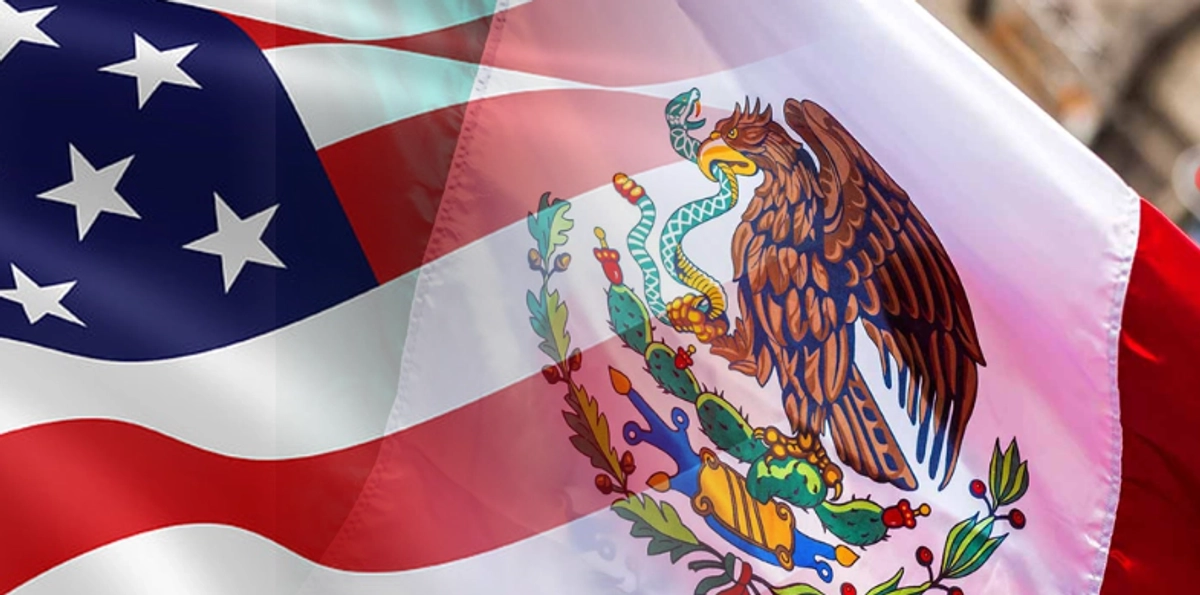

Mexico is a free and independent country, where I was born and where I also learned that we do not live in isolation, but under the constant watch of a vast neighbor with whom we have a long-standing relationship, one that over the years has become increasingly multifaceted and complex. It comes up in street conversations, as well as in the highest echelons behind every major economic or political decision.
This reminds me of a phrase once said by former President Porfirio Díaz Mori, who governed Mexico from 1876 to 1911: “Poor Mexico, so far from God and so close to the United States.”
That’s why, when our northern neighbor decides to implement important new measures, Mexico is always among those affected.
“Mexico is free, independent, and sovereign” is now a phrase repeated by Mexican President Claudia Sheinbaum, echoing in every corner of the country. Mexico is a complex society, a miniature mirror of the entire world. But that doesn’t mean the world understands the problems we face, not even those of a single state, municipality, or small town.
The United States isn’t a distant country: it’s a constant presence. In everyday conversations, in newspaper headlines, in every public discussion, its shadow is always there, even attempting to interfere in Mexico’s internal affairs.
Gasoline theft is a major scourge facing Mexico, and in some cases it has left victims dead, as in the January 2019 explosion at a Pemex pipeline in the state of Hidalgo, which claimed more than 130 lives.
Even with the aggressive strategy to address this problem, hydrocarbon milking, according to experts, is prevalent in northern and central Mexico, surrounded by great speculation about the extent of the criminal structure’s involvement in this crime.
Washington even hinted that “cooperation” is needed on this issue, as part of its agenda to confront drug trafficking and organized crime, which the White House now labels as terrorist, and even offered to send troops to the border to combat the cartels; but President Sheinbaum has been blunt: internal matters are resolved at home.
Disputes aren’t just underground. They’re also on the maps. What Mexico proudly calls the “Gulf of Mexico” is, in the United States, renamed the “Gulf of America.” This isn’t just a linguistic detail: even in the sea, we can see the shadow of hegemony and disrespect for our southern neighbor.
If sovereignty reveals a historical tension, in economic terms, that tension becomes transactional. In the reddish hills of Zacatecas, farmer Felipe Ruiz begins his day before dawn at the El Álamo ranch, where he carefully tends thousands of tomato plants. In the semi-desert of Fresnillo, its harvest is one of the most coveted on the continent.
This summer, I visited it with Adolfo Bonilla, his partner in the B 15 Agricultural Cooperative. His commitment is clear: export. But the fear of new US tariffs once again darkens the horizon. Hope and anxiety grow under the same sun.
The efficiency of the logistics chain is admirable: from the stem to the supermarket in less than 48 hours. In Texas, Arizona, and further north, the Mexican tomato is a daily fixture on many tables. But a single decree, a signature, can shatter this delicate web woven over decades.
When the USMCA was signed, many, including American consumers, saw it as synonymous with stability and equity. Today, the reality is different: the treaty became the starting point for negotiations; equity, a bargaining chip; the rules, tools of pressure. The tomato, red and shiny, has become trapped in the unbalanced logic of an increasingly transactional relationship.

Source: jornada