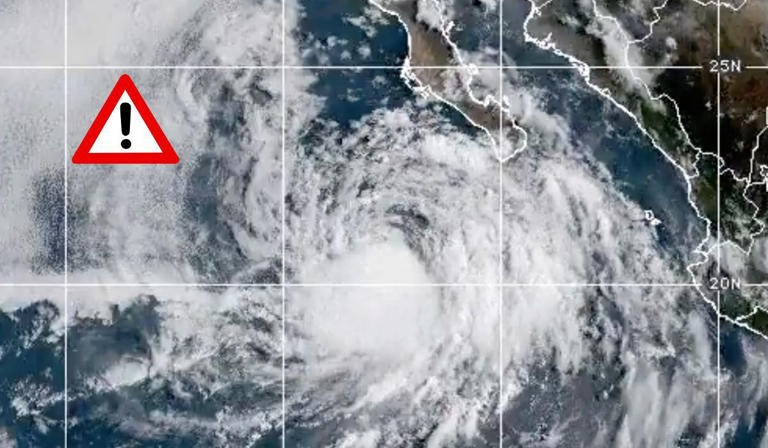

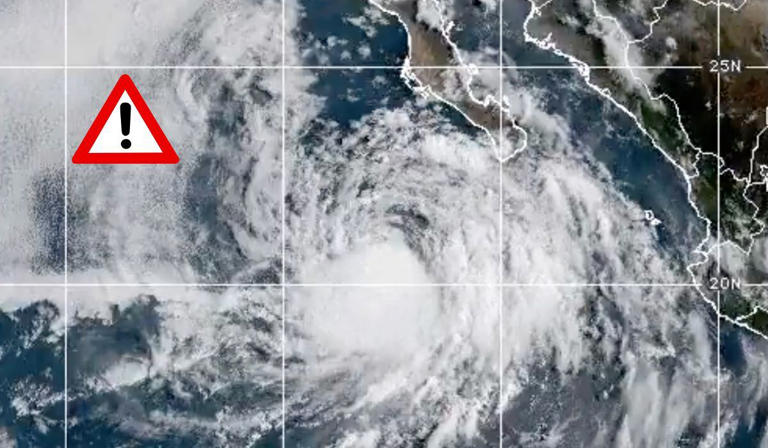
Tropical Storm Ivo continues its westward movement over the Pacific Ocean, gradually moving away from the Mexican coast. The storm has begun to lose direct influence over the national territory, reducing the risk of severe impacts on land.
The National Meteorological Service (SMN) of the National Water Commission (Conagua) reported that, due to this trajectory, Baja California Sur will no longer experience the most intense effects associated with Tropical Storm Ivo, such as persistent rain, gusty winds, and high waves, although precautions are recommended in coastal areas due to possible remnants.
Tropical Storm Ivo moves into the Pacific
The storm, which generated rain and high waves in the region in recent days, will move out to sea over the Pacific Ocean.
Although Tropical Storm Ivo is retreating, other weather systems remain in effect for precipitation and wind alerts across large areas of Mexico.
There will be rain with thunderstorms and hail in the country.
The Mexican monsoon, interacting with atmospheric instability, will cause heavy and very heavy rainfall in the northwest of the country, as well as showers in the Baja California Peninsula. Thunderstorms and possible gusty winds are expected in these areas.
Additionally, a low-pressure channel over the Northern and Central Plateaus, combined with an upper-level trough extending from the northeast to the west of the country, along with the influx of moisture from the Pacific and the Gulf of Mexico, will generate showers and heavy rain. These events may be accompanied by thunderstorms and possible hail.
In the southeast, another low-pressure channel, reinforced by the influx of moisture from the Gulf of Mexico and the Caribbean Sea, will cause heavy to very heavy rains in the southeastern states and the Yucatán Peninsula.
Very hot weather will continue over Mexico
Despite the rains, the hot to very hot weather will persist in northern areas of the country, as well as along the Pacific and Gulf of Mexico coasts, and the Yucatan Peninsula. Maximum temperatures are expected to exceed 40 degrees Celsius in specific regions.
Source: msn