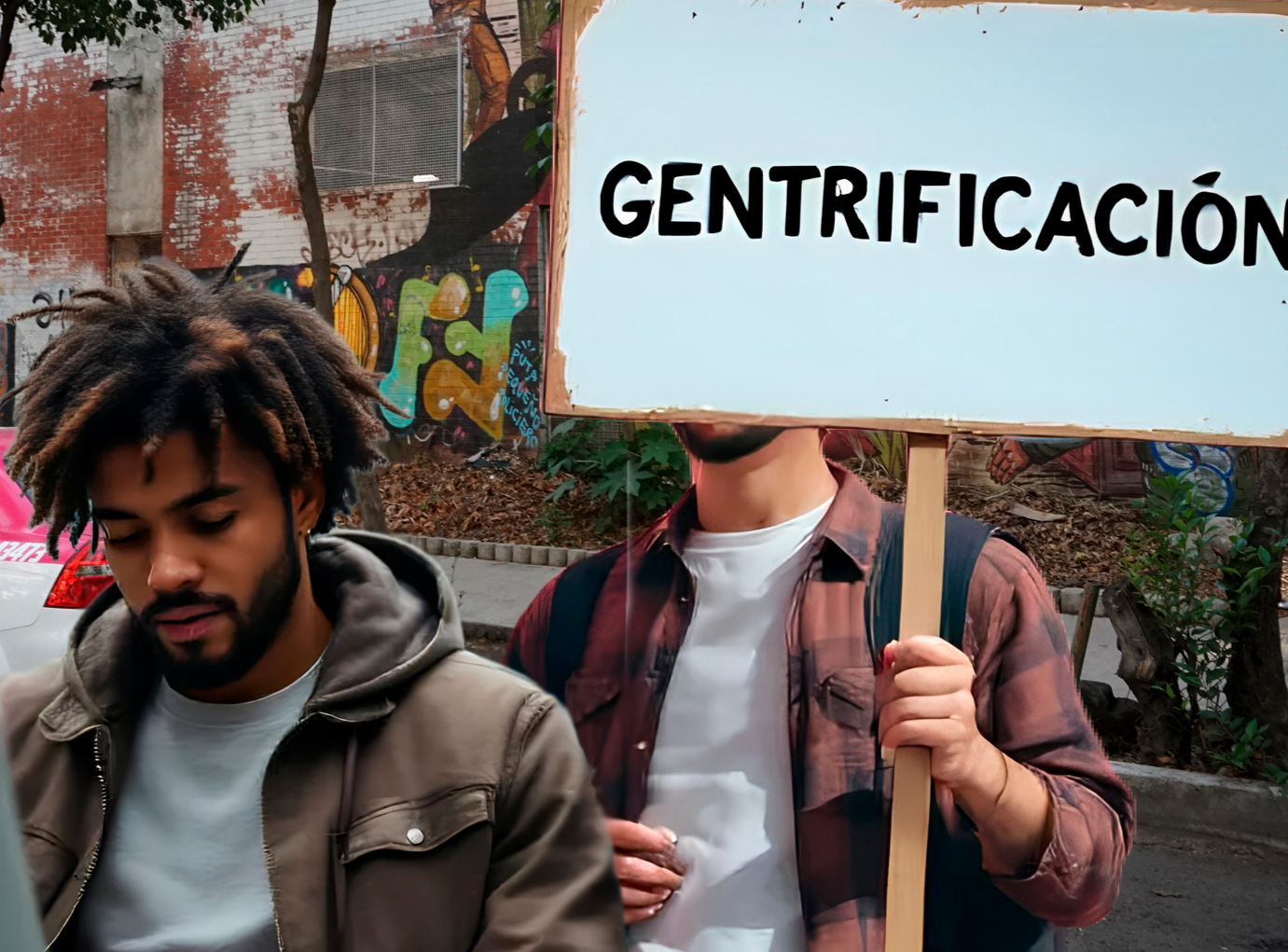

When thousands of residents took to the streets of Mexico City in July chanting “Gringo, go home!”, headlines quickly blamed digital nomads and American migrants for the capital’s gentrification crisis. The story seemed simple: tech-savvy remote workers move out, rents rise, and locals are priced out.
But that’s not the whole story. While digital migration has undeniably accelerated housing pressures in Latin America, the forces driving resentment toward gentrification there run much deeper. The recent protests are symptoms of several structural problems that have long shaped inequality in the region’s cities.
Long before digital nomad visas became post-pandemic buzzwords, Latin American cities were changing rapidly. In 1950, around 40% of the region’s population was urban. This figure had risen to 70% in 1990.
Today, nearly 80% of the population lives in dynamic cities, making Latin America the most urbanized region in the world. And by 2050, cities are projected to be home to 90% of the region’s population. This rapid urbanization has attracted international investors, tourists, and, more recently, digital nomads.
Gentrification: Investment, yes, but at what cost?
In Latin America, gentrification has often involved large-scale redevelopment and the construction of high-rise buildings, driven by state policies that prioritize economic growth and city branding over social inclusion.
Governments have rebranded entire working-class or marginalized areas as “innovation corridors” or “creative districts,” as in the La Boca neighborhood of Buenos Aires, to attract investment. This redefinition of neighborhood image has generated resentment among residents and, in Buenos Aires, policies that support self-managed social housing.
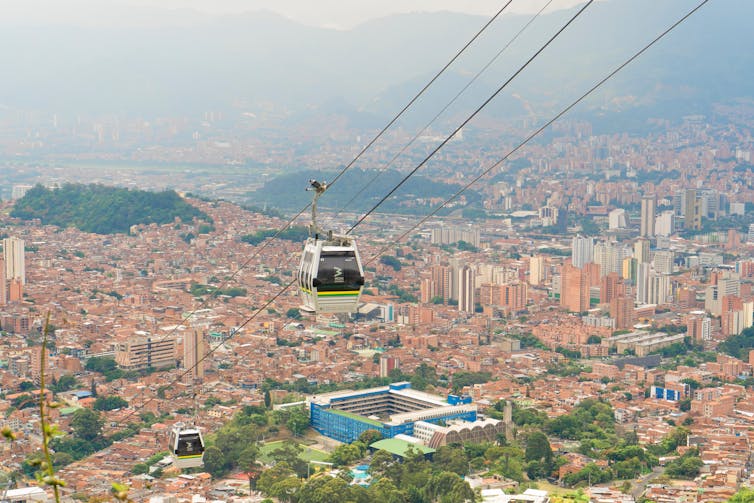
The introduction of integrated urban public transportation systems, while improving access to the city for marginalized communities, has also fueled real estate speculation in previously isolated communities. In the Colombian city of Medellín, for example, this has driven up prices and displaced longtime residents of hillside neighborhoods like Comuna 13.
This is not an isolated case. A 2024 study revealed that governments in Latin America often leverage transportation projects to attract private investment, using mobility as a tool for urban restructuring rather than social equity.
Touristification: A New Form of Extractivism
Researchers call the urban development observed in Latin America “touristification.” It is a form of extractivism where, just as raw materials are extracted from the earth for export, urban heritage, culture, and everyday life are exploited for economic value.
In the Barranco district of Lima, the Peruvian capital, heritage is commercialized for tourism purposes. While the district’s bohemian and artistic identity has become a distinctive tourist attraction, Barranco now faces challenges that threaten its sociocultural diversity and authenticity. Land prices there increased by 22% between 2014 and 2017, compared to just 4% in San Isidro, considered the wealthiest district in the Lima metropolitan area.
In Chile, the designation of Valparaíso’s historic center as a UNESCO World Heritage Site in 2003 spurred an increase in heritage tourism. The persistent emigration of long-term residents from the city center has led to a serious deterioration of the area’s residential function and, with it, the loss of a vibrant local life.
Inequality as a Backdrop
Protests against high rents and displacement in Latin America are often presented as direct responses to gentrification. However, academic research and policy analysis suggest that these protests are symptoms of much deeper structural problems.
Latin America is one of the most unequal regions in the world. Limited access to services such as quality education and formal employment means that many urban residents are already vulnerable before the pressures of gentrification begin. More than half of the current generation’s inequality in Latin America is inherited from the past, with estimates ranging from 44% to 63%, depending on the country and the measurement used.
The region’s cities also have a long history of spatial and social segregation, with marginalized groups concentrated in low-income neighborhoods.
Gentrification often exacerbates this situation by displacing these populations to the periphery.
The Case of Cartagena: History and Displacement
Cartagena, a port city rooted in colonial-era divisions, arguably exemplifies the greatest urban segregation in Colombian history. Spaniards and other Europeans lived in the fortified center, while enslaved people were confined to poorer neighborhoods like Gethsemane, outside the city walls.
Recently, urban planning decisions have favored certain groups over others. Only the colonial legacy linked to Europeans has been protected. Gethsemane, which once housed slave houses and workshops, now houses hotels, restaurants, and luxury homes.
Informality and Urban Capitalism
A large portion of Latin America’s urban workforce works informally. Informality, where workers lack job security and social protection, is not just an unfortunate effect of economic development.
It is an integral part of how global capitalism and urbanization unfold in Latin America.
It reflects the failure of state and market systems to meet the needs of the majority. Rising rents and the cost of living, driven by gentrification, disproportionately harm those with few resources to absorb such impacts.
The Price of Gentrification: Urban Inequality in Latin America
Protesters in Mexico aren’t just outraged by the influx of remote workers enjoying coffee breaks. They’re responding to decades of inequality, neglect, and urban exclusion. What’s emerging is a continent-wide battle over who can live, benefit, and shape the future of Latin American cities.
The region’s urban future doesn’t have to be a reflection of its past. But achieving this requires moving beyond simplistic narratives about foreign tenants or digital workers and addressing the structural issues that have long shaped inequality in Latin American cities.

Source: emprendedor