
In 1988, Guanajuato City was declared a World Heritage Site by UNESCO, a distinction that not only recognizes its cultural and architectural richness but has also been key to attracting tourism across multiple segments. However, it was not always considered an ideal location for congresses and conventions.
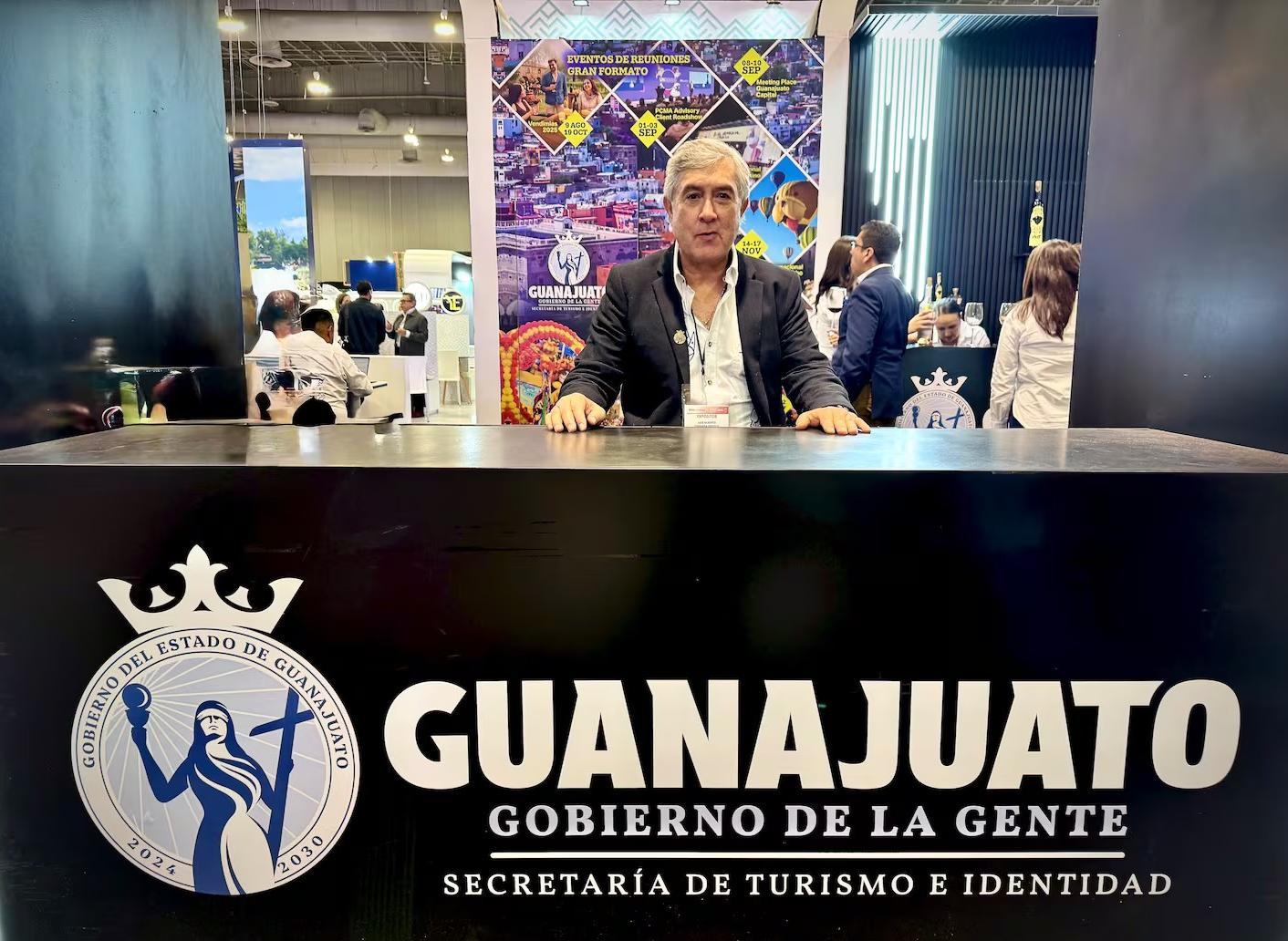
“For many years, Guanajuato was primarily managed as a cultural and leisure tourism destination. It was only in the last decade that it began to consolidate its position in the field of incentive travel, congresses, and conventions,” explained Luis Alberto Espinosa Orozco, president of the Guanajuato City Tourism Council.
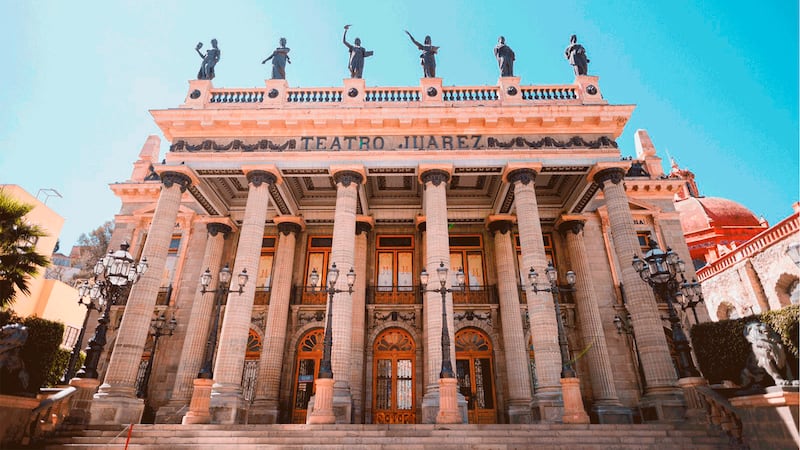
Growth was slowed by the pandemic, but today the outlook is different. “Since last year, we have worked intensively to promote the city as a host for international conferences and events. We have the necessary infrastructure: the Juárez Theater, the Alhóndiga de Granaditas, public plazas, auditoriums, the Convention Center, and hotel lounges, whose combined capacity allows for hosting between 1,200 and 1,500 attendees at a single conference.”
The city has more than 4,000 hotel rooms affiliated with the Hotel Association, in addition to a wide range of alternative accommodation options. Added to this is its strategic location: “60% of the Mexican population is less than three hours by road from Guanajuato, including cities such as Mexico City, Guadalajara, Querétaro, Aguascalientes, and León,” Espinosa Orozco emphasized.
Connectivity is another key focus. The state’s highways are recognized for their good maintenance and accessibility, and the international airport—just 15 minutes from the capital—is among the ten busiest in Mexico. “This airport has direct flights to destinations such as Tijuana, Monterrey, Mérida, and Oaxaca, facilitating the arrival of both domestic and international visitors,” he explained.
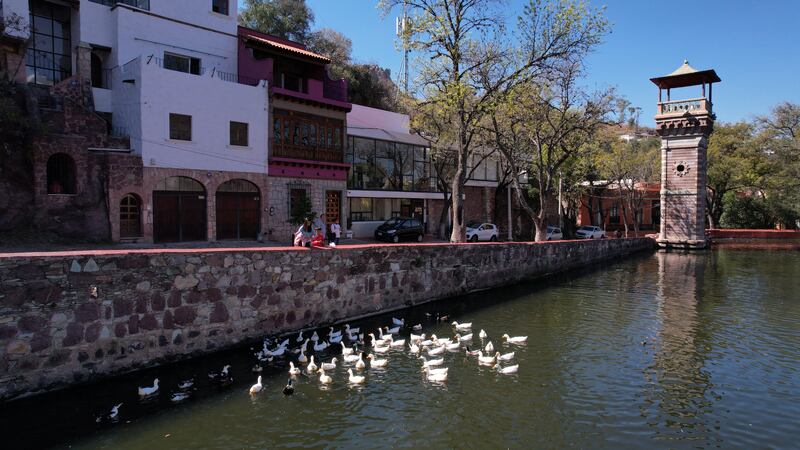
One of Guanajuato’s added values is that its Historic Center becomes a large open-air convention center, where everything is within walking distance. “Auditoriums, theaters, historic buildings, and a diverse gastronomic offering are concentrated within a two-kilometer radius. This allows each event to be experienced as an immersive cultural experience,” stated the president of the Tourism Council.
Sustainability is also part of the strategy. Espinosa Orozco emphasized that hotels and restaurants are adopting certifications and responsible practices in water, waste, and energy management. “Today, even properties over 150 years old integrate LED technology, solar systems, and specialized waste collection, ensuring more responsible tourism.”
The University of Guanajuato, with its multiple campuses, plays a crucial role in attracting scientific, cultural, and academic conferences. “We have an agreement with the university that allows us to use its auditoriums and classrooms for events, in addition to a close relationship between academia and the private sector in training and promotion. We even invite successful businesspeople from Mexico and abroad to share their experiences with students,” he commented.
International tourism is another growth driver. The main visitors come from the United States, Spain, Colombia, Japan, and China. “The region’s automotive corridor attracts business travelers, while its cultural richness attracts recreational tourism. This year, we will intensify our promotion in Japan, China, and Colombia, strengthening Guanajuato’s presence in strategic markets,” he stated.
In terms of international projection, sporting and cultural events are fundamental. Although the World Rally is no longer held in the city, Guanajuato now hosts the Cerro Abajo, an international downhill cycling competition sponsored by Red Bull and broadcast in more than 90 countries. Meanwhile, the International Cervantino Festival, with more than 50 years of history, remains a major cultural centerpiece: “Today it is considered the most important cultural festival in Latin America, which consolidates Guanajuato as the Cervantine capital of the Americas,” Espinosa Orozco emphasized.
Guanajuato’s Vision: Establishing Itself as a World-Class Destination
The Guanajuato Capital Tourism Council is working with a medium- and long-term vision that aims to position the city as one of the leading meeting tourism destinations in Latin America.
“If I tell you that Guanajuato Capital is a world-class destination, it’s no exaggeration. The city is distinguished worldwide for its history, culture, and hospitality. Our goal is for Guanajuato to occupy that role on the global stage, working on the quality and warmth of services, the modernization of facilities, and responsible management of resources,” stated the president of the Tourism Council.
The synergy between the public sector, the private sector, and the community is the key to this projection. With a unique environment that combines heritage, culture, infrastructure, and connectivity, Guanajuato is not only strengthening itself as a tourist city, but also as an international benchmark for congresses, conventions, and major events.
Source: cronica