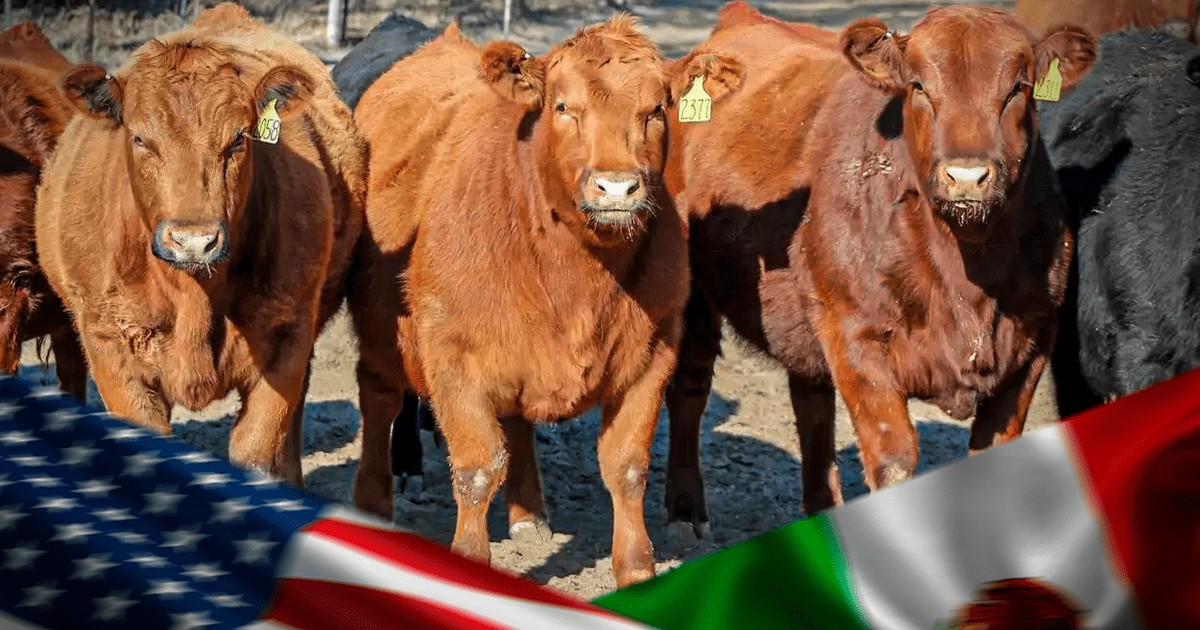

“We are concerned about the closure of live cattle exports to the United States, for up to one million head, and about the entry of live cattle and processed meat into Mexico, Central America, the Caribbean, and Brazil. In recent months of this year, there have been reports of processed meat imports, which pose a high health risk to the Mexican livestock sector,” expressed producers from several states in the country.
“The real problem, which no one talks about, is that foreign cattle from Brazil are entering Mexico already processed in excess. So far in 2025, more than 70,000 tons of cuts of beef have entered our country, equivalent to almost 320,000 head of cattle, with the consequent invasion of the domestic market.
Most seriously, in just three months: May, June, and July, this represents 70 percent of all imports in a year. The Mexican federal government is responsible for authorizing import permits for live animals and processed meat, without consulting producer organizations and, most likely, without taking the appropriate health measures.
As is public knowledge, throughout this year, the same practice of importing live and processed cattle without taking the necessary measures led to an infestation of the so-called “cattle screwworm,” with negative effects on the health of the national livestock industry, particularly in the southern and southeastern states of our country. Republic.
Livestock producers from several Mexican livestock-producing regions pointed out that the country’s authorities are fully aware that Mexico exports around one million head of live cattle annually to the United States market, based on the quality and health of the national livestock industry.
Faced with these conditions, once the invasion of the “screwworm” was reported in Mexico from Central American and Caribbean countries, the US government ordered the closure of its border with Mexico until the pest was eradicated.
The “cattle screwworm” corresponds to a stage in the life cycle of a specific fly. This insect feeds and reproduces in the wounds of animals, which entails additional expenses for ranchers and authorities supporting the livestock sector.
It should also be noted that a nation facing health problems due to this pest is affected by the closure of markets for live animals and livestock products.
According to Pascacio Taboada Cortina and Jorge Martínez Cedillo of Social Communication Strategy stated in a press release that this pest has been eradicated from Mexican territory for more than 35 years, but not before suffering significant economic damage. Its presence extends to other productive and economic activities, as it greatly affects the export of livestock and its derivatives, in addition to other goods that would normally be exported.
This pest was exterminated through collaboration between the governments of Mexico and the United States, through an executive branch called the Mexican-American Commission for the Eradication of the Screwworm Fly.
In parentheses, we can note that the governments of the aforementioned countries pooled capital, technology, and technical and scientific resources to eradicate another pest using the same mechanism, but that one from agriculture, the “Mediterranean Fly.” To date, we do not know the reasons for the disappearance of public administration and these two institutions, while recognizing that they should be permanent, given a situation where “pests and diseases arise.” at any time. “They don’t keep their word.”
Source: municipiospuebla