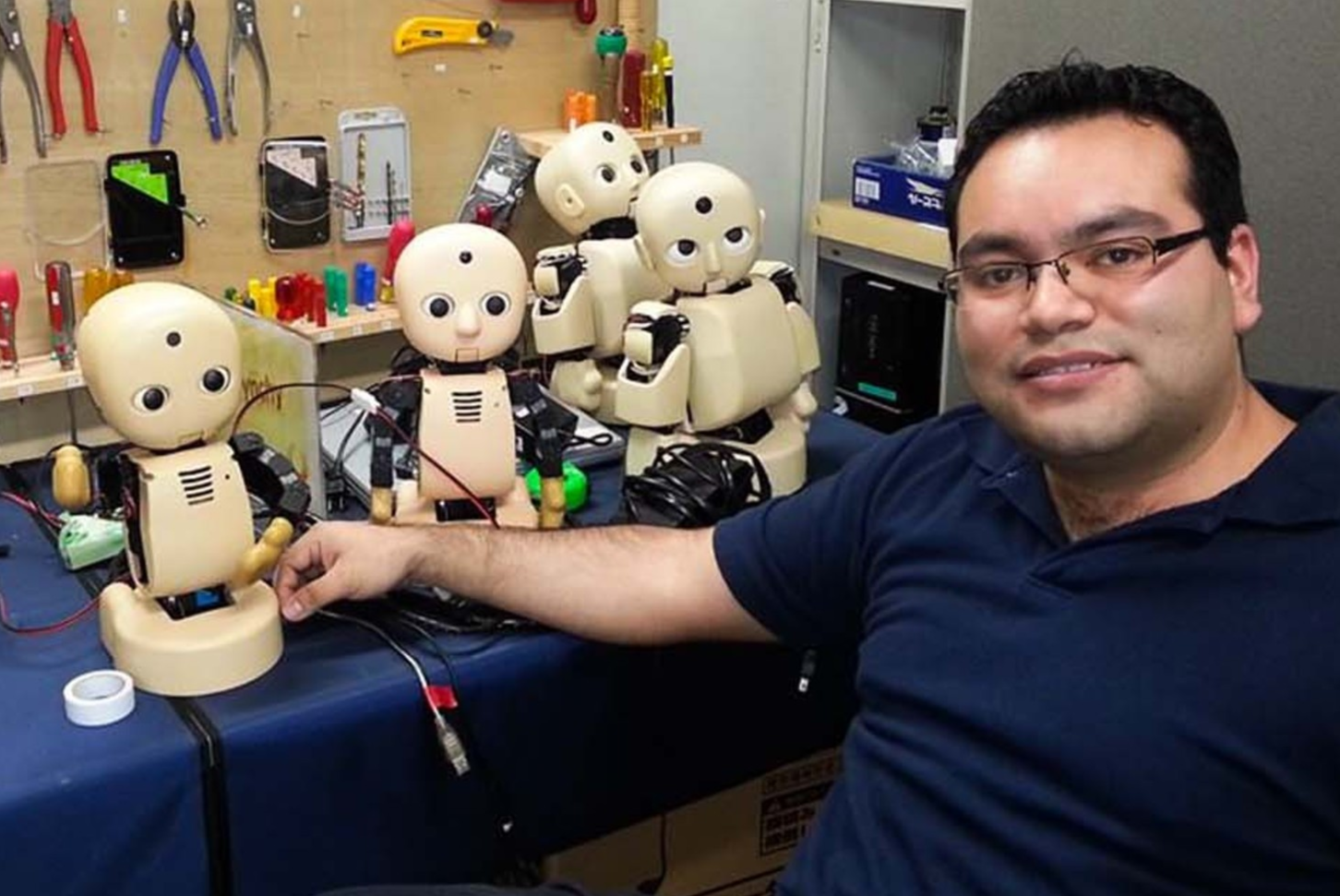

Christian Peñaloza, a Tijuana-born engineer, has been dubbed “the father of Mexican robots” for promoting pioneering advances in neurotechnology that allow prosthetics and robotic arms to be controlled with the mind, positioning him as an international leader in the field of brain-machine interfaces.
Christian Peñaloza, from Tijuana to the Japanese laboratory
Originally from Tijuana, Christian Peñaloza studied engineering at the University of San Diego and overcame significant challenges such as the language and the rejection of support in Mexico, before his career took off in Japan. After five rejections from Conacyt (National Council of Science and Technology), he managed to obtain funding and developed his research as part of his master’s and doctoral degrees in Robotics and Artificial Intelligence and Applied Cognitive Neuroscience at Osaka University.
Brain-machine interfaces that think for you
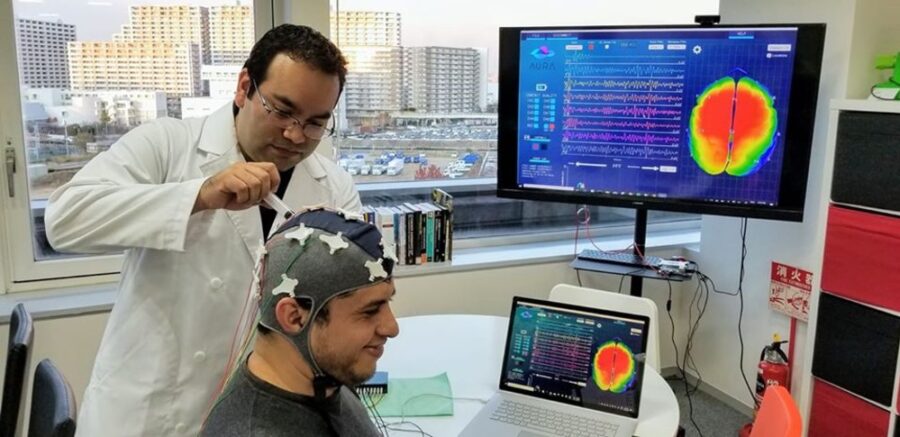
His most notable project, the Aura system, is an interface that interprets brain signals using artificial intelligence, allowing a robotic arm to be controlled with the mind, even while using both arms simultaneously. This innovation overcomes mental fatigue by “learning” the user’s commands and automating them.
The first brain-controlled “third arm”
In collaboration with researchers in Kyoto, Peñaloza managed to control an additional robotic arm. In tests with healthy volunteers, some were able to manipulate an object with the robotic arm while holding a tray in their hands, which could activate new cognitive abilities.
Recognition for Christian Peñaloza and Scientific Leadership
In 2016, he was named “Innovator Under 35” by MIT Technology Review Mexico for his contributions to advanced neurotechnology. He is also the founder of Mirai Innovation, a technology company that seeks to bring robotics and artificial intelligence solutions to Mexico and the world.
From crossing the border daily to studying, to adapting to Japanese culture and working as a waiter, Peñaloza shows that passion and innovation can open doors even in hostile environments or without local institutional support.
The father of Mexican robots: Christian Peñaloza
Christian Peñaloza’s work is fundamental in a world where the integration of mind and machine is no longer science fiction. His ability to transform thoughts into physical action not only paves the way for people with disabilities but also drives the global technological forefront. His career is an example of perseverance, vision, and Mexican pride in the fields of robotics and neuroscience.
Source: emprendedor