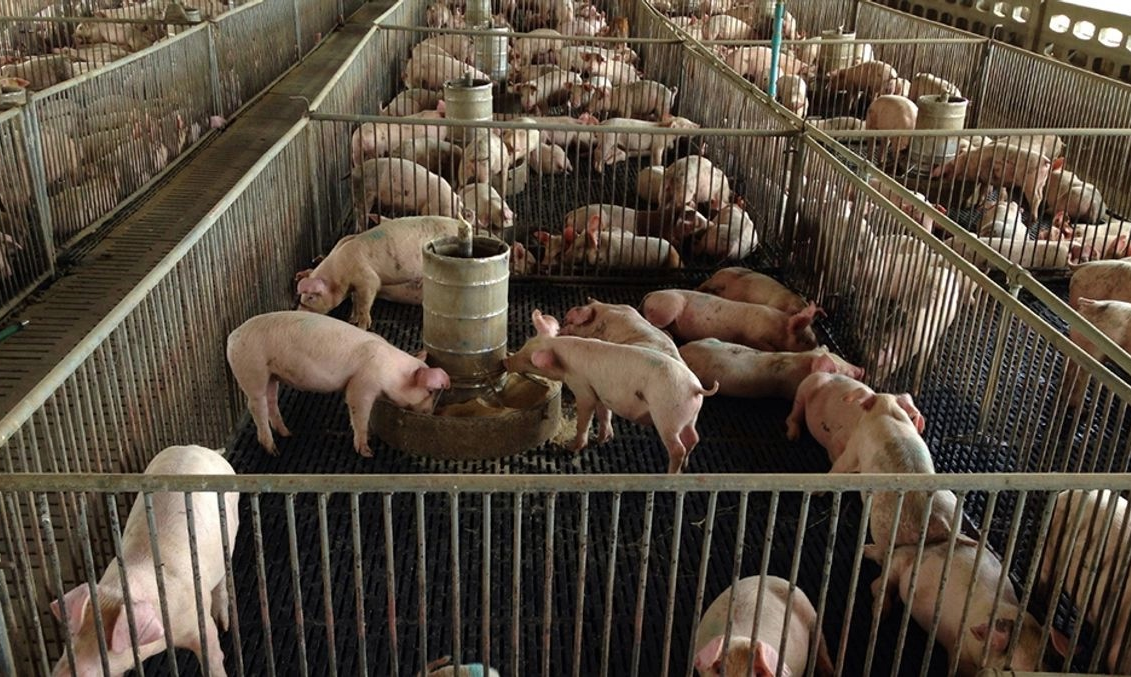

Drinking water from wells and piped systems is highly contaminated by fecal bacteria produced in pig farms. Despite several lawsuits, these farms continue to operate in at least 10 Mayan communities, defying court rulings and harming the health of residents, according to activists and affected residents.
They explained that studies by the Microbial Ecology and Marine Natural Products Laboratory of the National Autonomous University of Mexico detected fecal coliform bacteria and E. coli in wells and pipes in the municipalities of Chocholá, Kopomá, Kinchil, Maxcanú, Santa Teresa, Paraíso, Santa María Chi, San Fernando, and San Rafael.
They mentioned that studies by Johns Hopkins University in the United States, using a genetic marker, detected that the drinking water in these Mayan communities is contaminated with fecal matter from pigs, but not from humans or wild animals.
“We’re talking about risks for children and the elderly,” warned activist and lawyer Lourdes Medina Carrillo. Residents also pointed out the operation of pig farms in Yucatán, whose waste threatens the health and environment of their communities.
At a public event, Medina Carrillo recalled that in 2023, authorities such as the Federal Attorney’s Office for Environmental Protection (Profepa) and the Ministry of Environment and Natural Resources (Semarnat) recognized the existence of more than 500 pig farms in the state, of which fewer than 10 have environmental impact authorization to operate.
According to the environmentalist, the residents of illegal pig farms no longer want further diagnoses and studies; “they only ask for the intervention of federal authorities such as Profepa and Semarnat to stop the contamination of drinking water and for court orders to be respected.”
Otherwise, he demanded that criminal sanctions be applied against the owners of these companies for disobeying these regulations.
Activists and affected parties recalled that in 2020, the first regional complaint was filed against the pig farms; however, Semarnat only acknowledged the problems of groundwater contamination in 2023, and everything remained in documentation of damages and without specific legal action.
As an example, in the community of Santa María Chi, the company called Pecuaria Peninsular continues to operate just a few meters from homes, despite a federal judge ordering the closure of the site in 2024, said Wilberth Nahuat Puc, a neighborhood representative.
According to Nahuat Puc, Profepa has already sanctioned the company with administrative penalties and even imposed a fine of more than 14 million pesos, which apparently has not been paid. However, it continues to operate without heeding federal resolutions.
Regarding this case, environmentalists and residents reported that the pollution affects elementary school students and babies, forcing parents to buy large jugs even to bathe their children, because the water causes rashes on their skin.
Furthermore, the fetid odor permeates homes and prevents residents from carrying out their daily activities. They also reported that they have received threats against those who speak out in defense of their land.
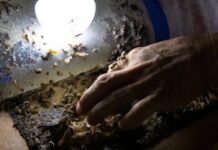
One case is that of the beekeepers of a cooperative in Maxcanú, who lost the certification of their organic honey in 2019 due to the proximity of the farms: “This loss has cost us almost one and a half million pesos, but beyond the money, what is at risk is our ancestral relationship with the bees and the land.”

Source: jornada