
The Mexican government, through the Ministries of Agriculture and Rural Development, Economy, Environment and Natural Resources, and Health, announced that the decree prohibiting the use, production, sale, and importation of 35 types of pesticides due to their potential harm to human health and the environment will be published in the Official Gazette of the Federation (DOF). This decree aims to guarantee cleaner, more sustainable, and safer agriculture for consumers and farmworkers.
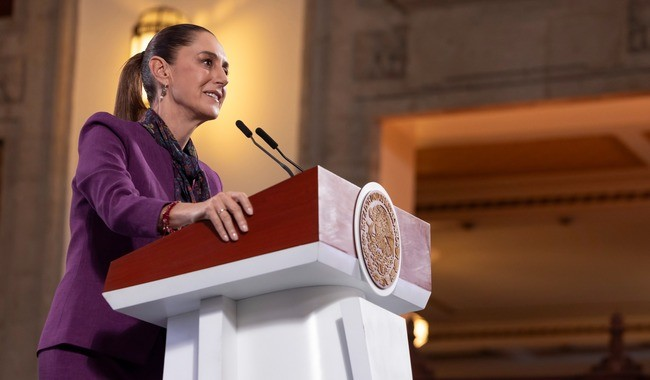
Mexican President Claudia Sheinbaum Pardo explained that the ban fulfills a commitment to the environment and, in turn, to protecting the health of Mexicans. Some of these pesticides are banned in many parts of the world.
“It was a commitment made months ago: the pesticides that will appear in the Official Gazette this afternoon or tomorrow at the latest are banned in Mexico. Some of them are banned in many places around the world, and their use wasn’t banned here. These pesticides cause significant harm to health and the environment,” he stated during the morning press conference, “The People’s Morning Press Conference.”
The Secretary of Agriculture and Rural Development, Julio Berdegué Sacristán, explained that these are 35 molecules identified in international conventions to which Mexico is a party, such as Basel, Stockholm, and Rotterdam.
He explained that the 35 banned pesticides include substances such as: Aldicarb, an insecticide that causes health damage upon contact; Carbofuran, an insecticide banned in Canada and Europe; Endosulfan, banned in 50 countries due to its significant impact on the physical, nervous system, and brain development of infants; DDT, whose use is banned worldwide.
He pointed out that the ban on these 35 pesticides represents a unique moment in Mexico’s history, as the last decree of this type was published in 1991 and only considered 21 active ingredients.
“The idea is to ensure that they have much stricter control and regulation, because there are products that cannot be used like aspirin, definitely not. And this is part of our President’s determination. Mexico, on the Second Level of the Fourth Transformation, will have a much cleaner, much more sustainable, and much safer agriculture for our population,” he commented.
He reported that the Mexican government will continue to promote actions to progressively eliminate substances that do not conform to the principles of modern and responsible agriculture. Therefore, a second group of these substances will be published for banning in 2026, while a third list will be published in 2027.
The 35 pesticides being banned are 2,4-Db, Alachlor, Aldicarb, Azafenidine, Azinphos-methyl, Azocyclotin, Bioresmethrin, Bromuconazole, Captafol, Carbofuran, Carbosulfan, Chlordane, and Chlorpyrifos-methyl.
As well as DDT, Diclofop-methyl, Dinocap, Dinoseb, Disulfoton, Edifenfos, Endosulfan, Fenarimol, Fenitrothion, Fenthion, Phenthoate, Flusilazole, Phosphamidon, Hexachlorocyclohexane, Hexaflumuron, Lindane, Methidathion, Fenbutatin oxide, Parathion ethyl, Quinalphos, Resmethrin, and Trichlorfon.

Source: gob