The Mexican government, through the National Water Commission (Conagua), held a two-day consultation in the municipality of Villa Sola de Vega, Oaxaca, to approve the construction of the Margarita Maza dam, formerly known as Paso Ancho, a project that is part of President Claudia Sheinbaum Pardo’s National Water Plan.
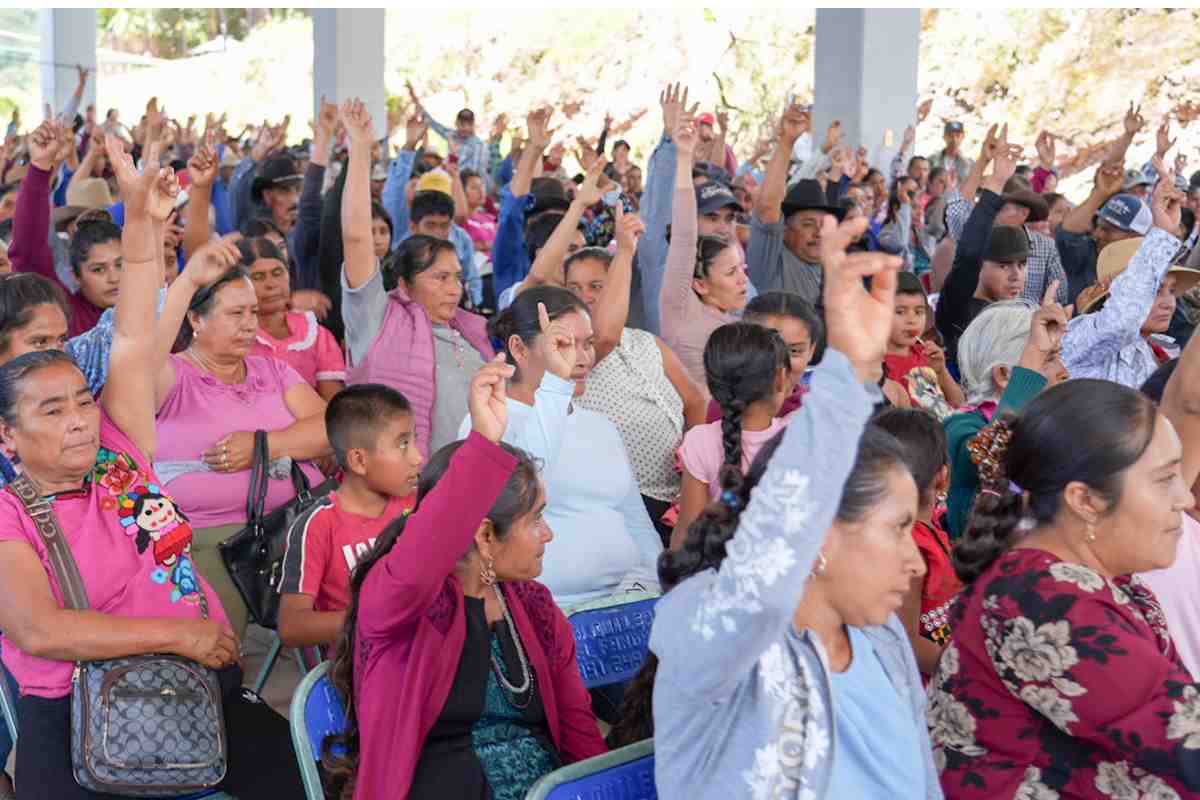
The consultation took place on September 6 and 7 in three community assemblies, according to Conagua, although it did not specify which communities. Representatives from 40 communities in the region reportedly participated in the assemblies, with 1,655 votes in favor, zero against, and zero abstentions.
The process differs from international standards, which require consultations with Indigenous peoples to be prior, free, informed, and culturally appropriate. It was coordinated by Conagua, in conjunction with the Ministry of the Interior, the Ministry of Environment and Natural Resources, the National Institute of Indigenous Peoples, the National Agrarian Registry, the Agrarian Attorney General’s Office, and the Oaxaca State Government.
A month earlier, the State Commission for Water for Well-being reported that the bidding process for this project had begun with the delivery of the technical packages to the National Water Commission (Conagua).
Consultation amidst conflicts between communities
Earlier this month, five days before the consultation, authorities from the municipality of San Vicente Coatlán, which is engaged in an agrarian conflict with Sola de Vega, warned that continuing construction of the dam without resolving the problem could lead to violence or confrontations.
The community explained that part of the dam will be built within its territory, which it has disputed with Villa Sola de Vega since 1970, due to an error in the resolution issued by the Supreme Court of Justice of the Nation.
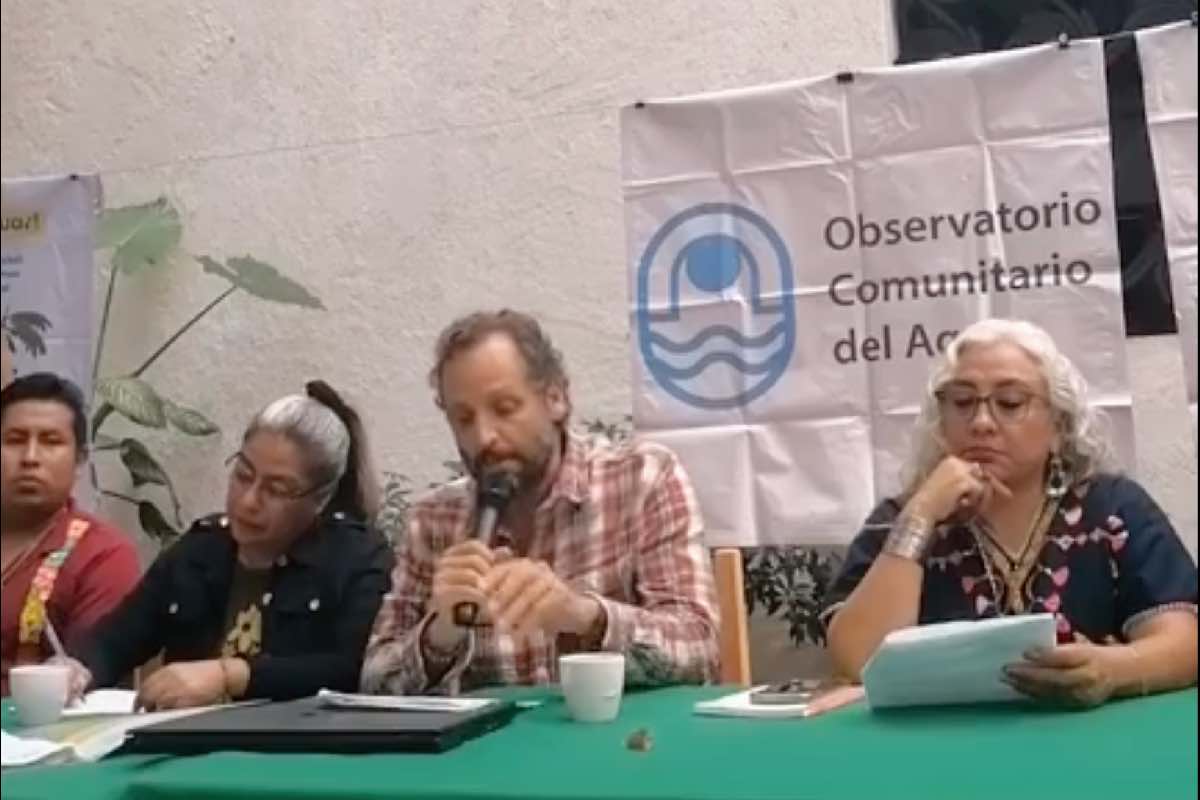
The approval of this dam also comes despite the fact that it has been classified as technically, socially, and legally unfeasible, as well as costly, by at least 20 civil society organizations that make up the Citizen and Community Observatory of Water and the Environment of the Central Valleys of Oaxaca.
In fact, construction of this project began in 2012 under the name Paso Ancho Dam, but was canceled in 2014 by the Federal Attorney for Environmental Protection (Profepa) for lacking authorization from the Ministry of Environment and Natural Resources (Semarnat) for the land use change on forest lands.
At that time, irregularities were also reported by the companies responsible for the environmental impact assessments, which were supposed to include a legal analysis. The project was halted, and the Oaxaca Secretariat of Comptrollership and Government Transparency (now the Secretariat of Honesty, Transparency, and Public Service) launched an investigation, but to date there is no information on the matter, despite a call to the local Congress to report the outcome.
Lack of transparency, says a citizen observatory in Oaxaca
In March of this year, the director general of Conagua, Efraín Morales López, announced a total investment of 4.6 billion pesos for this dam. However, a document from the federal government’s Compras MX platform indicates an investment of 7.775 billion pesos and includes: a dam, intake works, aqueduct, a water treatment plant, and interconnection lines and networks.
The project will be 72 meters high and 214 meters long, with a capacity to store nearly 20 million cubic meters of water and a flow rate of 1,000 liters per second. State authorities believe this would guarantee the human right to water in the city of Oaxaca and surrounding municipalities for the next 50 years.
Environmentalists such as Juan José Consejo Dueñas, of the Institute of Nature and Society in Oaxaca (INSO), believe this project represents a setback, as the paradigms for addressing environmental issues have changed. They state that dams typically have a useful life of between 20 and 25 years, a very short period compared to their construction costs.
For the citizen observatory, a project of this magnitude constitutes a matter of clear public interest. Therefore, exercising the right to public participation established in Article 1 of the Escazú Agreement, signed by the Mexican State, they are calling for the application of principles of publicity and transparency, something that, they say, has not occurred to date.
Furthermore, they point out that without an information process or in-depth consultation with the indigenous peoples through which the aqueduct will pass, the community where the water treatment plant will be located, and finally, the population of the Oaxaca metropolitan area, this project seems to emulate “the disastrous Paso Ancho project.”
The organizations, individuals, collectives, and educational and research institutions that comprise the Observatory demand an open dialogue to transparently address the scope of the project and its components, as well as a review of the Regional Environmental Impact Statement, a key document, and the consideration of other alternatives, not only to guarantee water supply but also to find sustainable ways and measures to combat the water crisis and adapt to global warming, with nature-based solutions.
Source: animalpolitico