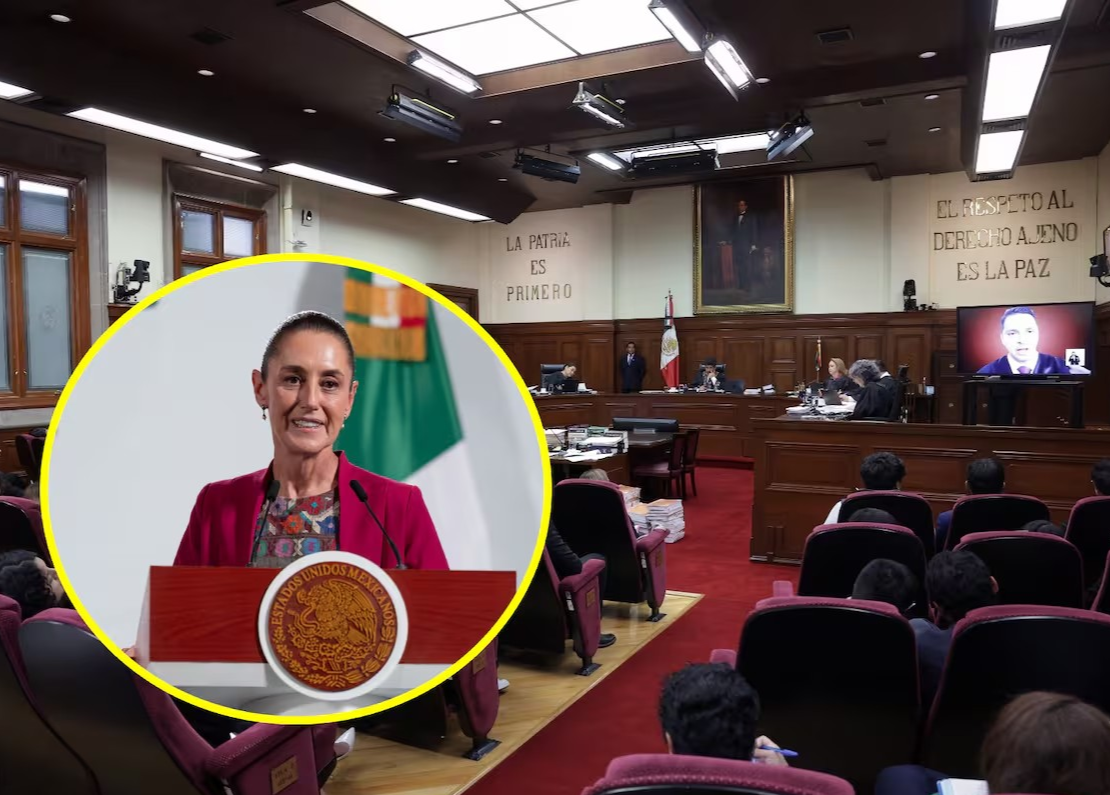

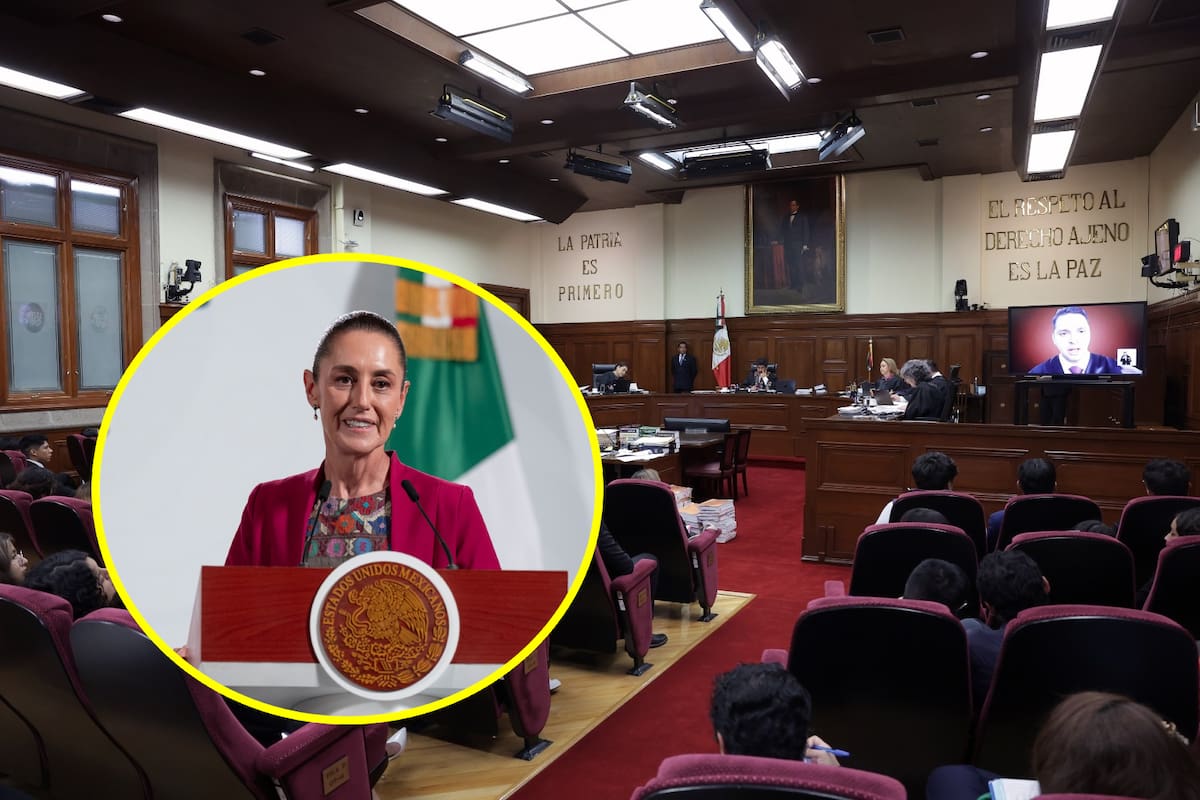
In a unanimous ruling, the Supreme Court of Justice of the Nation (SCJN) determined that the Presidency of the Republic must make public information about Navy commanders, rejecting the argument that its disclosure puts national security at risk.
What happened?
The SCJN Plenary, by a unanimous vote of 8, upheld a 2022 resolution by the National Institute for Transparency, Access to Information, and Protection of Personal Data (INAI). This resolution ordered the Legal Counsel of the Presidency to provide a private individual with the public version of 15 official documents containing:
The Presidency, during the administration of then-President Andrés Manuel López Obrador, had refused to provide this information, challenging the INAI’s decision before the Court. Its central argument was that disclosing this data jeopardized national security and, therefore, should be confidential, according to La Jornada.
The Court’s Central Argument: The Information Is Already Public
The ruling was based on Justice Loretta Ortiz Ahlf’s proposal. The Court declared the President’s arguments unfounded for one main reason: all the information requested is already in the public domain.
Justice Ortiz Ahlf explained during the hearing: “I do not share the idea that… a risk to national security is perceived in this specific case. In this matter, we must start from an incontrovertible fact: all, all of the information contained in the documents is already in the public domain, and in most cases, it was even published by the same authorities.”
The Court applied a common-sense principle here: it cannot be argued that information already circulating in official communications and news reports represents a current risk to national security if it is provided to a private individual.
Important Nuances of the Ruling
The Court’s decision does not mean that any data on military commanders must always be public. The bill clarifies points:
Case-by-case: The ruling emphasizes that each request for information must be evaluated individually. It does not establish an absolute precedent that the names and assignments of naval commanders can never be confidential.
The “Mosaic Theory”: The Presidency invoked this principle, which holds that small, seemingly harmless pieces of information, when put together, can reveal sensitive data. The Court held that, in this specific case, since the “mosaic” had already been assembled and published, the theory did not apply.
Positions of other ministers
Chief Justice Hugo Aguilar Ortiz: Although he supported the bill, he proposed a practical nuance. He suggested that the Navy official should be allowed, “under his strictest responsibility,” to assess which specific data to provide. That is, to redact (cross out) information that he considers still sensitive, even if parts of it are public.
Minister Irving Espinosa Betanzo: He agreed on the merits, considering that, although the President’s arguments might be well-founded (valid in theory), they were ineffective. His rationale was that, even if the Court overturned the INAI’s decision, it would be impossible to restrict information already published in various media outlets.
You may be interested in: IMSS retirees demonstrated before the new Court to demand resolution of cases regarding the return of their savings in individual accounts managed by Afores, ignored by the previous administration.
The abstention of a Minister
Minister María Estela Ríos González was declared legally barred from participating in the discussion and voting. This is because the appeal for review had been filed by her in 2022, when she served as head of the Legal Counsel of the Presidency, the same body that was now losing the case. This situation avoided a clear conflict of interest.
Source: elimparcial