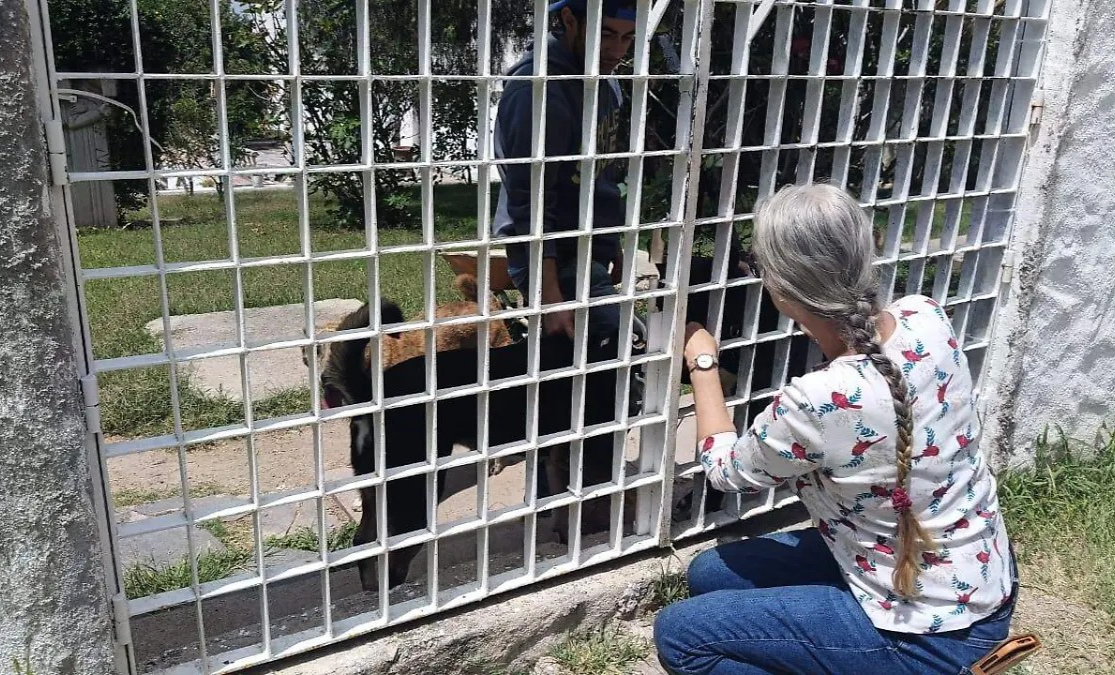

Following a judicial eviction by the Lova Group, the shelter’s founder and a veterinarian denounce restrictions on caring for dogs and cats. Activists hold a sit-in to prevent the animals from being removed and demand that their well-being be prioritized.
San Miguel de Allende, Gto.—For seven days, a group of volunteers, rescuers, and supporters of the Lucky Dogs Club House shelter has been on permanent guard outside the building on the outskirts of the city to prevent, according to their reports, more than 100 dogs and cats from being removed without the veterinary care they need. Amidst tents, posters with slogans, and donated food, the activists take turns day and night guarding the entrance and recording every movement.
The conflict began last week when the Lova Group executed a judicial eviction of the property. Maritza Peña, owner and founder of the shelter, says, “They kicked us out overnight, removed furniture, medicine, and food, and since then they haven’t let us in to care for the animals.” Peña says they have around 140 dogs and 20 cats under their care, many with chronic conditions or specific treatments. “We’re desperate; we take turns watching because we fear they’ll be taken away or die without care,” she said in an interview.
According to veterinarian Susana Trejo, a shelter employee and director of Lucky Dog, the time they’re allowed in is insufficient. “Right now, they only let us in for 20 minutes a day, without cell phones, to care for more than 100 dogs. When we were at the shelter, it took us from 9 a.m. to 3 p.m.; now it’s impossible to get them all out in half an hour. That’s why you can hear the dogs barking from outside. Many now smell of poop and pee,” she explained. Trejo warns that prolonged confinement and lack of walks affect the animals’ physical and emotional health: “There are dogs that don’t go to the bathroom unless they go for a walk, and that hurts them.”
Maritza Peña recalls that before becoming a shelter, the building was an addiction clinic from 1992 to September 2024. During the pandemic, it began rescuing stray dogs. “I started with one, and now we have more than 100. Here in San Miguel de Allende, the authorities don’t care; there are no clear laws or rules for dog control. No matter how much animal rights activists ask for it, they don’t care,” she complained. She also recounted that on Monday night they tried to take the dogs out in trucks “on the other side,” but volunteers prevented them.
According to Peña, the shelter’s expenses reach 260,000 pesos per month, as each animal goes through isolation, deworming, medical tests, and adaptation before being put up for adoption. “The only way to adopt with us is through Lucky’s website. We conduct interviews, request INE (National Institute of Statistics) and an optional 500-peso recovery fee, and follow up to ensure the dog is okay,” he explained. He asserts that everything is documented and that “the courthouse has taken the animals into safekeeping,” but that the current conditions are deteriorating.
The San Miguel de Allende City Council has stated that this is a private dispute and that its scope for intervention is limited.

Meanwhile, the sit-in outside the shelter continues. People take turns every few hours to guard the entrance, record movements, and feed the animals they manage to care for when they are granted 20-minute access.
Meanwhile, shelter supporters link the case to a larger property dispute in San Miguel de Allende. Peña stated that “today a company called Grupo Lova appears, trying to take over properties that don’t belong to them, using fraud and false documents.”
“We will remain here outside for as many days as necessary so that the animals receive care and are not removed illegally,” said Maritza Peña. The shelter remains amid signs, barking, and sleepless nights, as volunteers and activists repeat that their fight is not just for a piece of land, but for the lives of more than a hundred dogs and cats who depend on them today.

Source: oem