
The United States government reported that networks linked to the Jalisco New Generation Cartel (CJNG) control timeshare scam operations in Puerto Vallarta through call centers established in Mexico.
Investigations indicate that the scammers posed as real estate agents, lawyers, or representatives of tourism companies. Their goal was to contact U.S. citizens who owned timeshares in Mexico, convincing them they could sell or recover their properties.
Victims were tricked into making international wire transfers to pay fees, taxes, or commissions. These deposits never resulted in authentic transactions.
“Mexico Timeshare Fraud” Scheme: Operation and Tactics
In the “Mexico Timeshare Fraud” scheme, scammers obtained information about owners from insiders at resorts. Using this information, bilingual call center agents made calls in English or sent emails using fake identities.
Analysis, context, and facts. Click here to follow us on Google News.
The schemes included alleged property resales, re-rentals, or investment promises. Those affected were required to pay advances for procedures that were never completed.
Furthermore, US authorities documented cases of re-victimization: after the initial fraud, other individuals contacted the victims posing as law firms offering to recover the lost money in exchange for further advance payments.
US Sanctions on Timeshares in Puerto Vallarta
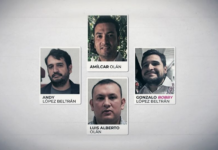
In August 2025, the United States sanctioned thirteen companies and four individuals based in Puerto Vallarta for their involvement in timeshare scams that benefited the CJNG.
The sanctions include the freezing of assets in the US and a ban on transactions with US financial institutions. These measures are part of Washington’s strategy to limit the CJNG’s sources of funding, beyond its drug trafficking activities.
Timeshare Scam Call Centers in Mexico: Detailed Modus Operandi
Timeshare scam call centers in Mexico operated with English-speaking staff posing as brokers, lawyers, or travel agents. Using a prepared script, they convinced timeshare owners to make deposits into Mexican bank accounts opened in the name of shell companies.
The money was transferred to companies registered as travel agencies, real estate agencies, or real estate companies that had no real presence. The funds were then funneled into financial structures managed by individuals linked to the CJNG (National Commission for the Defense of Colombia).
Between 2019 and 2023, more than 6,000 people reported losses due to this type of fraud, with an estimate close to $300 million. US authorities believe the true figure could be higher, as many victims do not report the incidents out of shame or mistrust.

Source: proceso