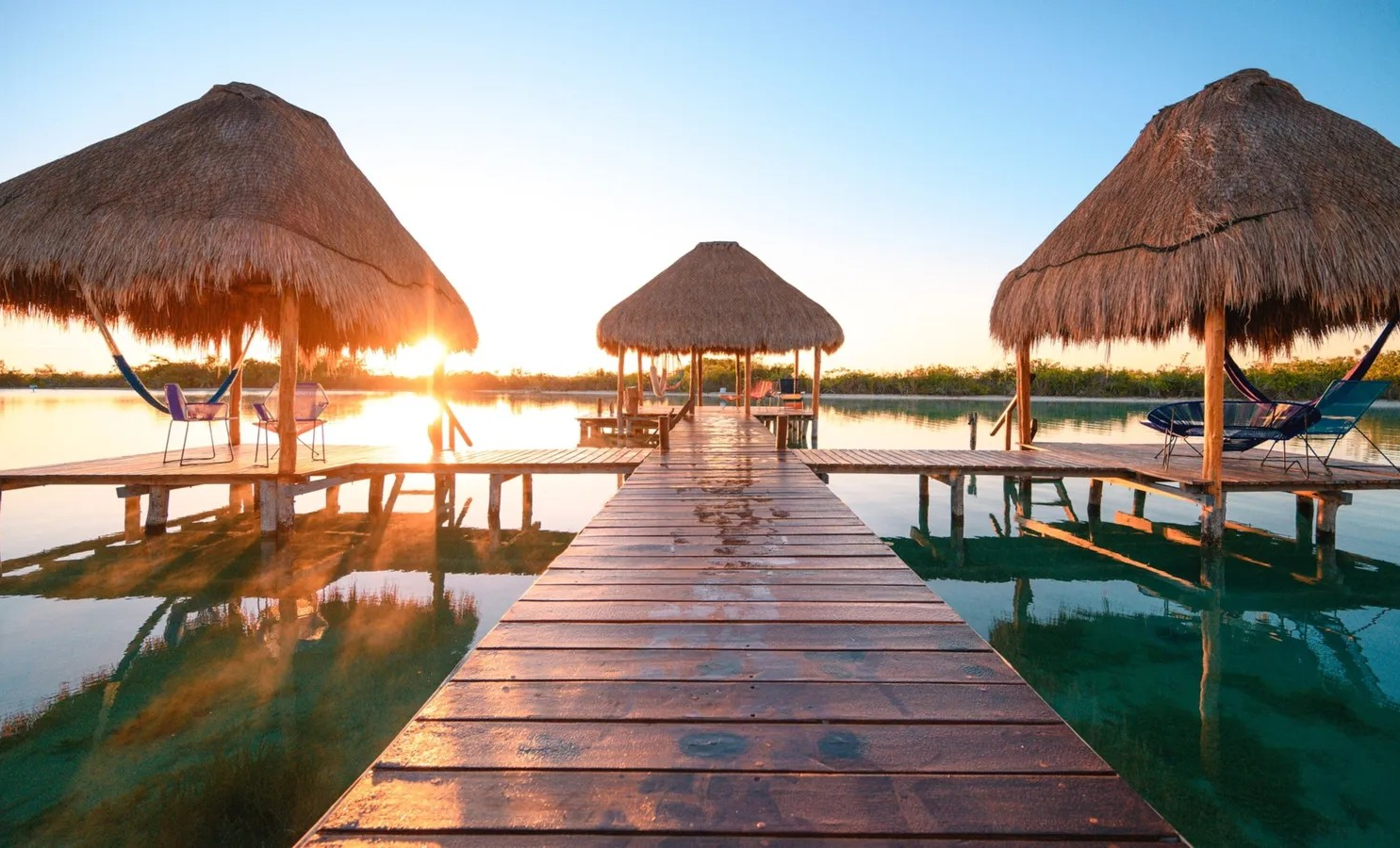

The Mexican Caribbean, the stretch of the Yucatán Peninsula that borders the Caribbean Sea and includes resort cities like Cancún, Tulum, and Playa del Carmen, has experienced a tourism boom in recent decades, welcoming some 20 million visitors a year.
Meanwhile, just over 100 miles south of Tulum, Bacalar offers a similar experience to the Mexican Caribbean in its early days. This laid-back coastal town, founded in the 5th century, offers wellness experiences, historic sites, boutique hotels, and outdoor activities, with its local charm still intact.
- The Ruins of Ichkabal
This ancient Mayan site, composed of large plazas and pyramids hidden in the jungle, opened to the public in late 2024. Since the ruins are about an hour from Bacalar, the best way to get there is to book a tour from Bacalar or the nearby city of Chetumal.
- The Ruins of Kohunlich
In this 8-hectare Mayan city outside of Bacalar, the call of howler monkeys resonates in the air. Its majestic Temple of the Masks is the most significant structure in the complex and is believed to have been built around 500 AD. It’s ideal to plan a half-day in the area and book a tour from Bacalar or Chetumal.
- San Felipe de Bacalar Fort
Italian architect Juan Podio designed this lagoon-front fort in 1733 to protect Bacalar from pirates. The structure was declared a National Historic Landmark in 1975 and has been a museum since the 1980s.
- Wellness Experiences
Bacalar is gaining a reputation as a wellness destination thanks to places like Nuestras Habitas Bacalar, Kapok Bacalar, Mía Bacalar, and the Rancho Encantado eco-resort. At these retreat centers, rooted in Mayan tradition, you can try treatments ranging from massages and ancient Mayan skin therapies to aromatherapy, cupping, and a traditional temazcal.
- Stroll Downtown
Bacalar’s downtown has a relaxed, hippie vibe, much like Tulum did a few decades ago. Stroll through its colorful mural-adorned streets, sit in quaint cafes, and visit local artisan shops and the fort.
Bacalar isn’t located directly in the Caribbean, but it’s home to a freshwater lake called Laguna de Bacalar, or the Lagoon of Seven Colors. Beneath the dazzling array of blues and greens of the lagoon’s surface lie cauliflower-shaped stromatolites, three-billion-year-old microorganisms that store CO2.
Unlike the encroaching towns of the Mexican Caribbean, which were damaged by rampant development, in Bacalar the community has banded together to protect its fragile resource, which is also its biggest tourist draw. Still, development is increasingly looming, such as the controversial Maya Train, which opened a station in Bacalar last year and has already drastically altered the natural environment.

Marco Jerico, originally from Cancún, has worked with environmental organizations in Bacalar for the past decade. He founded Agua Clara Bacalar in 2016, an NGO dedicated to protecting Bacalar Lagoon and managing sustainable tourism in the area. He currently chairs the Emerge Bakhalal Foundation, a social and environmental development organization in Bacalar.
Jerico cites the decision to close the lagoon to recreation every Wednesday as one of the community’s most important actions, a “day of respite” for the water and its fragile ecosystem. He also emphasizes the importance of focusing on tourism initiatives led by local residents.
Adrián Blanco is one of the co-founders of The Bacalar Collection, a group of local businesses that have joined together to sustainably manage Bacalar’s tourism offerings. Blanco calls it a kind of neighborhood watch that generates social pressure to curb large-scale development. “As a group and as a community, we will do everything we can to ensure the lagoon is preserved for future generations,” Blanco says.
Those looking for a laid-back spring break vibe might be disappointed with Bacalar. Jerico notes, “There are no parties or clubs here. In Bacalar, we have nature, culture, and a colony of the first living organisms that appeared on Earth.” Blanco shares a similar view about how Bacalar distinguishes itself from the rest of the Mexican Caribbean. “Bacalar focuses on lower-impact tourism,” he asserts.
The highlight of any stay in Bacalar is enjoying the lagoon. With calm, crystal-clear waters, it offers some of the safest and ideal conditions for paddleboarding, snorkeling, kayaking, sailing, and much more.
To protect this natural wonder, Jericó urges visitors to seek out experiences with a low environmental impact. This means avoiding motorized boat tours. “Sailing tours have a low impact and are the most beautiful way to explore the lagoon,” he explains.
Most tour companies also ask visitors to strictly follow responsible recreation guidelines. Opt for a T-shirt and a hat instead of sunscreen to avoid introducing harmful chemicals into the water. Be careful with litter, respect the buoys that designate protected areas, avoid loud music that could scare away birds, and be careful when paddling or stepping so as not to disturb the fragile underwater formations.
How to Get to Bacalar
The most direct way to get to Bacalar is on the new Maya Train, which makes stops in Cancún, Tulum, and Playa del Carmen. Train tickets cost between $7 and $50, depending on the route. The environmental impact of the new railway continues to generate controversy, especially when it comes to the preservation of Mexico’s cenotes.
Chetumal International Airport is the closest airport to Bacalar. After landing, you can take a 45-minute taxi to the town for approximately $20. If you choose to land at Cancún International Airport, plan a six-hour bus ride to Bacalar for approximately $40. Car rentals are also available at the airports for travelers interested in taking a road trip to the southeastern Mexican city.
Where to Stay and Eat in Bacalar
Thanks to Bacalar’s dedication to sustainable tourism, you won’t find massive hotels or all-inclusive resorts here. Instead, boutique hotels line much of the lagoon, and the hotels follow strict eco-friendly standards.
The elegant, adults-only Amainah Bacalar is nestled between two cenotes and features private plunge pools in its suites. Another option is Casa Hormiga, just north of downtown, designed in harmony with nature and built with local materials. For those looking for a bit more of the party atmosphere of Cancún or Tulum, there’s El Búho Hotel and Beach Club.
One of the best dining experiences in Bacalar is Nixtamal, where ingredients from the hotel’s garden take center stage. Enjoy contemporary Mexican cuisine at Jaguara, lagoonside; visit the Latin fusion restaurant La Playita, with its own hammock-lined beach club; or head to Ixchel for breakfast.
Zanny Merullo Steffgen is a freelance travel journalist based in Colorado. Her work has appeared in Fodor’s, Adventure.com, Lonely Planet, OutThere, and other publications.

Source: nationalgeographicla