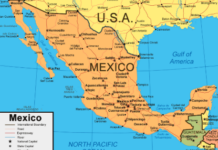
The State of Mexico has established itself as one of the country’s and the region’s leading economic and industrial powers, with a decisive role in transportation equipment, becoming a hub for integration with international value chains.
In context, the state positioned itself as the country’s second-largest economy, contributing 9% of the national gross domestic product (GDP) in 2023, behind only Mexico City (15.3%). Furthermore, it ranks 59th globally, with an estimated value of $162.718 billion, according to economic indicators from the Government of the State of Mexico, published by the Ministry of Economic Development (Sedeco) on its official website.
Its productive structure is marked by the predominance of the tertiary sector, which represents 66.8% of the state’s GDP, although its greatest dynamism is in the manufacturing industry.
Labor Market and Productive Dynamism
The State of Mexico’s labor market exceeds 8.4 million people, of which 1.9 million are formally registered with the Mexican Social Security Institute (IMSS), equivalent to 8.8% of the national total.
Between August 2024 and August 2025 alone, 102,249 new formal jobs were created, the highest figure in the country, according to the most recent data. The State of Mexico is home to more than 2,800 companies in strategic sectors such as automotive, chemicals, plastics, and food.
In addition, the State is home to more than 817,000 economic units, 99.7% of which are micro, small, and medium-sized enterprises (MSMEs), confirming its role as a breeding ground for business and an essential link in supply chains.
In terms of investment, the State of Mexico ranked second in the nation in attracting Foreign Direct Investment (FDI) between 2023 and 2025, with an inflow of $5.343 billion, equivalent to 7.2% of the national total. More than half of this investment went to the manufacturing industry, with the United States being the main source of capital.
In recent years, the State of Mexico maintained a steady flow of FDI. In 2023 alone, it attracted just over $1.9 billion, a figure that increased to more than $2.6 billion in 2024.
During the first half of 2025, the state has already accumulated more than $2.2 billion, consolidating its position as one of the main destinations for foreign capital in the country. Overall, the cumulative value from 2018 to the second quarter of 2025 exceeds $17.9 billion, reflecting the state’s strategic role in attracting investment to the manufacturing industry and sectors linked to trade and services.
At the same time, state foreign trade reached $68.24 billion in 2024, with exports totaling $25.677 billion and imports of $42.347 billion, with vehicles, auto parts, and polymers as the main export products.
With a presence in 125 municipalities and its epicenter in Tlalnepantla, Cuautitlán Izcalli, Toluca, Tultitlán, and Ecatepec, the Metropolitan Automotive Cluster (CLAUT) concentrates a workforce of 7.8 million people and an export value exceeding $5.908 billion.
According to Elisa Crespo, executive president of CLAUT, the challenges for the region lie in the logistics and security of freight transport, as well as the reconfiguration of supply chains in the face of tariffs and the replacement of parts from Asia.
“Companies are redirecting their strategies to continue investing in Mexico and replacing components from the country, primarily from China,” she noted.
She highlighted the technological development process in new production lines, focused on more efficient electric, hybrid, and internal combustion vehicles, which requires innovation and cost reduction to maintain competitiveness.
With productive linkage strategies and tax benefits for new investments, the state seeks to consolidate itself as a hub for industrial and logistics development in the center of the country, according to data from Sedeco.
Take advantage of its strategic location, its extensive labor base, and its infrastructure to attract investment projects and continue to be a driving force in the integration of global value chains.

Source: t21