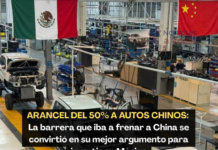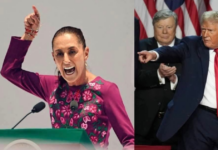

Mexico will delay parliamentary debate on tariff increases on nearly 1,500 products from China and other Asian countries while it analyzes changes to the proposal, amid complaints from the Asian giant, said President Claudia Sheinbaum and Morena representative Ricardo Monreal.
President Claudia Sheinbaum sent the proposal—which seeks to increase tariffs by up to 50% on imports of automobiles, textiles, clothing, plastics, steel, and other products—to the Chamber of Deputies in early September, where Morena holds a large majority.
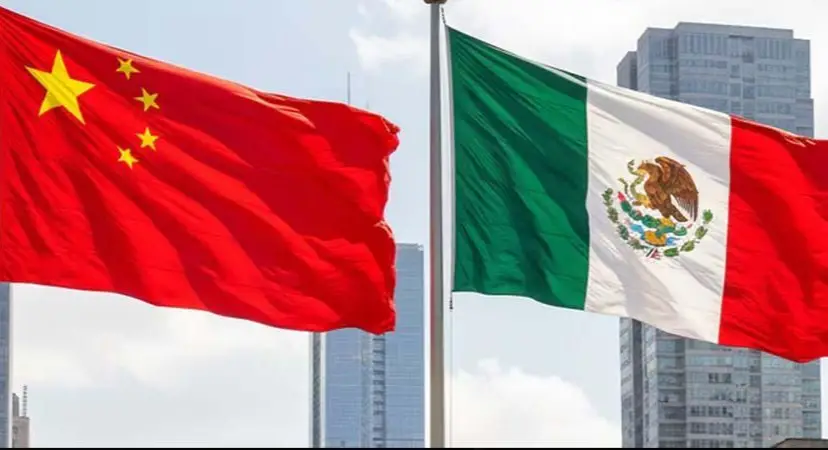
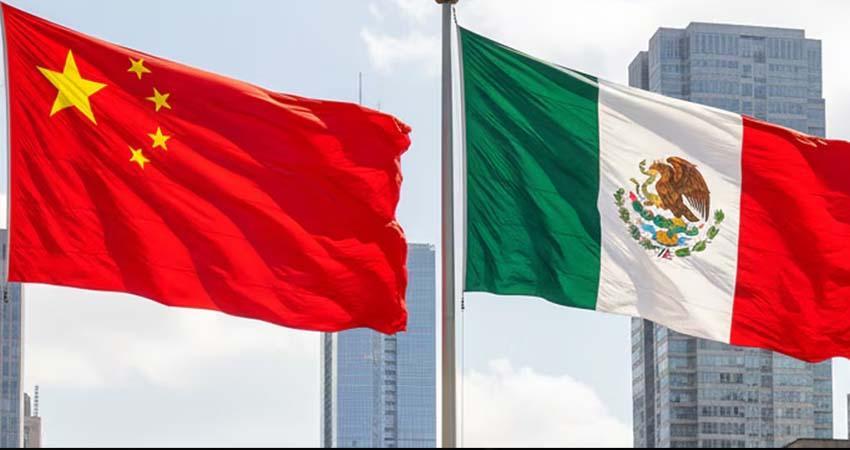
Since then, China—Mexico’s second-largest trading partner after the United States—has harshly criticized the proposed increase, claiming it would undermine investor confidence. It has also warned Mexico that it will take the “necessary measures” to safeguard its “legitimate rights and interests.” Mexico has maintained that the increase is not “coercive.”
“Since China stated that it does not agree and that it would be good to have a working group, we are holding these meetings with different countries to see if we can adapt what we presented to Congress for approval this year,” Sheinbaum said during her daily press conference.
“We are reviewing the proposal very seriously,” Ricardo Monreal, leader of the Morena party in the lower house, said on Wednesday. The lawmaker added that Congress is taking a “pause” on the proposal and will resume it at the end of November.
Morena lawmakers, who spoke on condition of anonymity, told Reuters that the tariffs would not advance in Congress as proposed and that the plan would likely have to be watered down.
An automotive sector source said he expected that, rather than an adjustment to tariff rates, the list of tariffs would be thoroughly reviewed to avoid anticipated impacts on key goods such as auto parts.
Any changes could generate an additional deficit in the 2026 national budget, as the Mexican Treasury projected that the proposed tariffs would generate an additional $3.76 billion.
The proposal would affect imports from countries with which Mexico does not have a trade agreement, such as China, South Korea, India, Indonesia, Russia, Thailand, and Turkey.
As currently worded, tariffs on light vehicles would increase from the current 15%-20% to 50%, and on auto parts, from the current 0%-35% to 10%-50%.
Some analysts estimate that the increased tariffs on automobiles would primarily affect electric vehicles manufactured in China and sold in Mexico, hitting BYD and Tesla the hardest.
The Sheinbaum administration argues that the tariff increases are a way to protect Mexican domestic production, although they also come amid pressure from the United States for Mexico to reduce business with China.
A Morena politician, who requested anonymity, said the approval of the tariffs has been delayed due to concerns that they could trigger a surge in inflation and negatively impact Mexican businesses.
The source added that, in the long term, they believe the Sheinbaum administration is moving toward a plan for the United States, Canada, and Mexico to impose equivalent tariffs on China.
Mexico seeks to preserve a trilateral trade agreement with the United States and Canada, the USMCA, which is scheduled for review next year. The USMCA has allowed Mexico to continue exporting most of its products to the United States without tariffs.
Source: diarioelindependiente