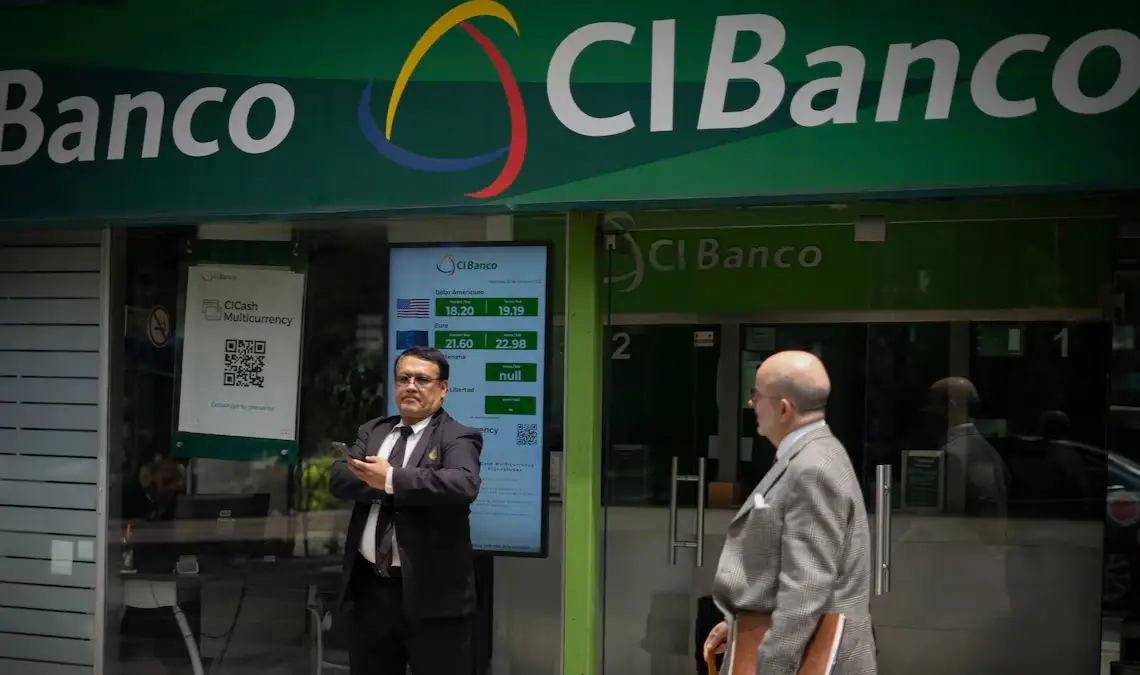

CIBanco, one of the three financial institutions singled out by the Treasury Department for alleged drug laundering, has begun its liquidation process. The National Banking and Securities Commission (CNBV) revoked CIBanco’s license, thereby signaling the start of its liquidation. The bank was sanctioned by United States authorities on June 25, along with Vector and Intercam, for alleged money laundering and illicit opioid trafficking. As a result of its investigations, the Treasury determined that the aforementioned entities could not conduct transactions with their counterparties in the United States as of October 20, which was the final blow to CIBanco. Mexican authorities announced this Friday that the bank’s shareholders requested the voluntary revocation of its license. “This decision is in response to what the shareholders considered the best option for the interests of their clients,” the Mexican regulator reported.
In a statement on its website, the CNBV (National Bank of Mexico) announced that it will begin the payment process for insured deposits for savers starting October 13. According to Mexican law, savers are covered for up to 400,000 deposit units, equivalent to approximately 3.4 million pesos per person. “This coverage applies only to products considered insured deposits and not subject to exclusion from coverage under the law. The Institute for the Protection of Bank Savings (IPAB) does not guarantee, among others, deposits held by shareholders, members of the board of directors, and officers of the first two hierarchical levels of CIBanco,” the Mexican authority stated. Thus, as of this Friday, no banking transactions will be possible, except for payments due from customers who have loans with the bank.
CIBanco’s origins date back to 1983, when it began as a corporate currency exchange house. In 2008, it obtained official authorization to operate as a bank and became one of the largest trust fund managers in the country. However, the bank declined after the blow dealt by the Treasury Department and its decision to prohibit transactions with any financial institution in the United States. As of August of this year, the bank’s assets amounted to 68.658 billion pesos, a 48% drop compared to the assets it had in August 2024. Anxiety about the bank’s future led to the withdrawal of clients and the disestablishment of trust funds. In August, the company decided to sell its trust business to Banco Multiva and its automotive portfolio to BanCoppel.
The bank, now on the verge of closure, was accused by the Treasury of facilitating the business of the Gulf Cartel, the Beltrán Leyva Cartel, and the Jalisco New Generation Cartel (CJNG). Furthermore, based on their information, they allege that CIBanco has been instrumental in facilitating payments on behalf of Mexico-based companies involved in the acquisition of precursor chemicals for illicit purposes. In their investigations, they allege that from 2012 to 2018, Mexican and U.S. authorities seized at least four shipments associated with a Mexico-based company containing precursor chemicals or illicit drugs, including methamphetamine.
Source: elpais