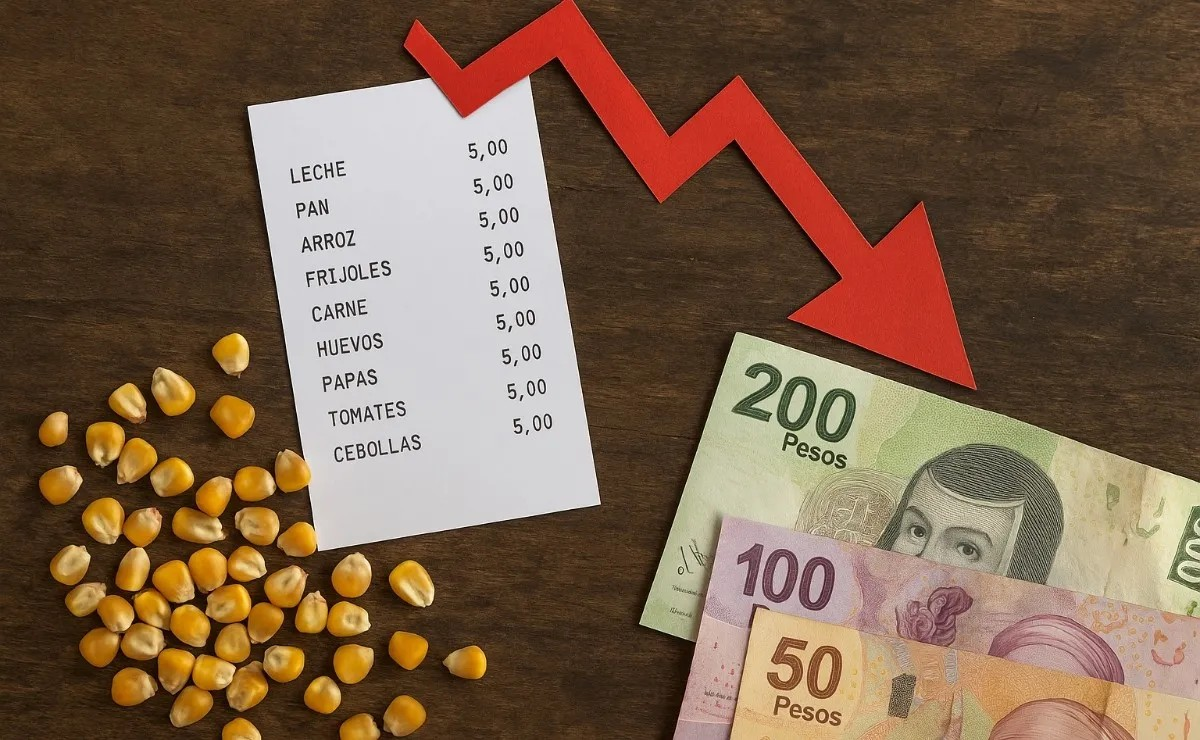

October 2025 inflation in Mexico revealed a profound regional disparity, with southeastern states experiencing price increases far exceeding the national average.
While the overall National Consumer Price Index (INPC) registered a moderate increase of 0.36% month-on-month, states like Tabasco, Yucatán, and Campeche led the way with the largest monthly variations. This phenomenon reflects the direct impact of the end of subsidies for summer electricity rates in the region.
Tabasco topped the list with a 2.17% increase in its monthly INPC, closely followed by Yucatán with a 1.63% increase and Campeche with 1.31%.
Other states with significant increases above the national average were Nuevo León (1.30%) and Quintana Roo (1.13%). At the city level, the impact was even more pronounced in southern urban centers, such as Villahermosa, Mérida, and Campeche, which registered drastic increases.
This phenomenon of concentrated inflation is mainly explained by the non-core component of the National Consumer Price Index (INPC), which includes energy and government tariffs.
This index grew 0.63% month-on-month, driven by the end of the subsidy for the summer electricity tariff program in 18 cities.
Electricity prices soared 17.65% in October, making it the generic product with the greatest upward impact on the INPC, contributing 0.204 percentage points to overall monthly inflation.
The INPC covers several cities in the southeast where the summer tariff program ended, including Mérida, Villahermosa, Campeche, Chetumal, and Cancún.
The elimination of this government aid caused energy costs to normalize abruptly, disproportionately impacting these regional economies.
This seasonal adjustment in energy rates has been the dominant and most painful factor for consumers in the warmer states.
Despite the sharp energy price hike that affected the Southeast, annual headline inflation stood at 3.57%, lower than the 4.76% observed in October 2024.
The impact of electricity on the non-core inflation index was partially offset by the decrease in agricultural product prices, which fell 0.90% during the month.
Essential products such as eggs, chicken, and potatoes registered price decreases, counterbalancing the rising prices of housing and basic services in the South.
The decrease in agricultural product prices, such as eggs (-2.23%), chicken (-1.32%), and potatoes (-7.29%), has counterbalanced the rising prices of housing and basic services in the South.
These price decreases have helped to partially mitigate the impact of the increase in electricity rates, although they have not been enough to fully offset inflationary pressure in the affected regions.
Essentially, October’s inflation acted as a concentrated source of stress: the pressures on the economy were not widespread, but rather geographically limited.
The seasonal adjustment in energy rates has been the dominant and most painful factor for consumers in the warmer states, where the National Consumer Price Index (INPC) surged due to the loss of the subsidy benefit. This phenomenon underscores the importance of considering regional particularities when analyzing inflation in Mexico.
Looking ahead, it is crucial that the authorities consider measures to mitigate the impact of subsidy elimination in the most vulnerable regions.
Implementing policies that promote energy efficiency and the use of renewable energy could be a viable solution to reduce dependence on subsidies and stabilize prices in the southeast of the country.
Source: debate