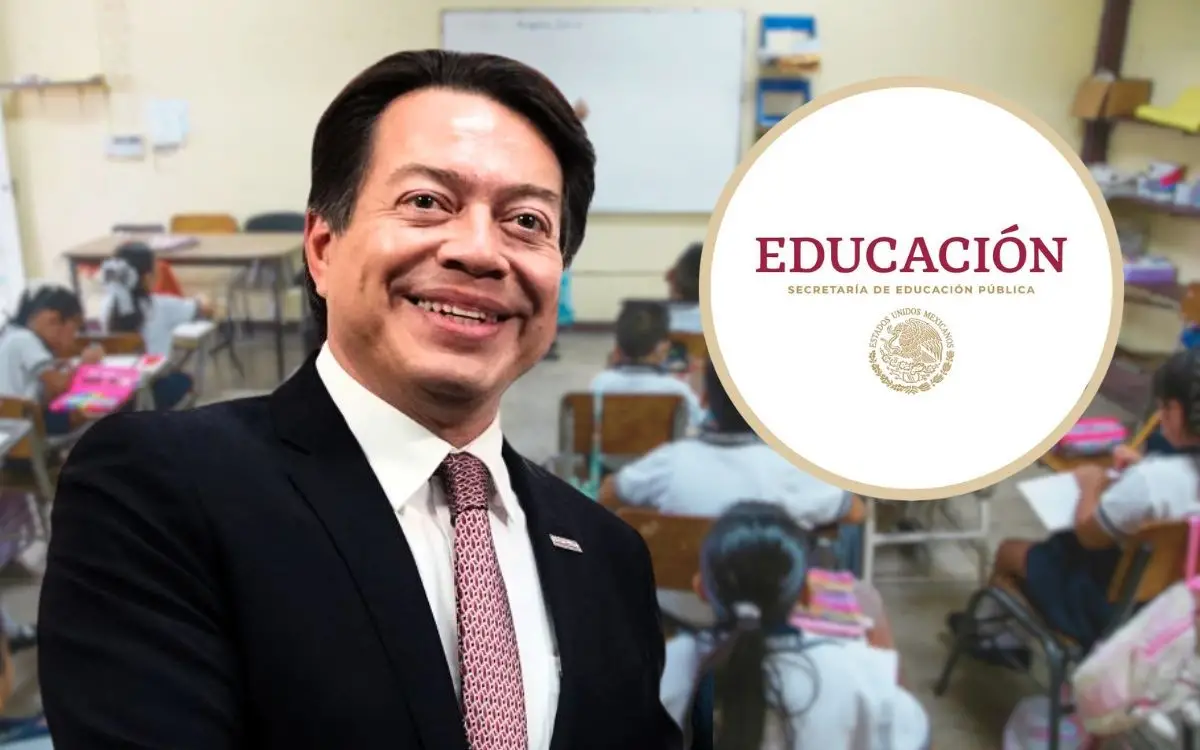

The debate on artificial intelligence reached the Mexico City Congress with a stark warning: the indiscriminate use of tools like ChatGPT could generate “intellectual laziness” that weakens the capacity for thought, writing, and analysis among students and citizens.
During his appearance before the joint committees on Education, Science, Technology and Innovation, and Sports and Youth of the local Congress, Secretary Pablo Yanes Rizo outlined the challenges facing the capital’s education system in the face of the accelerated expansion of artificial intelligence.
“We are facing a technological advancement of enormous scope, but without pedagogical criteria, the risk of affecting the capacity for synthesis, writing, and reasoning is real,” the official emphasized.
The head of Education explained that writing is an essential social tool and that delegating it to a machine can erode human cognitive abilities. “The ability to write involves organizing ideas, understanding the world, and communicating it. If we ask a machine to do it for us, we reduce our own capacity for expression,” he noted.
His warning reflects a growing concern in educational institutions worldwide: the rise of generative artificial intelligence raises questions about its impact on the education of new generations, who already rely heavily on digital platforms to learn, communicate, and solve problems.
Yanes also addressed a structural issue: technological inequality. He emphasized that the existence of “premium” versions of artificial intelligence tools, such as ChatGPT, could widen the gap between those who can afford advanced access and those who cannot.
“Some can afford the premium version, and some cannot. This creates a new form of educational inequality,” he warned. This phenomenon, known as the “second-generation digital divide,” threatens to perpetuate inequities in access to knowledge and job opportunities.
The Secretary proposed an educational approach based on collective learning and digital ethics, inspired by UNESCO principles. He stated that learning processes should not become individualistic or dependent on machines, but rather promote educational communities that strengthen critical thinking, collaboration, and the accuracy of information.
In times when artificial intelligence can generate both academic texts and fake news, Yanes urged the promotion of a digital citizenry capable of discerning, verifying, and creating content responsibly.
During his presentation, Yanes showcased the progress of the Mixtli Digital program, a technological infrastructure that aims to equip Mexico City’s public schools with connectivity and appropriate digital tools for teaching.
He also highlighted the Education Utopias project, whose purpose is to transform public elementary and secondary schools into comprehensive development centers that combine educational innovation, social inclusion, and community values. By the end of the year, at least 60 schools are expected to operate under this model.
Beyond technology, the secretary acknowledged that one of the most pressing challenges remains early childhood education coverage, especially for children aged 0 to 5. This gap particularly affects women who assume childcare roles, perpetuating gender inequalities and limiting children’s holistic development.
“Without a solid early childhood education policy, there is no equitable foundation for leveraging technological advancements,” Yanes stated, linking the digital divide to the social and gender gap.
Yanes’s speech comes at a crucial moment, as the emergence of generative artificial intelligence tools like ChatGPT, Gemini, and Claude raises ethical, pedagogical, and labor dilemmas worldwide.
The Secretary’s call is not to halt technology, but rather to encourage critical reflection on how to integrate it responsibly into education, preventing digital dependence from replacing human thought.
“We must decide whether artificial intelligence will be a tool that amplifies the human mind or a shortcut that weakens it,” he concluded.

Source: msn