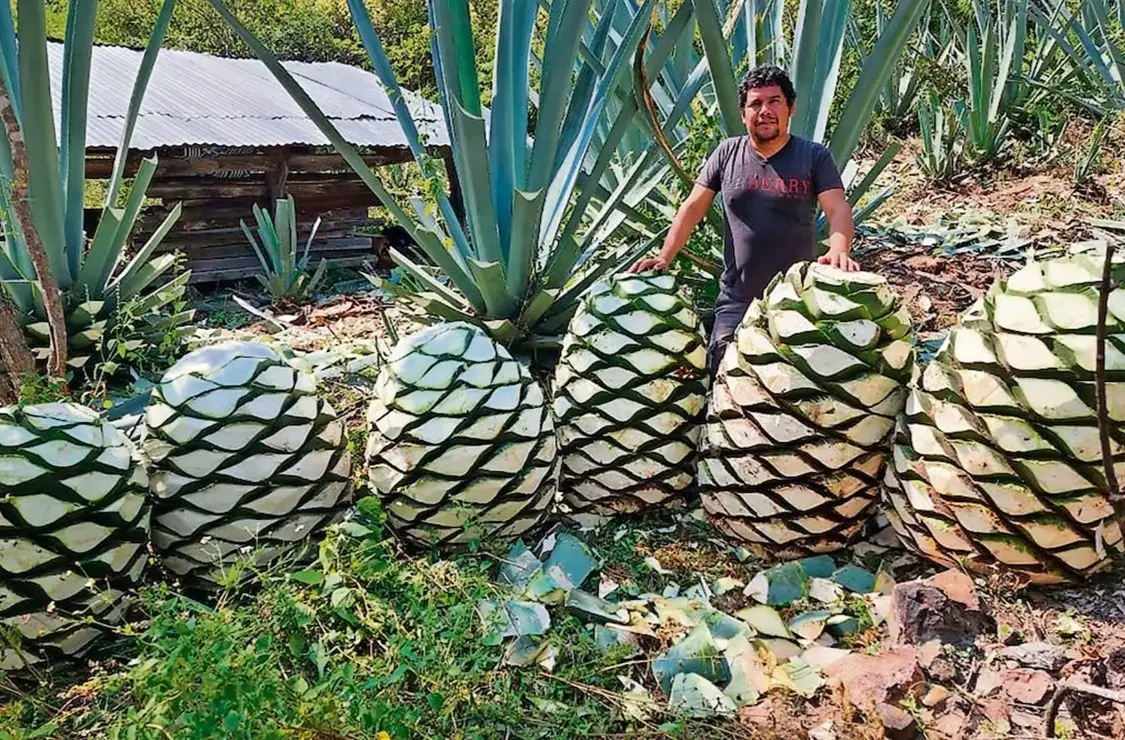

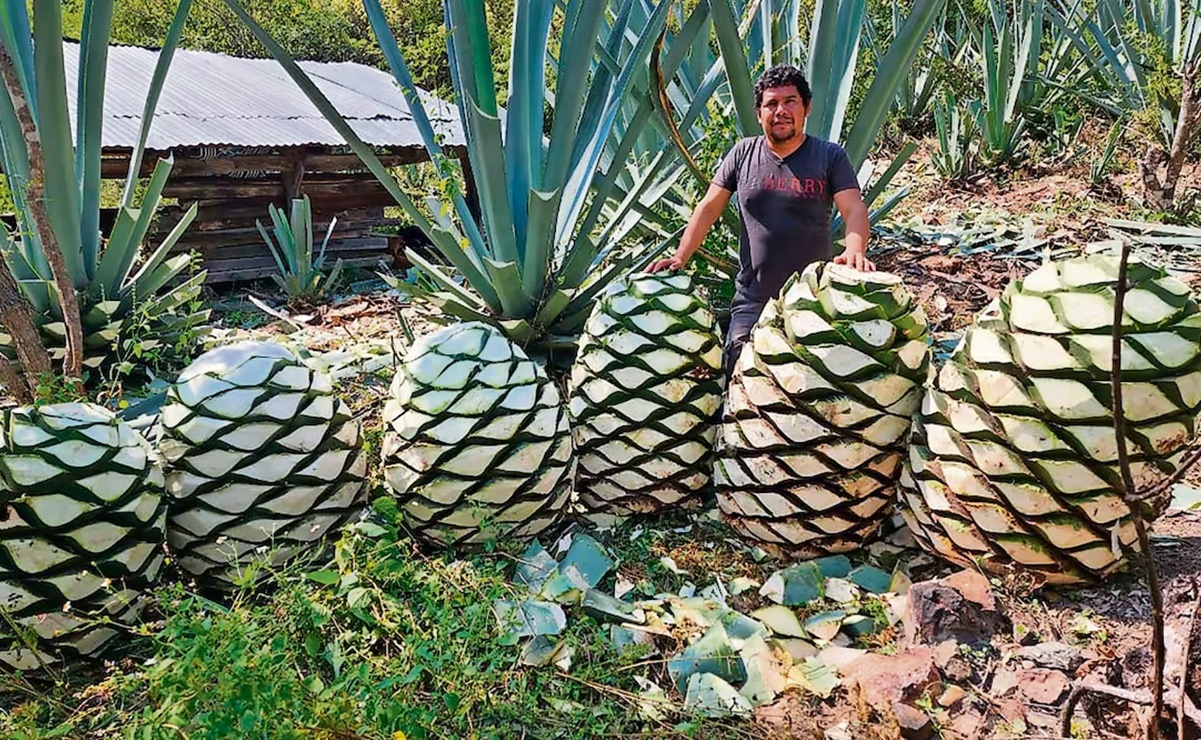
Since last April, producer Héctor Galindo has stopped shipping artisanal mezcal to the United States due to increased shipping costs and decreased consumption among Mexicans living there, primarily in Michigan and Florida, because of the raids.
“They stopped having parties for fear of the raids, so we gradually stopped shipping,” the artisanal mezcal producer from the Ñuu Savi community in the municipality of San Juan Mixtepec, located in the Mixteca region of Oaxaca, told EL UNIVERSAL.
Héctor Galindo explains that part of his income came from selling mezcal to family and fellow Mexicans living in the United States, especially in Florida, the third state with the most remittances to Mexico.
Like Galindo, Fabiola, from the community of Yuchio el Alto, of the Ñuu Savi and Nahuatl people, located in the municipality of Santiago Juxtlahuaca, says that her sales of totopos (tortilla chips) have decreased in recent months because the families who used to buy from her have stopped doing so, citing the increased costs of crossing the border with the neighboring country to the north.
“Normally, we used to deliver 36 batches of totopos a week, which is about 90 kilograms of corn. Now we still deliver, but not as much, because they say they are charged too much at the border to cross and it’s not worth it for them to bring them to sell,” explains the young woman who combines her work in the kitchen, grinding totopos (toasted tortillas), and working in the fields.
With the arrival of Donald Trump’s administration, the lives of families residing in the United States with irregular status changed drastically; The celebrations that once served as a refuge and space of resistance for communities gradually ceased.
Even this year, celebrations like Hispanic Heritage Month, which runs from September 15 to October 15, were canceled due to fear of being detained by Immigration and Customs Enforcement (ICE) agents.
The fear of raids is also present in major cities in California, New York, and Illinois, among others, where migrants of Oaxacan origin are concentrated. This year, other events such as the Cinco de Mayo parade in Chicago and Philadelphia, as well as the June 4th celebrations in predominantly Hispanic neighborhoods in Los Angeles, have been canceled.
The same thing happened in Louisiana, where nearly 30% of the population identifies as Hispanic. The festivities in September, considered Hispanic Heritage Month, were canceled due to a lack of support from sponsors and vendors, according to a statement from Valerie Brolin, a city spokesperson.
Source: oaxaca.eluniversal