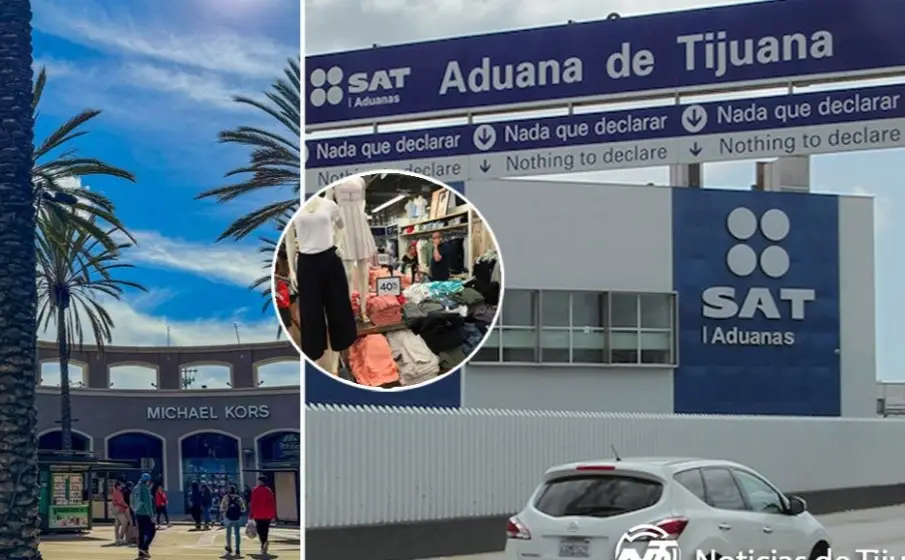

In the midst of the holiday season, recent changes to the duty-free allowance are generating uncertainty among border residents, warned Aldo Rafael Rodríguez, president of the Tijuana Binational Commission of Coparmex (Employers’ Confederation of the Mexican Republic).
He noted that although the general duty-free allowance increased from $300 to $500, the benefit does not apply equally to those who live on the border. For this sector, he explained, the limit was reduced to $150, cumulative only up to $300 per family, which he described as a significant exception that directly affects thousands of households that regularly cross the border to shop in the United States.
Rodríguez pointed out that, although on paper it seems like a favorable measure, in practice it becomes a hindrance, as it limits the permitted amount and exposes taxpayers to stricter inspections. The excess, he detailed, is taxed at a general rate of 19%, a figure much higher than the U.S. state tax, which ranges between 7.5% and 8%.
He asserted that this tightening comes just as trade increases during the holiday season, putting more pressure on families and small businesses that traditionally shop across the border.
The Coparmex representative pointed out that these types of modifications contribute to an environment of greater oversight, which complements the structural changes planned in the upcoming Customs Law Reform, set to take effect in 2026.

Source: ndtnoticiasdetijuana